
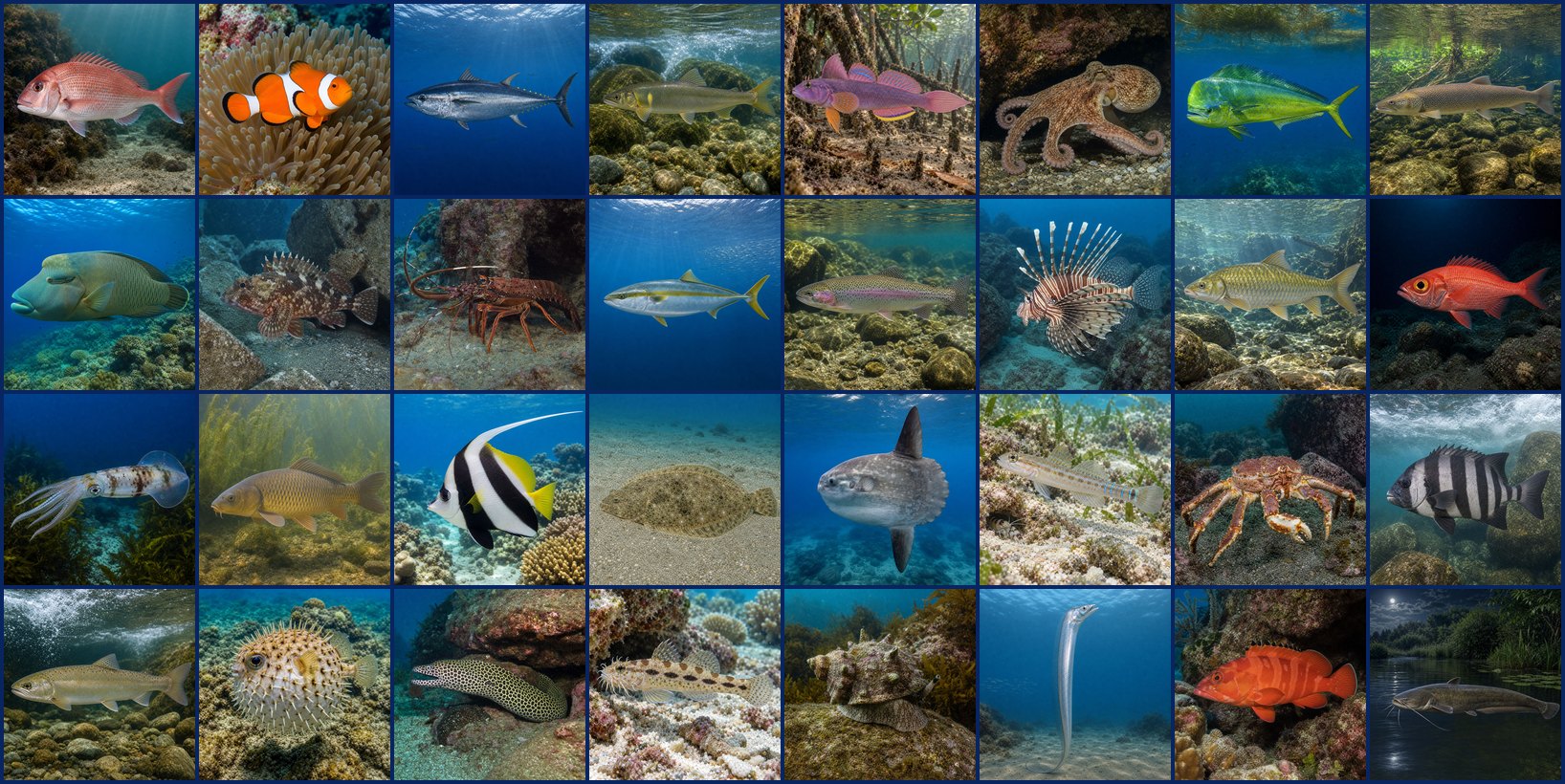
8月1日に人気の魚200種から始めた「生息イメージ」のイラストづくりが、13回目の今回で完成しました。最後の122種を加えて、魚・エビ・カニ・貝・イカ・タコの全2,811種で、白背景版と生息イメージ版の2枚を切り替えて見られるようになりました(クラゲの仲間は、イラスト1枚で載せる方針です)。
「2本立て」とは
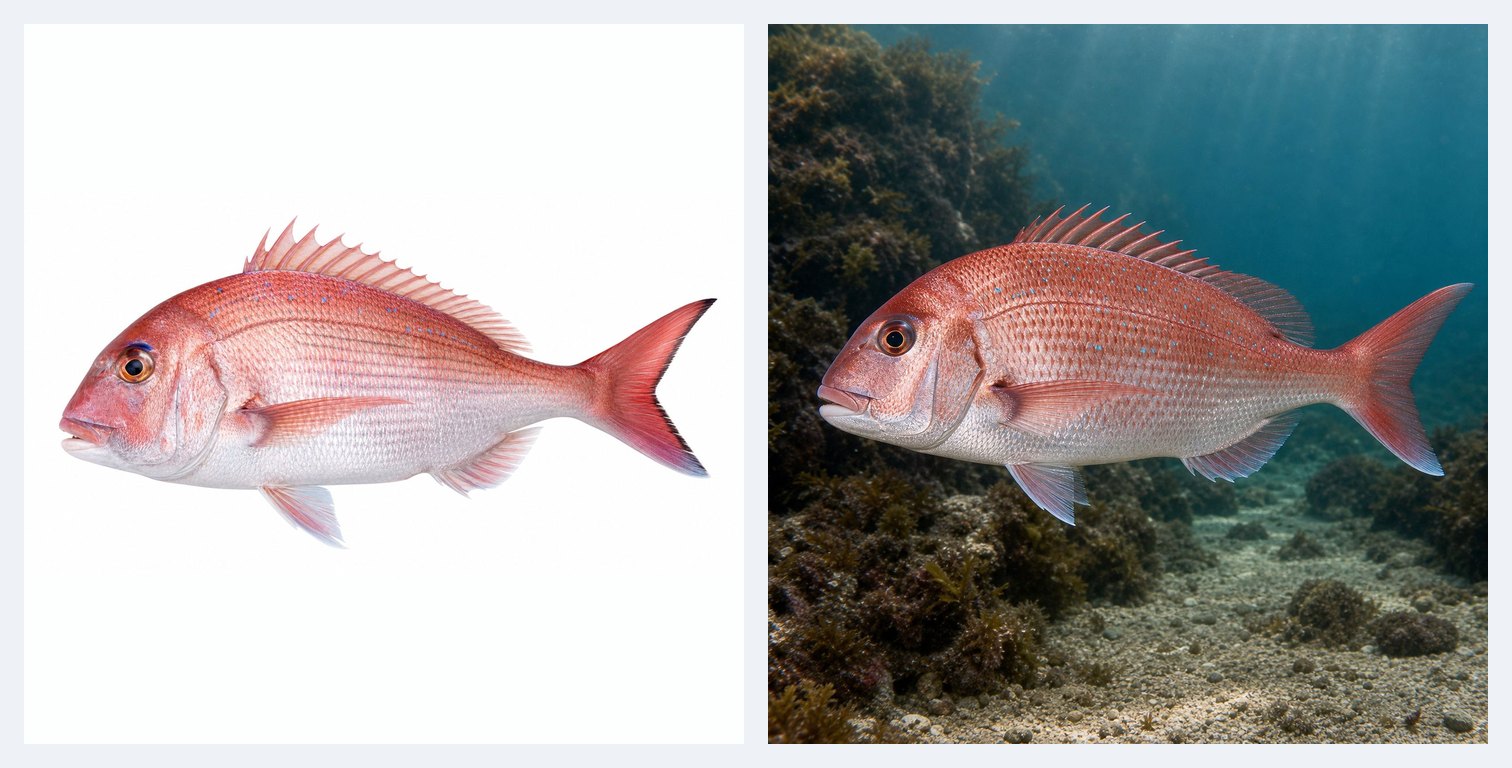
図鑑のイラストは、1種につき2枚あります。白背景版は、ひれの形や模様、体の色がいちばん見やすい「標本」のような1枚。生息イメージ版は、その魚が実際に暮らしている場所——砂の海底、ケルプの林、マングローブの泥、山の渓流——を背景ごと描いた1枚です。同じ種でも、どこで、どんな姿で泳いでいるのかが伝わります。
2か月、13回の歩み
生息イメージ版は、はじめ図鑑を拡充するたびにその回に新しく加わった種だけに用意していて、8月の時点で294種でした。そこから「知名度の高い順」に描き始め、途中からは「あと少しで全種がそろう科」から埋めていくやり方に切り替えて、13回で約2,500種を描き足しました。
- 8月1日〜3日(1〜3回目)… 人気の魚から600種。494種 → 694種 → 894種
- 8月8日・13日(4・5回目)… 1,094種 → 1,294種。5回目から「科を完結させる」順番に
- 9月12日〜19日(6〜9回目)… 1,494種 → 1,695種 → 1,895種 → 2,094種。残りわずかな科を次々に完結
- 9月21日〜25日(10〜12回目)… 2,290種 → 2,490種 → 2,689種。メジロザメ、ベラ、サケ、メバル、アジ、ハタなど大きな科が完結
- 10月1日(13回目・今回)… 2,811種。最後まで残っていたコイ科とハゼ科、そしてタイ科が完結し、魚のすべての科がそろいました
最後の122種 — コイとハゼ
最後に残ったのは、種の数がとても多いコイの仲間(82種)とハゼの仲間(39種)、それに前回描き直しをお願いしていたタイの仲間1種です。
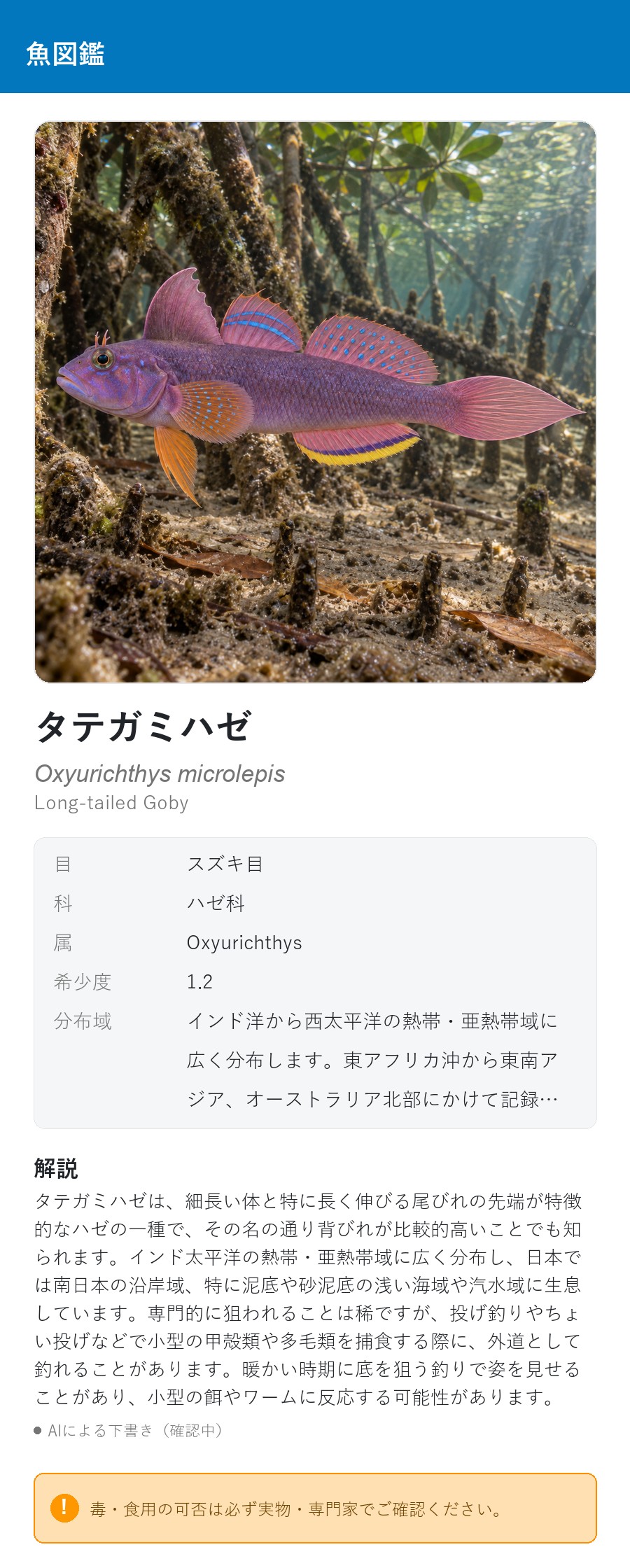
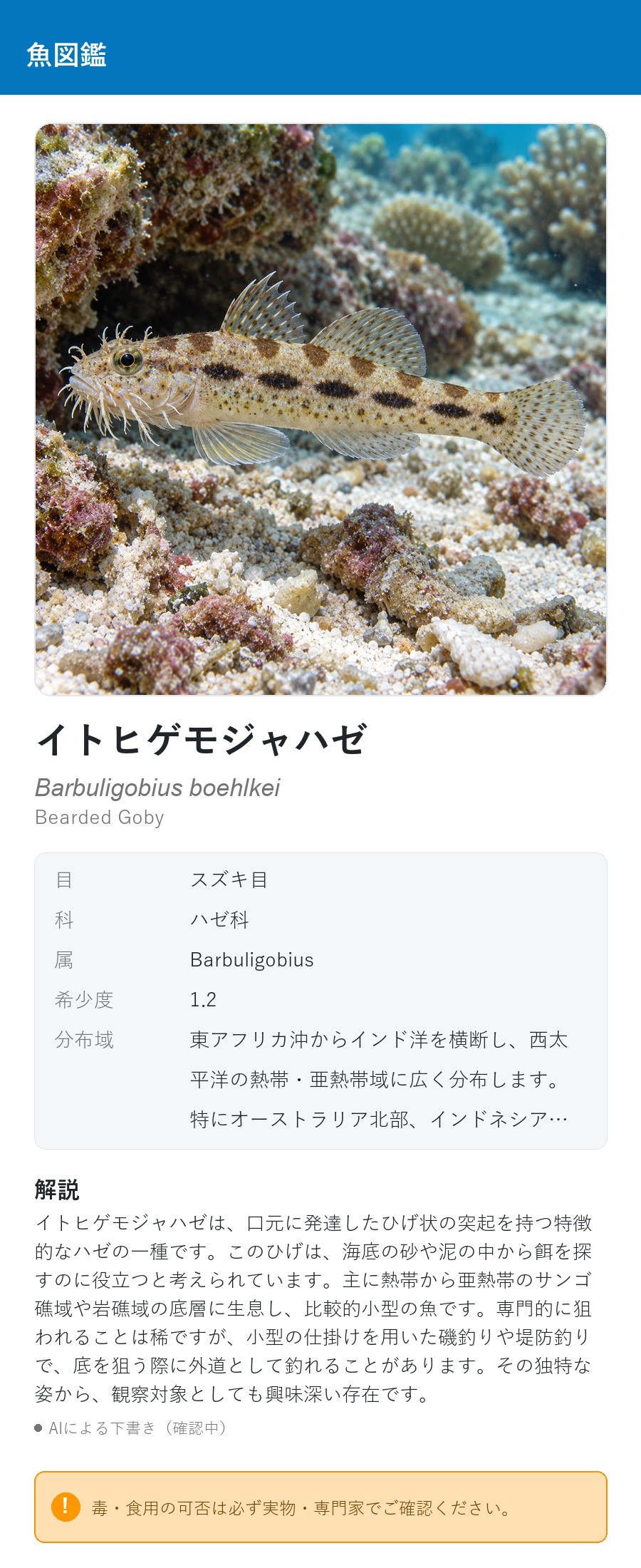
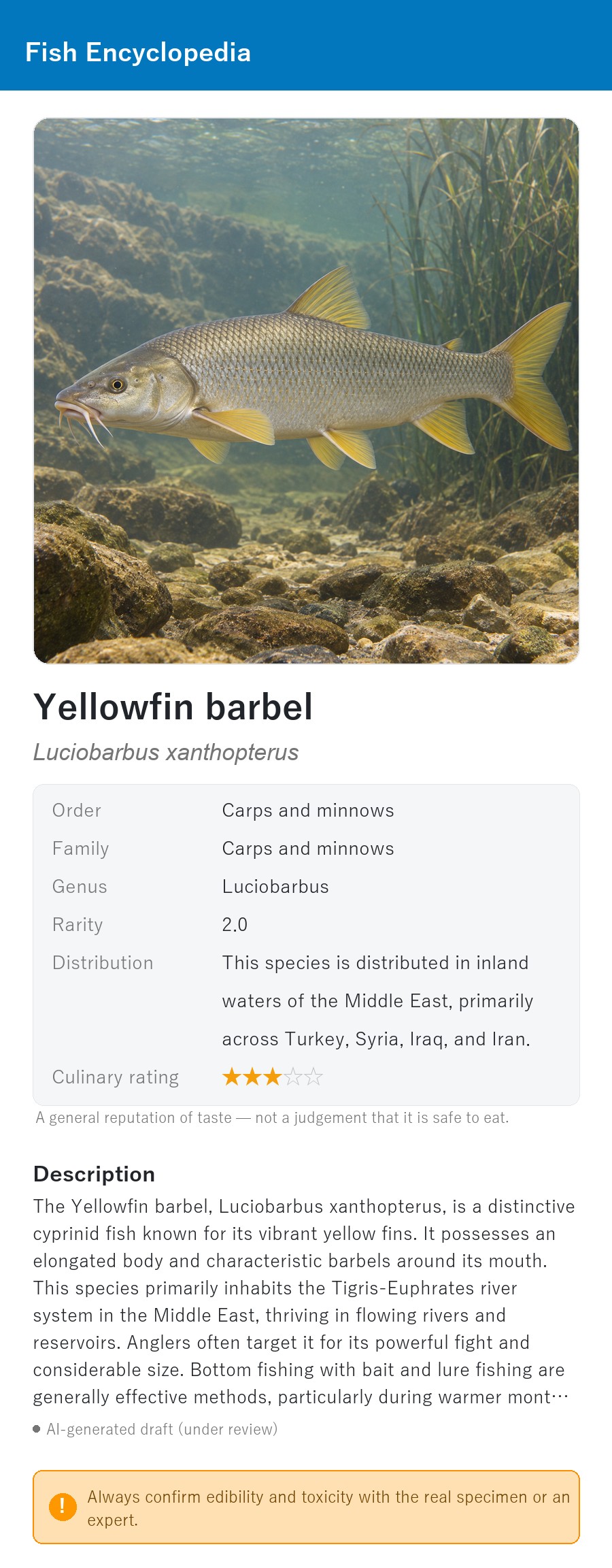
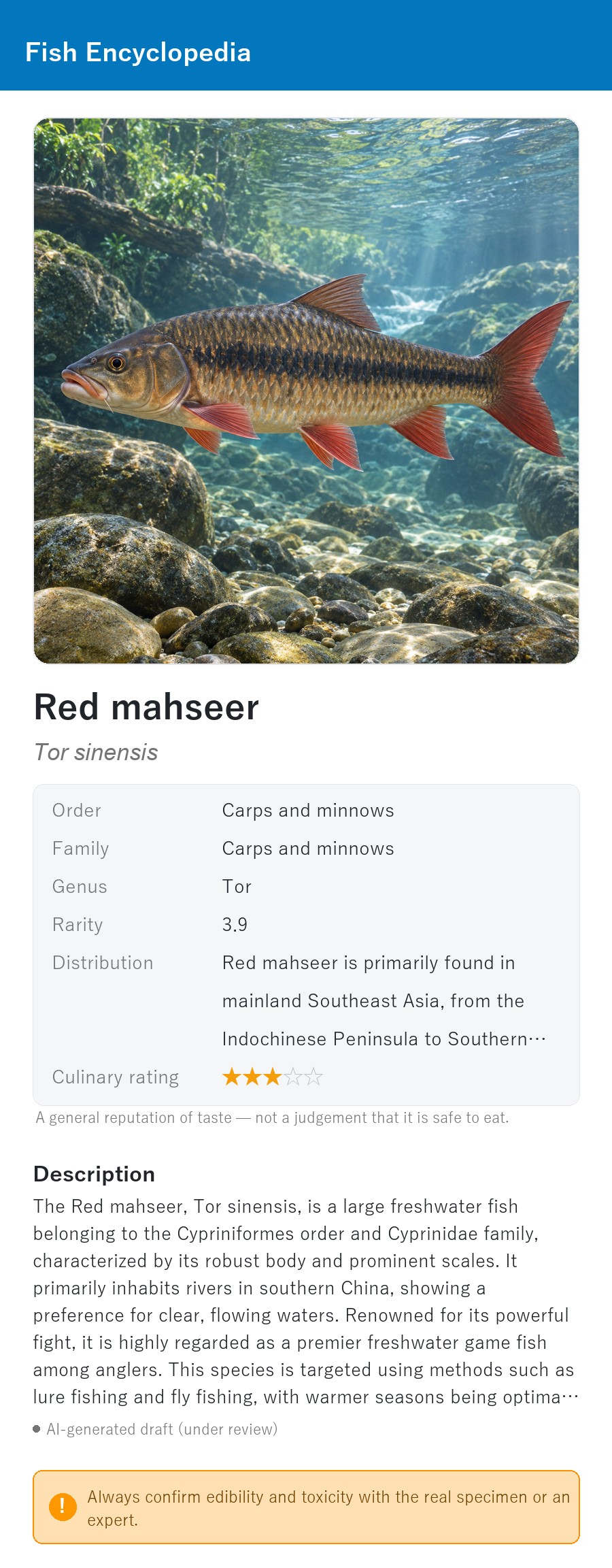
アプリの魚図鑑での表示イメージ。日本語・英語どちらの表示にも対応しています。
コイの仲間は、産地ごとに8つの章に分けて描きました。見た目のよく似たイベリア半島のバーベル6種は、それぞれが暮らす川の景色で描き分け、鱗の列に沿った黒い点と赤い尾の Barbus haasi や、全身がまだらの Barbus meridionalis も並びます。チグリス・ユーフラテス川からは、カワカマスのように細長い頭の「Pike barbel」と、口ひげを持たない「Binni」。アフリカからは赤い眼の「Redeye labeo」、東南アジアからはマハシールの仲間、北米からは尾の付け根に丸い黒斑がある「Spottail shiner」も加わりました。
ハゼの仲間は、礁や潮だまりにすむ種(テッポウエビと巣穴を分け合う種を含む)と、内湾・河口・マングローブの泥にすむ種に分けて描いています。尾の近くに青い輪が並ぶヤツシハゼ、白い体に褐色の点が散るコナユキハゼ、眼からえらぶたへ黒い「たすき」が走るタスキヒナハゼ、眼が退化してほとんど見えないヒゲワラスボなど。全長2〜3cmの小さな種は、寄った構図で描いています。
前回描き直しをお願いしていた紅海の「Haffara seabream」も、今回は黒い斑が本来の2か所だけで描かれ、タイ科も全種がそろいました。
1枚ずつ、目で確かめてきました
イラストは1種ごとに「この種はここが決め手」というメモを付けて依頼し、納品されたら寸法やファイル名の機械的なチェックに加えて、全部の絵を1枚ずつ目で見て種を照合してきました。以前、寸法も名前もすべて正しいのに別の種が描かれていた回があり、機械のチェックだけでは種の取り違えは見つからないと分かったためです。
決め手が描けていなかった絵は描き直しをお願いし、次の回でまとめて描き直してもらいました。「縦縞」ではなく「頭から尾へ」「背から腹へ」と書く、模様の無い種は「無地」と書き切る、似た種が並ぶ組は独立した表にまとめる——そうしたメモの書き方の工夫も、回を重ねるごとに積み上がっています。描き手がメモの誤りを資料で見つけて直してくれたこともありました。
約2,500種を2か月で描き上げてくれた描き手(共同運営者)に、心から感謝しています。
これから
- クラゲの仲間(104種)は、これまでどおりイラスト1枚で載せます(2枚目は描かない方針です)。
- 図鑑の中には、同じ種が別の学名で二重に載っている行などが少し残っています。これらは2枚目を描かずに、図鑑の整理を進めます。
- イラストの気になる点は、これからも見つけしだい直していきます。お気づきの点があれば、アプリの「バグ報告」からお知らせください。
ご注意
- 図鑑の絵は写真ではなくイラストです。 生息イメージ版は水中での見え方を伝えるために描いたもので、特定の個体や実際の撮影地を記録したものではありません。
- 毒の有無や種の判断は、必ず実物と専門家の確認をお願いします。 図鑑の表示は参考情報であり、安全を保証するものではありません。
- 解説の一部は AI による下書きで、順次見直しを進めています。お気づきの点はアプリの「バグ報告」からお知らせください。
- 名称・分類データは GBIF を出典としています。図鑑のイラストの著作権は世界釣りマップに帰属します。無断転載・二次利用はご遠慮ください。
The in-habitat illustrations we began on August 1 with 200 popular species are now complete, with this 13th batch. With the final 122 species added, all 2,811 fish, crustacean and mollusc species — shrimps, crabs, shellfish, squid and octopuses included — now have two illustrations, a plain one and an in-habitat one, that you can switch between. (Jellyfish are shown with a single illustration, by design.)
What "two illustrations" means
Each species has two pictures. The plain illustration is a specimen-style view that shows fin shape, markings and colour most clearly. The in-habitat illustration shows the same species in the place it actually lives — a sandy seabed, a kelp forest, mangrove mud, a mountain stream — so you can see where and how it swims.
Two months, thirteen batches
At first, in-habitat artwork was only made for species newly added in each encyclopedia expansion, which left 294 species with two illustrations in early August. We then started drawing in order of popularity, and part-way through switched to filling the families that were closest to complete — adding about 2,500 species over thirteen batches.
- August 1–3 (batches 1–3): 600 popular species. 494 → 694 → 894
- August 8 and 13 (batches 4–5): 1,094 → 1,294. From batch 5 we worked family by family
- September 12–19 (batches 6–9): 1,494 → 1,695 → 1,895 → 2,094, completing one small family after another
- September 21–25 (batches 10–12): 2,290 → 2,490 → 2,689, completing large families such as the requiem sharks, wrasses, salmon, rockfishes, jacks and groupers
- October 1 (batch 13, this one): 2,811. The carps and gobies, the last families left, are complete along with the sea breams — and with them, every fish family
The final 122 — carps and gobies
What remained were two very large families, the carps (82 species) and the gobies (39), plus one sea bream we had sent back for a redraw last time.
How species look in the app encyclopedia — available in both Japanese and English.
The carps were drawn in eight chapters by region. The six look-alike barbels of the Iberian Peninsula are told apart by the rivers they live in, alongside Barbus haasi with black dots along its scale rows and a red tail, and the all-over mottled Barbus meridionalis. From the Tigris and Euphrates come the long-headed, pike-like Pike barbel and the Binni, which has no barbels at all; from Africa, the red-eyed Redeye labeo; from Southeast Asia, the mahseers; and from North America, the Spottail shiner with a round black spot at the base of its tail.
The gobies were split into species of reefs and tide pools (including those that share burrows with snapping shrimps) and species of bays, estuaries and mangrove mud. The Ornate prawn-goby with blue rings near its tail, the white-bodied, brown-speckled Feia Goby, the Girdled Goby with a black "sash" from the eye across the gill cover, and the nearly eyeless tan worm goby. The smallest species, just 2–3 cm long, are drawn close up.
The Haffara seabream of the Red Sea, sent back last time, now has dark spots in only its two true places — and with it, every sea bream is complete as well.
Checked one by one
Each illustration was commissioned with a short note on what identifies the species, and every delivery was checked not only mechanically for dimensions and file names, but by looking at every single picture and verifying the species. We learned early on that a batch can be perfect on dimensions and names and still contain the wrong species, and that mechanical checks alone cannot catch that.
Pictures that missed a key feature were sent back and redrawn in the next batch. Along the way our notes got better: we write "head to tail" and "back to belly" instead of words like "stripe" that can be read either way, we spell out "plain" for species with no markings, and we gather look-alike species into their own tables. More than once, the illustrator also found a mistake in our notes and corrected it from the sources.
Our heartfelt thanks go to the illustrator — one of the two people who run this app — for drawing about 2,500 species in two months.
What's next
- Jellyfish (104 species) will keep a single illustration — we are not planning a second one.
- A few entries in the encyclopedia still need tidying — for example, the same species listed twice under different scientific names. We will tidy these up rather than draw second illustrations for them.
- We will keep fixing anything we find in the illustrations. If you spot something, please tell us through "Report a bug" in the app.
Notes
- These are illustrations, not photographs. The in-habitat version is drawn to convey how a species looks underwater; it does not record a particular individual or a real location.
- Always confirm identification and venomousness with the real specimen and an expert. Entries in the encyclopedia are reference information and are not a guarantee of safety.
- Some descriptions are AI-generated drafts that we are reviewing over time. If you spot an error, please tell us through "Report a bug" in the app.
- Names and taxonomy are sourced from GBIF. The encyclopedia illustrations are © World Fishing Map; please do not reproduce or reuse them without permission.