
魚図鑑のイラストは、種によって「白背景版」と「生息イメージ版」の2枚を用意しています。前回の196種に続いて、今回はさらに200種が2枚立てになり、合計2,490種になりました。収録種数は約2,939種のままで、種の追加はありません。
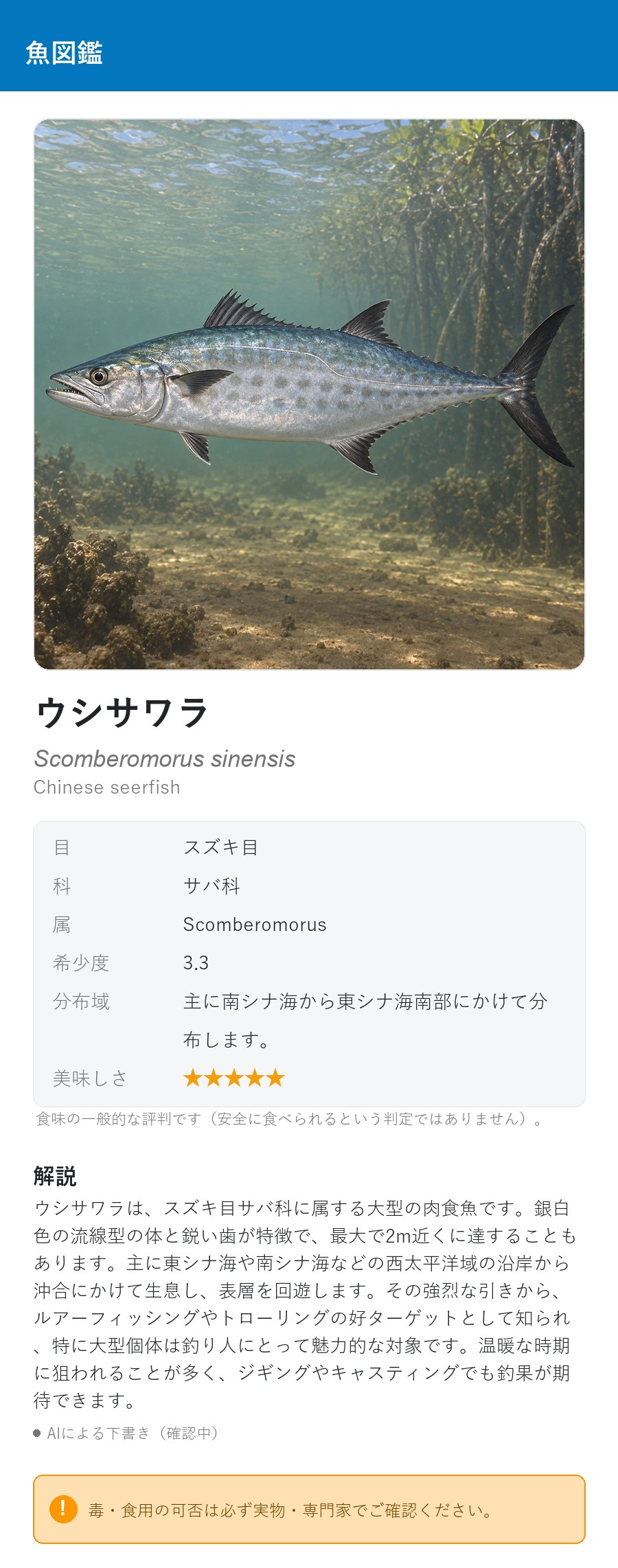
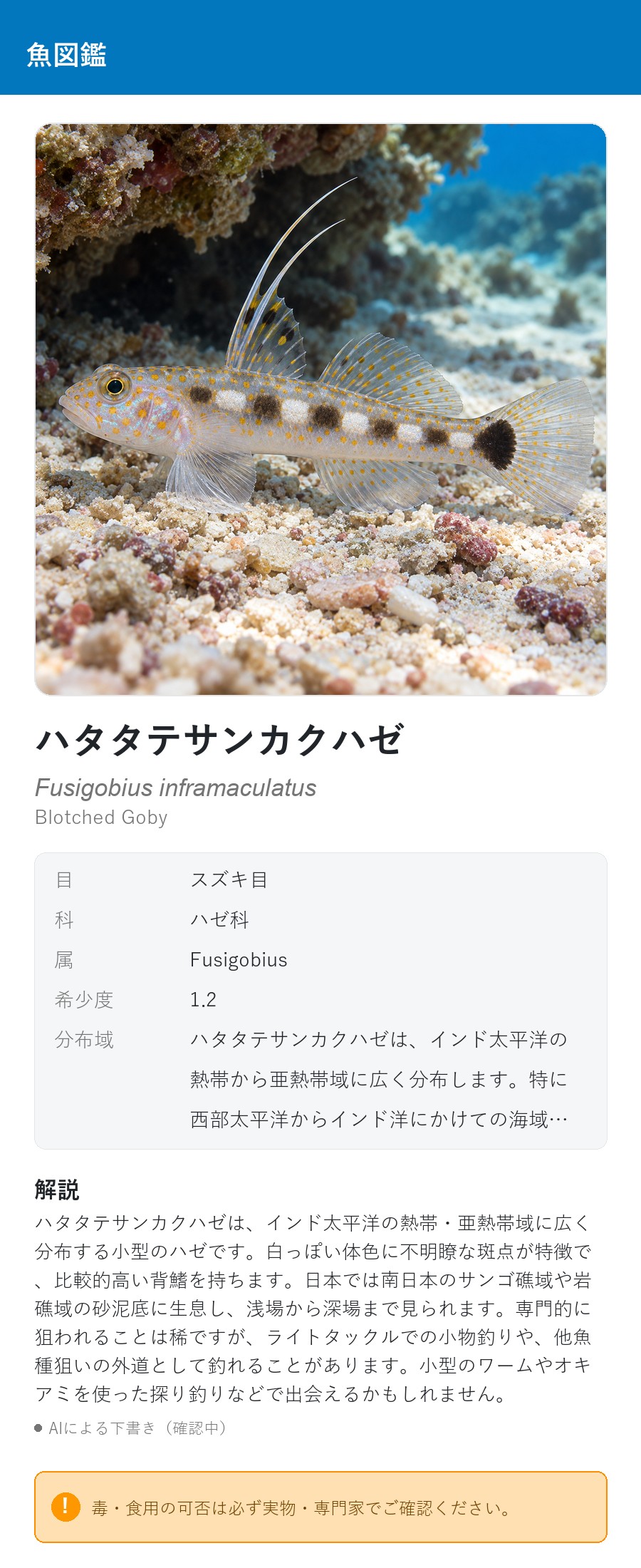
アプリの魚図鑑での表示イメージ。日本語・英語どちらの表示にも対応しています。イラストは左右にスワイプ(Web版はイラスト下の左右ボタン)で白背景版と切り替えられます。生息イメージ版がまだ用意できていない種は、これまでどおり白背景版の1枚だけを表示します。
今回は「その科の残り30〜34種」
図鑑は「目 → 科 → 属 → 種」とたどれます。前回までに「あと29種以内で揃う科」をすべて埋めたので、今回は「あと30種から34種で、その科の全種が2枚立てになる」5つの科をまとめて描きました。イソギンポ科・ベラ科・サケ科・カワスズメ科・フエダイ科です。
さらに、前回描き直しにしていたサバ科とチョウチョウウオ科の4種も届きました。これで7つの科は、科のページを開けばすべての種で2枚のイラストが切り替わるようになりました。残り種数がいちばん多いハゼ科も、今回は9つの属をまるごと描いています。
潮だまりの小さな住人、イソギンポ科
イソギンポの仲間は30種。岩の穴から顔を出す小さな魚たちで、頭の飾りと模様で種が分かれます。首の上に櫛のような皮弁が並ぶマーカスミノカエルウオ、真っ赤な網目のイナズマタテガミカエルウオ、頭に刃のようなとさかを持つセンカエルウオ、前が赤く後ろが黄色いヒナギンポ、背びれの棘が2本だけ長く突き出る「Laiphognathus multimaculatus」。マングローブの汽水にすむカワギンポとヒルギギンポ、砂泥底の巣穴にすむウナギのように細長いヒメウナギギンポも入りました。雌雄で色が違う種は、指定した側の色で描いています。
ベラ科は「どの色の時期で描くか」
ベラの仲間は32種。ベラは成長や性転換で色ががらりと変わるので、種ごとに「雄」「雌」「成魚」のどれで描くかを決めて依頼しました。豪州の巨大なベラ「Eastern blue groper」と「Western blue groper」(見た目ではほぼ見分けられないので、豪州の南東岸と南西岸の海で描き分け)、体の後ろを深紅の帯が1周する「Crimson-banded wrasse」、頬に赤い線の輪があるホホワキュウセン、前半が白く後半が黒いタレクチベラと白い帯が4本のシマタレクチベラ、白い楔形の帯のクサビベラ、背びれの棘が糸のように伸びるイトヒキオハグロベラ。ニシキベラ・オトメベラ・ヤマブキベラ・キヌベラ・リュウグウベラのニシキベラ属5種は、線の太さと向き、尾びれの色で描き分けています。
冷たい湖と川のサケ科
サケ・マスの仲間は32種、すべて婚姻色ではない普段の姿です。北米と欧州のコクチマス(ホワイトフィッシュ)の仲間は銀色で似た姿なので、口の位置(吻の先に開くか、吻の下で下を向くか、下あごが前へ出るか)で描き分けました。アリゾナの山の源流にすむ「Apache trout」(目を横切る黒い仮面)、メキシコの「Mexican golden trout」(成魚にも残る幼魚斑)、バルカン半島の固有のマス(オフリド湖の2種、ワインレッドの大きな斑の「Macedonian trout」、黒い帯が4本のローヌ水系のマス)、アルプスの湖の「Alpine char」、チュクチの隕石孔の湖の深みにすむ「Long-finned char」。カワヒメマス(グレイリング)の仲間7種は、帆のような背びれの模様と口の大きさが決め手です。
アフリカと中南米のシクリッド
カワスズメ(シクリッド)の仲間は34種、ほぼすべて淡水です。南米のピーコックバスは帯の本数と途切れ方で2種、ティラピアの仲間は尾びれに縞を入れない(有名なナイルティラピアの模様にしない)ことを確かめながら描きました。アフリカ南部の大型肉食シクリッド(Serranochromis)6種は顔の点と眼の線の有無で分かれます。中米の「Mayan cichlid」は尾の付け根の眼状斑、「Blackbelt cichlid」は腹の黒い帯、アマゾンの「Bigeye cichlid」は大きな眼と大きな口。ここも婚姻色ではない普段の色で統一し、名前の由来が婚姻色の「Black tilapia」だけは黒い姿で描いています。
フエダイ科は「線の本数と黒い斑の位置」
フエダイの仲間は34種。黄色い体に青い線が4本のベンガルフエダイ、淡い黄色の細い線が10本以上並ぶキュウセンフエダイ、胸びれの付け根に黒い斑がある「Dusky-striped Sea-perch」、側線にまたがる黒い丸斑の「Mahogany snapper」。西表島の浦内川の淡水にもすむウラウチフエダイは濁った川の中に描きました。水深100m以深のヒメダイ・アオダイの仲間は、背から下りる帯が4本のシマアオダイと5本のヤンバルシマアオダイ、上唇に肉質のこぶがあるキビレフエダイ、背びれの糸を引くイトヒキフエダイなど、薄暗い深場の情景です。
ハゼは「属ごと」まとめて
残り種数がいちばん多いハゼの仲間は、今回は属の残りを全部描いて9つの属を完結させました(34種)。サンゴやヤギ、海綿の上で暮らすハゼはすむ相手ごと描き分けています。枝サンゴの間にすむコバンハゼの仲間10種、ムチヤギに張り付くオオガラスハゼ、黄褐色のヤギにだけすむコビトガラスハゼ、カップ状の海綿のヤギハゼ、ウミショウブの葉の上のウミショウブハゼ、赤紫のトゲトサカのスケロクウミタケハゼ。砂地のサンカクハゼの仲間9種は、背びれの黒い斑の数と位置、糸のように伸びる棘の本数で見分けます。名前に反して相手を持たないミツボシガラスハゼは、海草の藻場に描いています。
なお、コバンハゼの仲間の2つの学名は、研究で「独立した種ではない」とされているため、今回は描いていません(図鑑側で整理する予定です)。
前回の描き直し4種が届きました
- ウシサワラ:決め手の「第1背びれの下で急に折れ曲がる側線」がはっきり描かれて届きました。
- ニシアフリカサワラ:体の斑が、本来の「背から腹の方向にやや細長い楕円が3列ほど」になりました。
- オニハタタテダイ・シマハタタテダイ:背びれの白い「旗」が、有名なハタタテダイのように長くならず、この2種本来の短い旗になりました。
これでサバ科とチョウチョウウオ科も全種そろいました。描き直しの依頼では「どこが違うか」と「正しくはどうか」を種ごとに書き、とくに「どこで止めるか」「どちら向きか」を言葉で指定するようにしたところ、4種とも一度で直りました。
描いてもらう前の検算も続けています
イラストは「この種はここが決め手」というメモを付けて依頼しています。学名や分布はデータベースから自動で入るので、間違いが残るとすればこの手書きのメモです。今回も依頼する前にメモを図鑑や魚類データベース、元の記載論文と突き合わせて直しました。たとえば上の「Eastern blue groper」は、最初「額にこぶは無い」と書いていましたが、資料を確かめると大きな個体は額がなだらかに盛り上がることが分かり、そのとおりに直しています。
全点を目視で確認、今回は描き直しゼロ
寸法やファイル名の機械的なチェックとは別に、納品されたイラスト200点すべてを1枚ずつ目で見て種を照合する工程を今回も行いました。気になった約30点は原寸で見直し、200点すべてが合格しました。間違った絵は掲載しない方針は変わりません。お気づきの点があれば、ぜひアプリの「バグ報告」からお知らせください。
ご注意
- 図鑑の絵は写真ではなくイラストです。 生息イメージ版は水中での見え方を伝えるために描いたもので、特定の個体や実際の撮影地を記録したものではありません。
- 毒の有無や種の判断は、必ず実物と専門家の確認をお願いします。 図鑑の表示は参考情報であり、安全を保証するものではありません。
- 解説の一部は AI による下書きで、順次見直しを進めています。お気づきの点はアプリの「バグ報告」からお知らせください。
- 名称・分類データは GBIF を出典としています。図鑑のイラストの著作権は世界釣りマップに帰属します。無断転載・二次利用はご遠慮ください。
Encyclopedia illustrations come in two versions — a plain one and an in-habitat one. Following the previous 196 species, another 200 now have both versions, for a total of 2,490 species. No species were added; the encyclopedia still covers about 2,939.
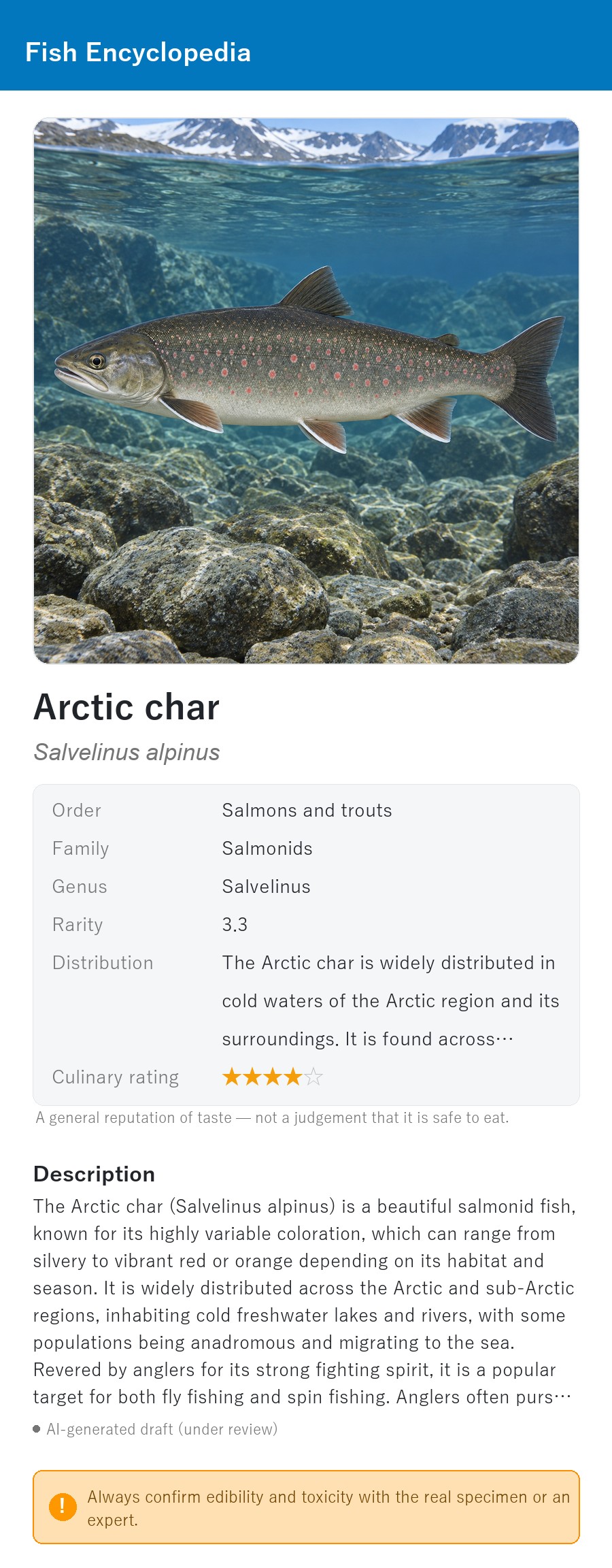
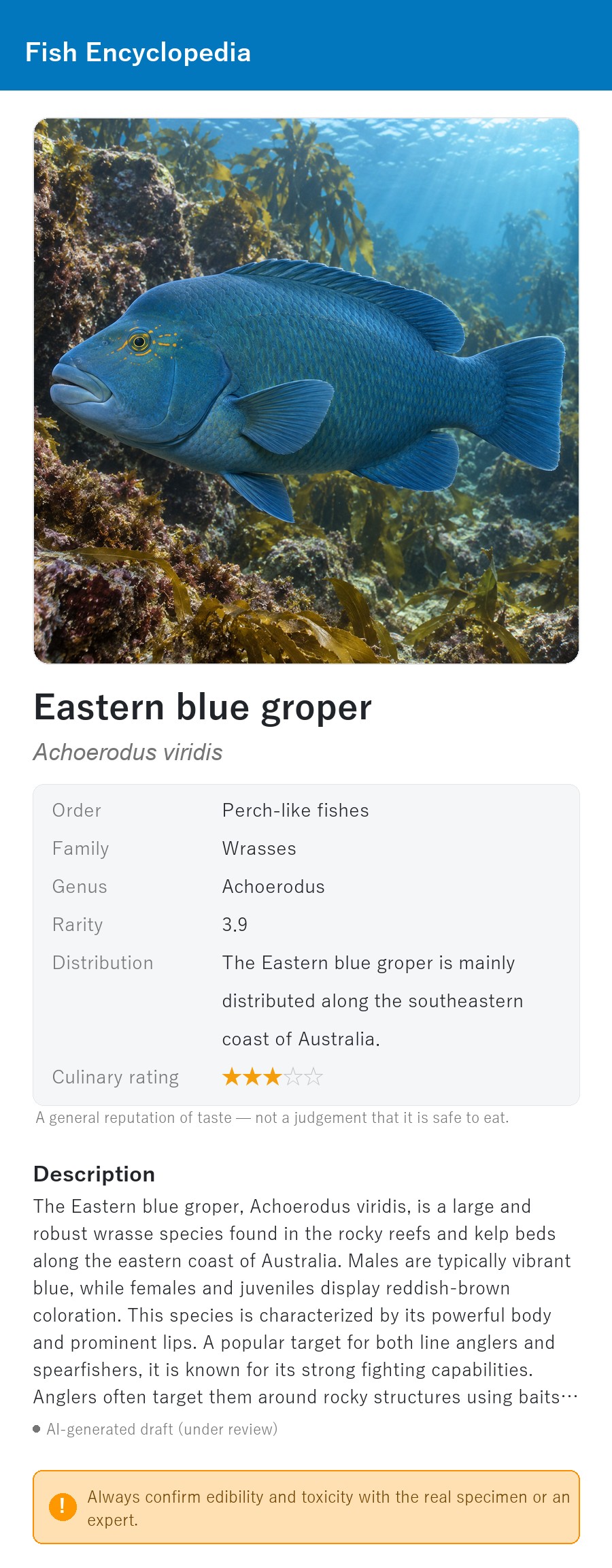
How species look in the app encyclopedia — available in both Japanese and English. Swipe the illustration left or right to switch versions (on the web, use the arrow buttons below it). Species without in-habitat artwork simply show the single plain illustration, exactly as before.
This time: families 30 to 34 species short
The encyclopedia is browsable by order, family, genus and species. Having already filled every family that was 29 or fewer species short, this time we took on the five families that were 30 to 34 species short of complete coverage: the combtooth blennies, wrasses, salmon and trout, cichlids, and snappers.
The four mackerels and butterflyfishes sent back last time have also arrived, so in seven families every species now switches between both illustrations. For the gobies — still the family with the most to go — we completed nine whole genera this time.
Combtooth blennies of the tide pools
Thirty blennies, small fish that peer out of holes in the rock and are told apart by their head ornaments and markings: the Squiggly blenny with a comb of cirri across the nape, the Redstreaked blenny with its bright red network, the Lined rockskipper with a blade-like crest on the head, the Christmas blenny that is red in front and yellow behind, and Laiphognathus multimaculatus with just two dorsal spines standing tall. Also the Gossamer blenny and Omox blenny of brackish mangrove creeks, and the eel-like Japanese snake blenny that lives in a burrow in sandy mud. Where the sexes differ, each is drawn in the colours we specified.
Wrasses: which colour phase to draw
Thirty-two wrasses. Wrasses change colour dramatically as they grow and change sex, so for each species we specified male, female or adult. Australia's giant Eastern and Western blue gropers (nearly identical, so set in the southeastern and southwestern Australian seas), the Crimson-banded wrasse with a deep red band around its rear body, the Circle-cheek wrasse with a ring-shaped red line on the cheek, the Blackeye thicklip split white in front and black behind and the Barred thicklip with four white bars, the Orange-dotted tuskfish with its white wedge, and the Cocktail wrasse with long filamentous dorsal spines. Five Thalassoma wrasses are told apart by the width and direction of their lines and the colour of their tails.
Salmon and trout of cold lakes and rivers
Thirty-two salmonids, all in their everyday, non-spawning colours. The whitefishes of North America and Europe are similar silvery fish, so we drew them apart by where the mouth sits — at the tip of the snout, tucked beneath it, or with the lower jaw jutting forward. Also the Apache trout of Arizona's mountain headwaters with a black mask through the eye, the Mexican golden trout that keeps its parr marks as an adult, endemic trouts of the Balkans (two from Lake Ohrid, the Macedonian trout with large wine-red spots, and a Rhône trout with four black bars), the Alpine char of Alpine lakes, and the Long-finned char from the depths of a meteorite-crater lake in Chukotka. The seven graylings are told apart by the pattern of their sail-like dorsal fin and the size of the mouth.
Cichlids of Africa and Latin America
Thirty-four cichlids, nearly all freshwater. Two South American peacock basses told apart by the number of bars and how they break up, and tilapias drawn without the tail stripes of the familiar Nile tilapia. The six large predatory Serranochromis of southern Africa differ in whether the face is spotted and whether a line runs through the eye. From Central America, the Mayan cichlid with an eyespot at the tail base and the Blackbelt cichlid with its dark belly band; from the Amazon, the big-eyed, big-mouthed Bigeye cichlid. All are drawn in everyday rather than breeding colours, except the Black tilapia, whose name comes from its dark breeding dress.
Snappers: how many lines, and where the black spot sits
Thirty-four snappers: the Bengal snapper, yellow with four blue lines; the Yellow-lined snapper with ten or more fine pale-yellow lines; the Dusky-striped sea-perch with a black spot at the pectoral fin base; and the Mahogany snapper with a round black spot on the lateral line. The Papuan black snapper, which also lives in the fresh water of Iriomote Island's Urauchi River, is drawn in a murky river. The deep-water jobfishes and rubylips from below 100 m are set in dim blue depths: the Saddle-back snapper with four bars and the Cocoa snapper with five, the Tang's snapper with a fleshy knob on the upper lip, and the Chinamanfish trailing dorsal filaments.
Gobies, one whole genus at a time
For the gobies, we drew every remaining species in a genus and completed nine genera (34 species). Gobies that live on corals, sea fans or sponges are drawn on their own host: ten coral gobies among branching corals, the Large whip goby on a whip coral, the Gorgonian whipgoby only on its tan sea fan, the Cup-sponge goby in a cup-shaped sponge, the Bilobed ghost goby on the leaves of Enhalus seagrass, and Boldingh’s ghostgoby on a red-purple soft coral. Nine sand-gobies are told apart by the number and position of black spots on the first dorsal fin and how many spines are drawn out into filaments. The Blackspot minigoby — a “glass goby” by its Japanese name — has no known host, so it is drawn in a seagrass meadow.
Two coral-goby names were not drawn, because research no longer treats them as separate species (we plan to tidy them up in the encyclopedia).
Last time's four redraws have arrived
- Chinese seerfish: now with its key feature clearly drawn — a lateral line that bends sharply downward below the first dorsal fin.
- West African Spanish mackerel: the spots are now the correct shape, slightly taller than long, in about three rows.
- Masked bannerfish (Heniochus monoceros) and Singular bannerfish (H. singularius): the white dorsal banner is now the short one these two species really have, not the long streamer of the well-known Pennant coralfish.
The mackerels and butterflyfishes are now complete too. In the redraw request we wrote down, species by species, what was wrong and what is right — and spelled out where a feature should stop and which way it should run. All four were fixed on the first try.
We keep checking the brief before ordering
Each illustration is commissioned with a short note on what identifies the species. Names and ranges come straight from the database, so any remaining mistakes live in those hand-written notes. Again this time, we checked the notes against field guides, fish databases and the original descriptions before ordering. For example, we had first written that the Eastern blue groper has "no bump on the forehead", but the sources show that large individuals develop a gently raised forehead, and we corrected the note accordingly.
Every illustration checked by eye — none sent back
Alongside the mechanical checks on dimensions and file naming, we again reviewed all 200 delivered illustrations one by one and verified each species, taking a full-size second look at about 30 of them. All 200 passed. Our policy of never publishing incorrect artwork is unchanged. If you spot something, please tell us through "Report a bug" in the app.
Notes
- These are illustrations, not photographs. The in-habitat version is drawn to convey how a species looks underwater; it does not record a particular individual or a real location.
- Always confirm identification and venomousness with the real specimen and an expert. Entries in the encyclopedia are reference information and are not a guarantee of safety.
- Some descriptions are AI-generated drafts that we are reviewing over time. If you spot an error, please tell us through "Report a bug" in the app.
- Names and taxonomy are sourced from GBIF. The encyclopedia illustrations are © World Fishing Map; please do not reproduce or reuse them without permission.