
魚図鑑のイラストは、種によって「白背景版」と「生息イメージ版」の2枚を用意しています。前回の200種に続いて、今回はさらに200種に生息イメージ版を追加しました。2枚立てになった種は合計1,094種で、収録種の約4割に届いています。収録種数は約2,940種のままで、種の追加はありません。
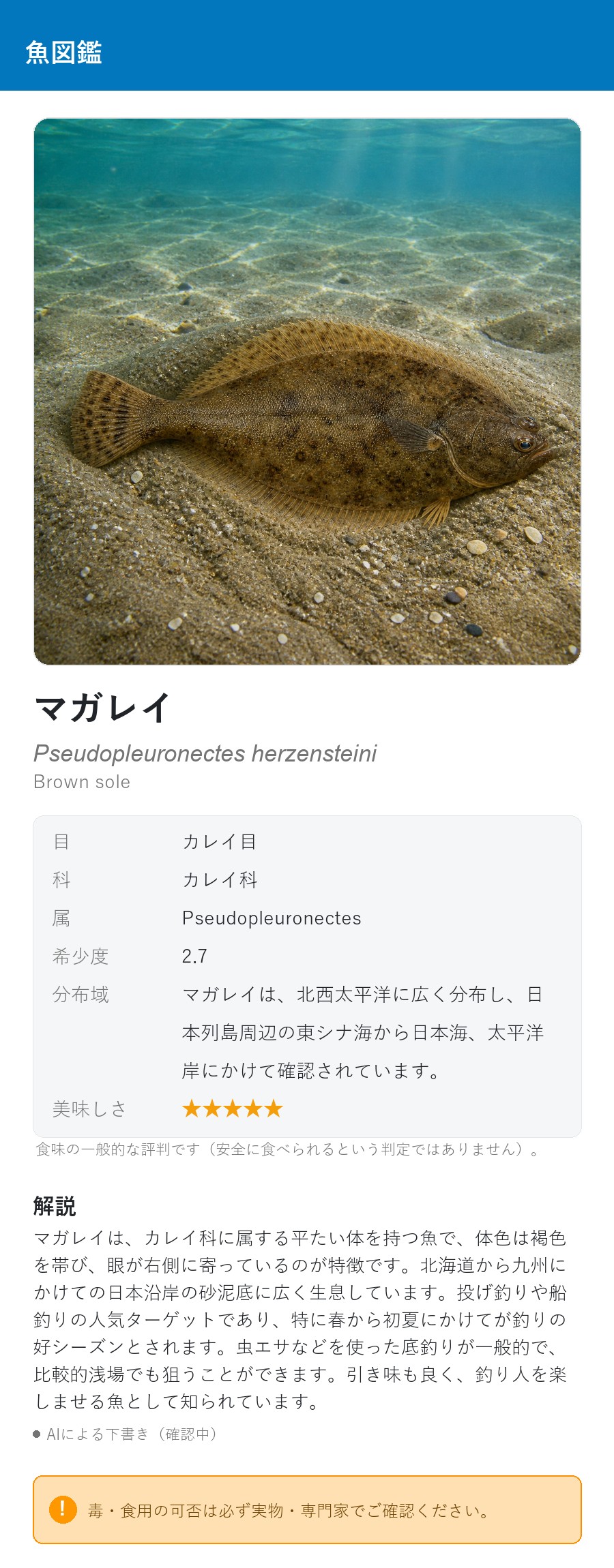
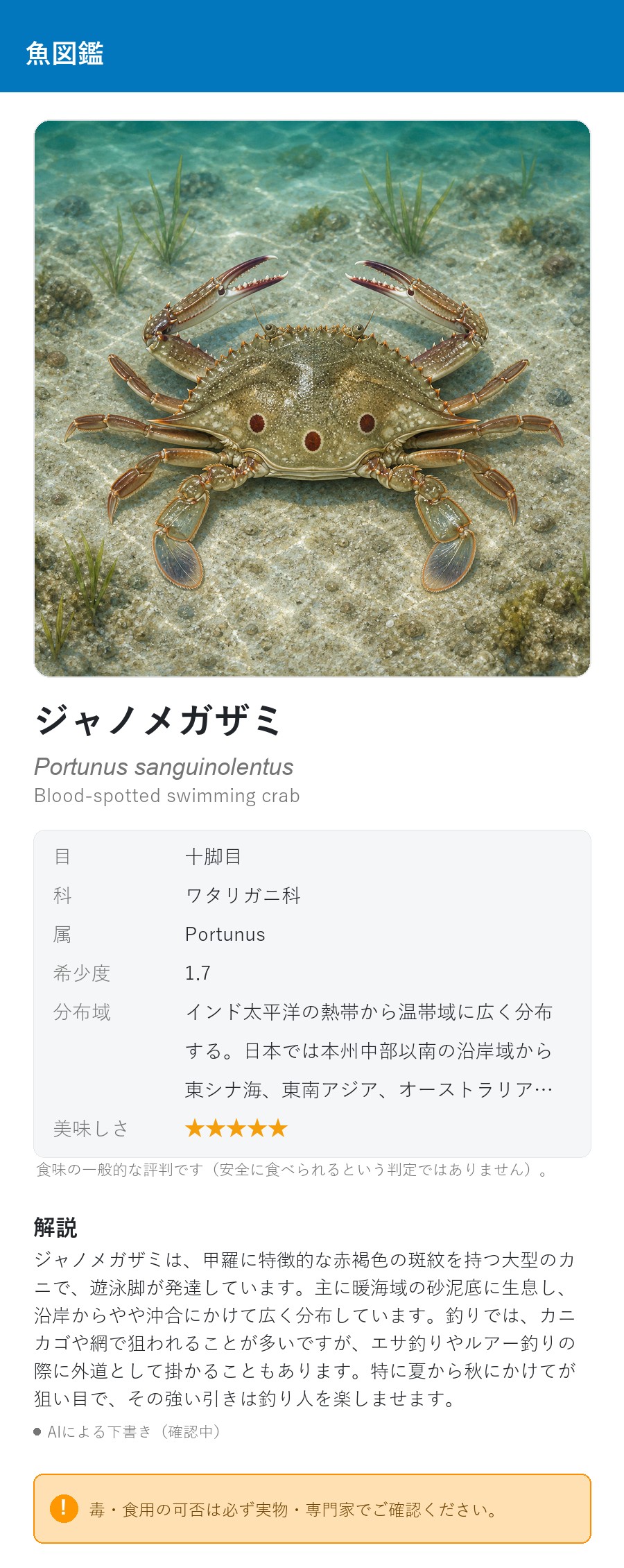
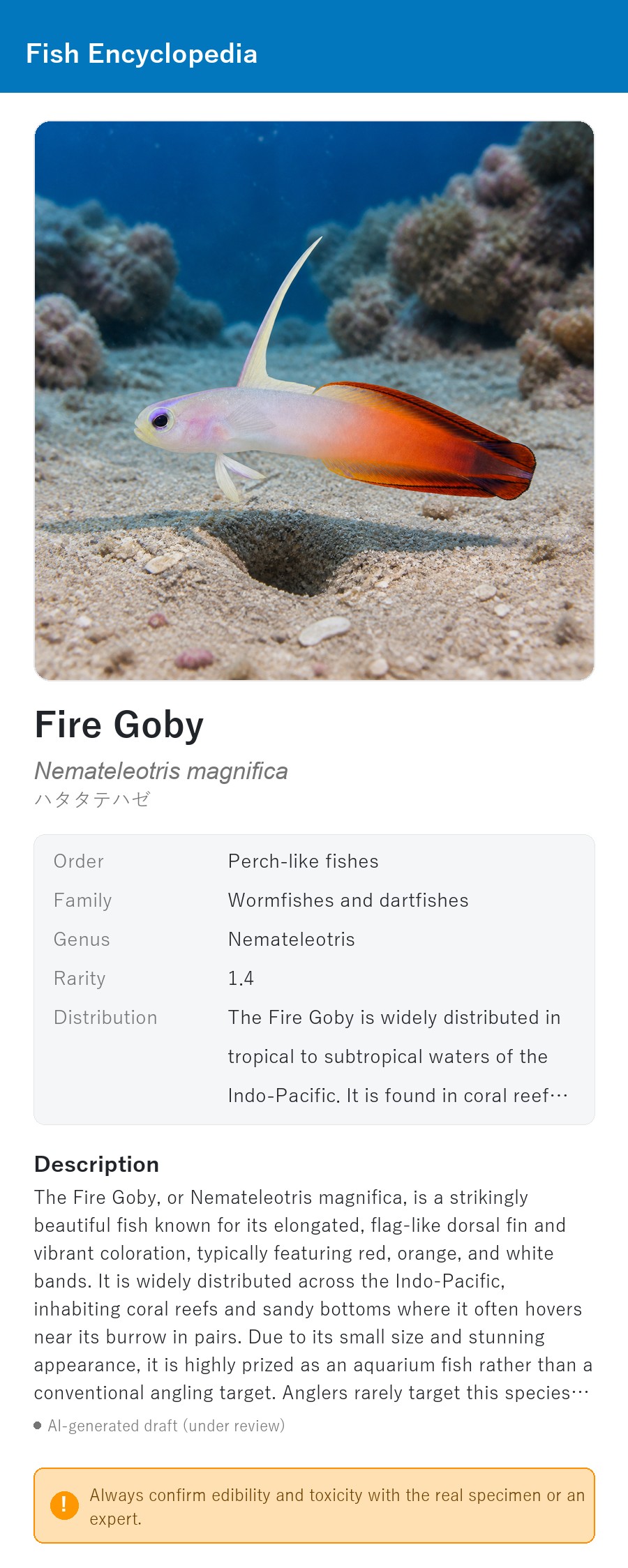
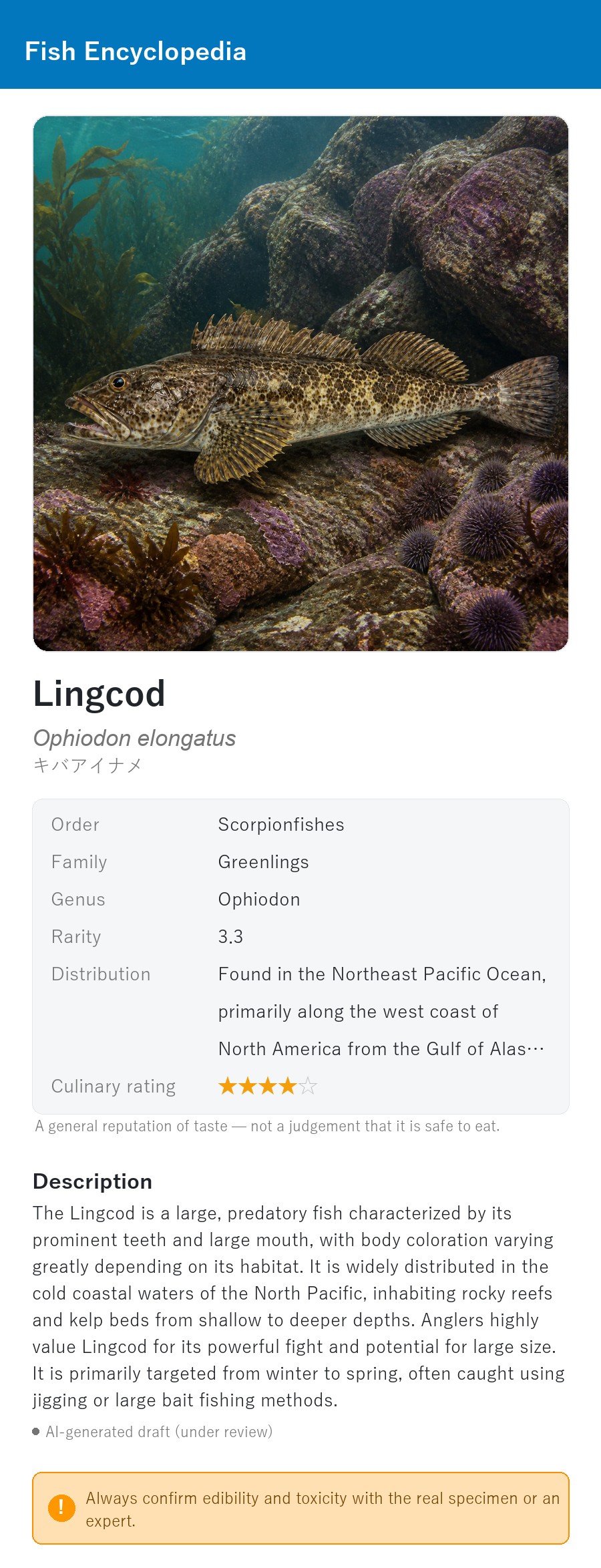
アプリの魚図鑑での表示イメージ。日本語・英語どちらの表示にも対応しています。イラストは左右にスワイプ(Web版はイラスト下の左右ボタン)で白背景版と切り替えられます。生息イメージ版がまだ用意できていない種は、これまでどおり白背景版の1枚だけを表示します。
今回は「一軍の次に、実際によく釣れる魚」へ
これまでの3回で、マダイやブリのような看板の魚、世界のビッグゲーム、そして「調べたくなる魚」を埋めてきました。4回目の今回は、釣り場で当たり前のように顔を出すのに、図鑑では白背景1枚のままだった魚を選んでいます。メバル・ソイ・カサゴの根魚、マガレイやババガレイといったカレイの仲間、南の島のハタとフエダイ。どれも似た仲間が何種も並ぶグループで、住んでいる場所ごと描くと違いが伝わりやすくなります。
カレイの仲間は「眼のある側」の向きまで揃えました
カレイ目の魚は、種によって眼が体の右側にあるもの(カレイ科など)と左側にあるもの(ヒラメ科など)に分かれます。今回はこの向きを1種ずつ指定して描き分け、11種すべてを確認しました。ヌマガレイのように「カレイ科なのに日本産は眼が左にある」例外もそのとおりに描いています。ウシノシタ科(イヌノシタ)は左眼性、ササウシノシタ科(オビウシノシタ)は右眼性と、科の名前から受ける印象とは逆の関係になる点も反映しました。
今回追加したおもな種
- メバル・ソイ・カサゴ類(日本の根魚)(11種) — シロメバル・タケノコメバル・キツネメバル・タヌキメバル・ヨロイメバル・ヤナギノマイ・シマゾイ・ハツメ・ユメカサゴ・アヤメカサゴ・ウッカリカサゴ。
- カレイ・ヒラメ・ウシノシタ(11種) — マガレイ・アカガレイ・ソウハチ・ムシガレイ・ババガレイ・ヤナギムシガレイ・ヌマガレイ・カラスガレイ・ガンゾウビラメ・イヌノシタ・オビウシノシタ。
- 南方・サンゴ礁のターゲット(25種) — サラサハタ・カンモンハタ・アオノメハタ・カスリハタ・マダラハタ・マハタモドキ・ホウキハタ・ツチホゼリのハタ類、フエダイ・クロホシフエダイ・ヨスジフエダイ・イッテンフエダイ・ヒメフエダイ・マダラタルミ・オオヒメ・ハチジョウアカムツのフエダイ類、フエフキダイ・メイチダイ・シロダイ・ノコギリダイ・ヨコシマクロダイ、タカサゴ・ウメイロモドキ・オジサン・アカヒメジ。
- 世界のゲームフィッシュ・食用魚(海)(20種) — ソトイワシ・カライワシ・ネズミフエダイ・ミナミバラフエダイ・ブラックシーバス・キバアイナメ・コダラ。海外勢では「Yellowtail snapper」「Mutton snapper」「Gag grouper」「Kelp bass」「King George whiting」「Dusky flathead」「Australian salmon」「Australian bass」「Black snook」「European conger」「Atlantic wolffish」「Sablefish」「Common sole」。
- 世界の淡水ゲーム・怪魚・地域魚(24種) — タタウイア・パヤラ・コロンビアン・ドラード・カトラ・スポットナイフフィッシュ・キノボリウオ・カワスズメ・アミア・ショートノーズガー・フロリダガーなど。「Speckled peacock bass」「Nile tigerfish」「Giant wolf fish」「Trahira」「Biara」「Black mahseer」「Rohu」「Giant pangasius」「Basa catfish」「Striped snakehead」「Barca snakehead」「Jaguar guapote」「Jack Dempsey」「Golden perch」「Zander」も含みます。
- リーフ・水族館の人気者(20種) — ハタタテハゼ・ニシキアナゴ・キイロサンゴハゼ・ネジリンボウ・ギンガハゼ・ルリスズメダイ・オヤビッチャ・ミスジチョウチョウウオ・アケボノチョウチョウウオ・オオフエヤッコダイ・カスミチョウチョウウオ・ミナミハタタテダイ・チリメンヤッコ・ヤエヤマギンポ・フタイロカエルウオ・メガネゴンベ・アカモンガラ・ツバメウオ・カンムリベラなど。
- 沿岸・堤防の身近な魚/深場の高級魚(20種) — タカベ・カゴカキダイ・クロメジナ・ウミタナゴ・シマイサキ・キントキダイ・ウスバハギ・アミメハギ・オキザヨリ・ブダイ・フサギンポ、メダイ・アブラボウズ・マナガツオ・シマガツオ・イタチウオ・クロアナゴ・シシャモなど。
- タイ・イサキ・イトヨリ/コチ・ホウボウ・北の海の魚(19種) — ヘダイ・ミナミクロダイ・コロダイ・コショウダイ・セトダイ・ヒゲダイ・イトヨリダイ・キアマダイ、ワニゴチ・メゴチ・ミナミホウボウ・カナド・ウサギアイナメ・キタノホッケ・コマイ・トゲカジカ・ギスカジカ・ケムシカジカ。
- 日本の淡水魚・身近な水辺(14種) — ソウギョ・コクレン・キンブナ・タモロコ・ムギツク・タイリクバラタナゴ・ヌマムツ・カワヒガイ・シマドジョウ・ヤマノカミ・イワトコナマズ・カマキリ・ウキゴリ・カワヨシノボリ。
- 毒を持つ魚・サメ・エイ(15種) — イズカサゴ・フサカサゴ・ダルマオコゼ・ヒメオコゼ・ハチ・ミシマオコゼ・ミナミゴンズイ・アカザは、毒のある棘が見える角度で描いています。ウシエイ・ツカエイ・オトメエイ・ハチノスオトメエイ・アミメトビエイ・アオスジトビエイ・ニュージーランドホシザメは、これまでと同じく恐怖を煽らず生態が伝わる自然な姿にしています。
- イカ・タコ・甲殻類・貝(21種) — スナダコ・シマダコ・ジャコウダコ・ヒメコウイカ・アルゼンチンマツイカ・ヒラケンサキイカ、シマイシガニ・ジャノメガザミ・アカテノコギリガザミ・ヒラツメガニ・ウチダザリガニ、アカガイ・イワガキ・トコブシ・イガイ・ヒオウギガイ・バカガイ・ナミガイ・アカニシなど。貝は砂に潜って水管を出す・岩に固着するといった「暮らしている姿」で描いています。
全点を目視で確認しています
今回から、寸法やファイル名の機械的なチェックとは別に、納品されたイラスト全点を1枚ずつ目で見て種を照合する工程を入れました。その結果、200点のうち20点で「別の種の姿になっている」「解説と特徴が食い違う」といった問題が見つかり、正しい特徴を1種ずつ書き出して描き直してもらっています。この記事で公開している1,094種は、その確認を通ったものです。
ご注意
- 図鑑の絵は写真ではなくイラストです。 生息イメージ版は水中での見え方を伝えるために描いたもので、特定の個体や実際の撮影地を記録したものではありません。
- 毒の有無や種の判断は、必ず実物と専門家の確認をお願いします。 図鑑の表示は参考情報であり、安全を保証するものではありません。
- 解説の一部は AI による下書きで、順次見直しを進めています。お気づきの点はアプリの「バグ報告」からお知らせください。
- 名称・分類データは GBIF を出典としています。図鑑のイラストの著作権は世界釣りマップに帰属します。無断転載・二次利用はご遠慮ください。
Encyclopedia illustrations come in two versions — a plain one and an in-habitat one. Following the previous 200 species, this update adds in-habitat artwork for 200 more. 1,094 species now have both — close to 40% of the encyclopedia. No species were added; it still covers about 2,940.
How species look in the app encyclopedia — available in both Japanese and English. Swipe the illustration left or right to switch versions (on the web, use the arrow buttons below it). Species without in-habitat artwork simply show the single plain illustration, exactly as before.
This time: the fish you actually catch, just below the headliners
The first three batches covered Japan's marquee species, the world's big game, and the fish you look up because you are not sure what you caught. This fourth one goes to the species that turn up constantly on the water yet still had only a plain illustration — rockfishes and other structure-loving fish, the flounders, and the groupers and snappers of southern reefs. All of them come in sets of confusingly similar relatives, and drawing them where they live makes the differences easier to read.
Flatfish are drawn facing the correct way
In flatfish, the eyes sit on the right side of the body in some families and the left in others. For this batch we specified the orientation species by species and checked all eleven. The starry flounder is drawn as an exception — it belongs to the right-eyed family, but Japanese populations are almost always left-eyed. We also captured a pairing that runs against intuition: tonguefishes (Cynoglossidae) are left-eyed while soles (Soleidae) are right-eyed, despite their names suggesting otherwise.
What this update covers
- Rockfishes and structure fish of Japan (11) — White rockfish, Oblong rockfish, Yellow body rockfish, Threestripe rockfish, Owston's rockfish, Hilgendorf saucord and five more.
- Flounders, halibuts and soles (11) — Brown sole, Flathead flounder, Pointhead flounder, Shotted halibut, Slime flounder, Willowy flounder, Starry flounder, Greenland halibut, Cinnamon flounder, Robust tongue sole and Banded sole.
- Groupers, snappers and emperors of southern reefs (25) — Barramundi Cod, Honeycomb grouper, Peacock grouper, Potato grouper, Camouflage grouper, Eightbar grouper, Comet grouper and Speckled blue grouper; Star snapper, Russell's snapper, Common bluestripe snapper, One-spot snapper, Humpback Red Snapper, Black Beauty, Crimson jobfish and Deep-water red snapper; Chinese emperor, Grey large-eye bream, Japanese large-eye bream, Striped large-eye bream and Bigeye Bream; plus Double-lined fusilier, Yellow and blueback fusilier, Manybar goatfish and Yellowfin goatfish.
- Game and food fish of the world's seas (20) — Longfin bonefish, Hawaiian ladyfish, Gray snapper, Red Snapper, Yellowtail snapper, Mutton snapper, Gag grouper, Black sea bass, Kelp bass, King George whiting, Dusky flathead, Australian salmon, Australian bass, Black snook, European conger, Atlantic wolffish, Sablefish, Lingcod, Haddock and Common sole.
- Freshwater sport fish and oddities of the world (24) — Tatauaia payara, Colombian dorado, Catla, Rohu, Clown featherback, Climbing perch, Mozambique tilapia, Bowfin, Shortnose gar and Florida gar; plus Speckled peacock bass, Nile tigerfish, Giant wolf fish, Trahira, Biara, Black mahseer, Giant pangasius, Basa catfish, Striped snakehead, Barca snakehead, Jaguar guapote, Jack Dempsey, Golden perch and Zander.
- Reef and aquarium favourites (20) — Fire Goby, Orange-barred Garden Eel, Okinawa Goby, Yellow-snout Shrimp-goby, Banded Prawn Goby, Blue Damselfish, Indo-Pacific Sergeant, Oval Butterflyfish, Black-back Butterflyfish, Big Longnose Butterflyfish, Brushytoothed Butterflyfish, Horned Bannerfish, Vermiculated Angelfish, Jewelled blenny, Bicolor Blenny, Arc-eye Hawkfish, Red-toothed triggerfish, Longfin batfish, Dragon moray eel and Clown coris.
- Inshore regulars and deep-water delicacies of Japan (20) — Yellowstriped butterfish, Stripey, Smallscale blackfish, Surfperch, Sharpbeak terapon, Red bigeye, Unicorn leatherjacket, White-spotted pygmy filefish, Hound needlefish, Japanese parrotfish and Japanese Warbonnet; plus Japanese butterfish, Skilfish, Silver pomfret, Pacific pomfret, Goatsbeard brotula, Beach conger and Shishamo smelt.
- Seabreams, sweetlips, flatheads and northern fish (19) — Goldlined seabream, Okinawan black porgy, Painted sweetlips, Crescent sweetlips, Broadbanded velvetchin, Long barbeled grunter, Golden threadfin bream and Yellow horsehead; plus Crocodile flathead, Bluefin gurnard, Rock greenling, Atka mackerel, Saffron cod, Great sculpin, Frog sculpin and Sea raven.
- Freshwater fish of Japan (14) — Grass carp, Bighead carp, Field gudgeon, Black stripe gudgeon, Rosy bitterling, Japanese dark chub, Oily gudgeon, Striped loach, Four gill fish, Biwa rock catfish, Fourspine sculpin, Floating goby and River goby.
- Venomous fish, sharks and rays (15) — Izu scorpionfish, Onaria scorpionfish, Pitted stonefish, Grey stingfish, Ocellated waspfish, Japanese stargazer, Striped eel catfish and Torrent catfish are drawn at an angle where the venomous spines are visible. Brown Stingray, Broad Cowtail Ray, Whitespotted whipray, Honeycomb Whipray, Ornate eagle ray, Banded Eagle Ray and Rig are, as always, drawn as animals going about their lives — not as monsters.
- Squid, octopus, crustaceans and shellfish (21) — Dollfus's octopus, Ornate octopus, Mediterranean eledone, Kobi cuttlefish, Argentine shortfin squid and Mitre squid; Striped swimming crab, Blood-spotted swimming crab, Orange mud crab, Signal crayfish and more; Bloody clam, Iwagaki oyster, Small abalone, Korean mussel, Noble scallop, Chinese mactra, Japanese geoduck and Veined rapa whelk. Shellfish are shown as they live — buried with siphons extended, or fixed to rock.
Every illustration was checked by eye
Alongside the mechanical checks on file size and naming, we now review every delivered illustration individually and verify the species. Twenty of the 200 turned out to show the wrong animal or to contradict the described features, and each was redrawn from a written list of the correct diagnostic details. The 1,094 species published here have all passed that review.
Notes
- These are illustrations, not photographs. The in-habitat version is drawn to convey how a species looks underwater; it does not record a particular individual or a real location.
- Always confirm identification and venomousness with the real specimen and an expert. Entries in the encyclopedia are reference information and are not a guarantee of safety.
- Some descriptions are AI-generated drafts that we are reviewing over time. If you spot an error, please tell us through "Report a bug" in the app.
- Names and taxonomy are sourced from GBIF. The encyclopedia illustrations are © World Fishing Map; please do not reproduce or reuse them without permission.