
「生息イメージ」のイラストをさらに200種へ追加しました(合計1,494種)
魚図鑑のイラストは、種によって「白背景版」と「生息イメージ版」の2枚を用意しています。前回の200種に続いて、今回はさらに200種が2枚立てになり、合計1,494種になりました。収録種数は約2,941種のままで、種の追加はありません。
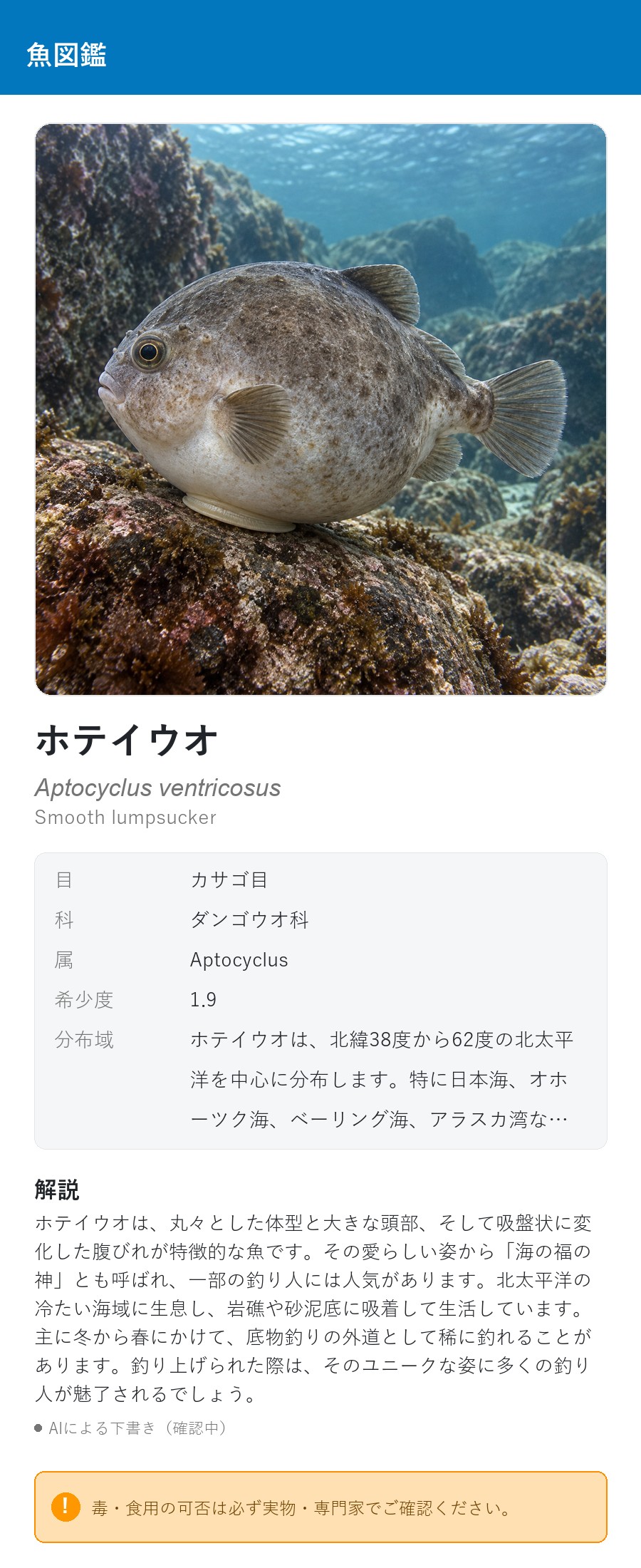
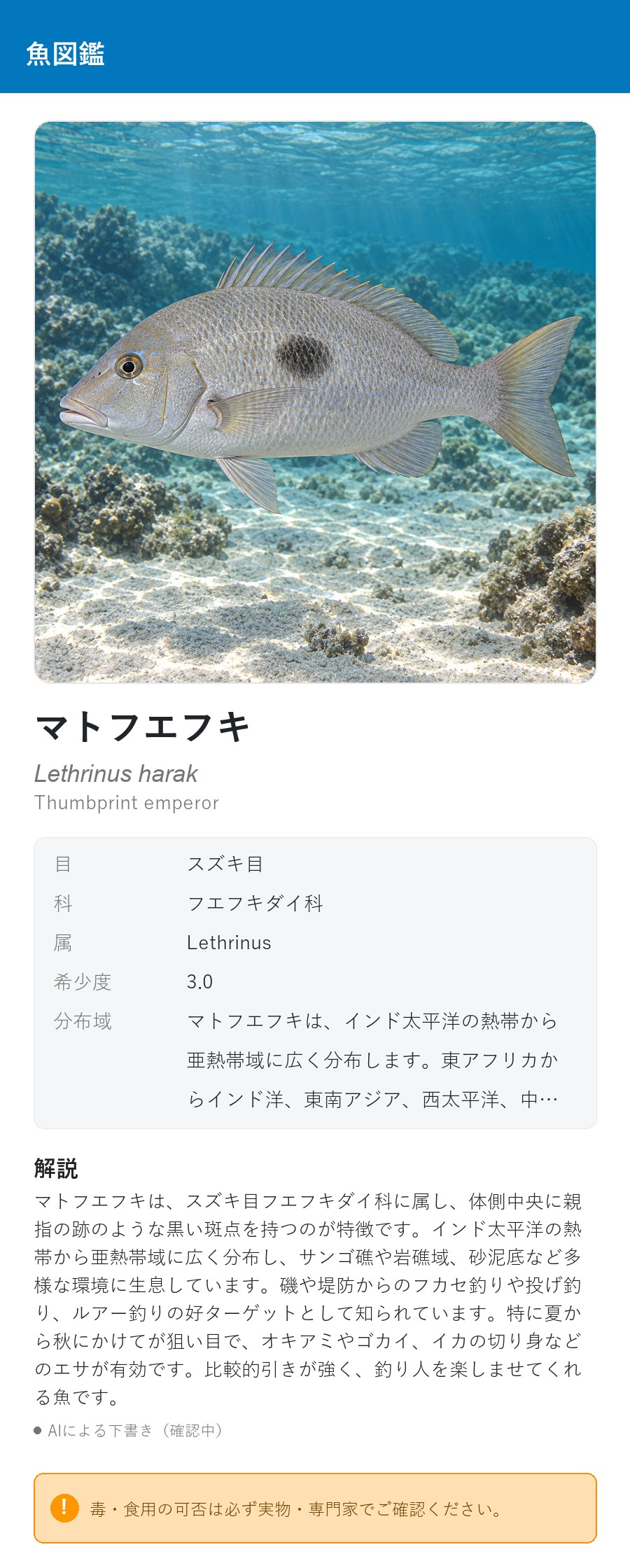
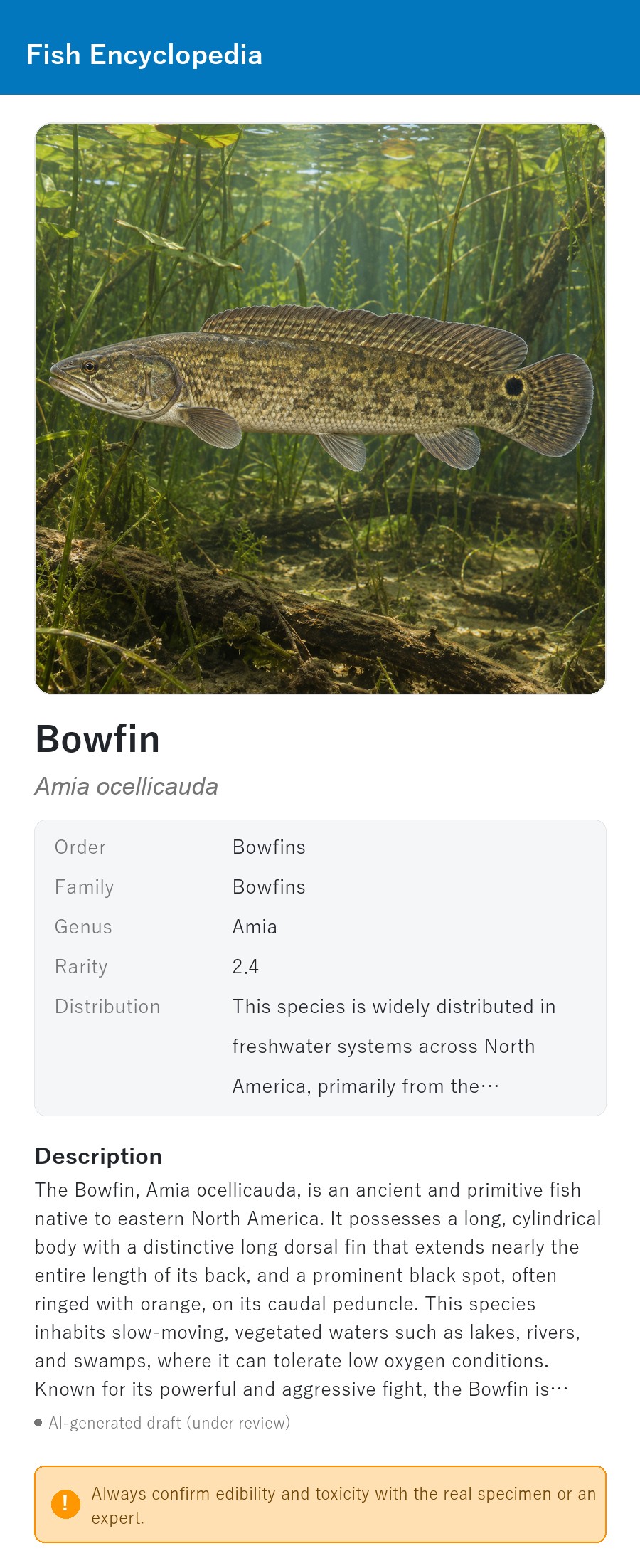
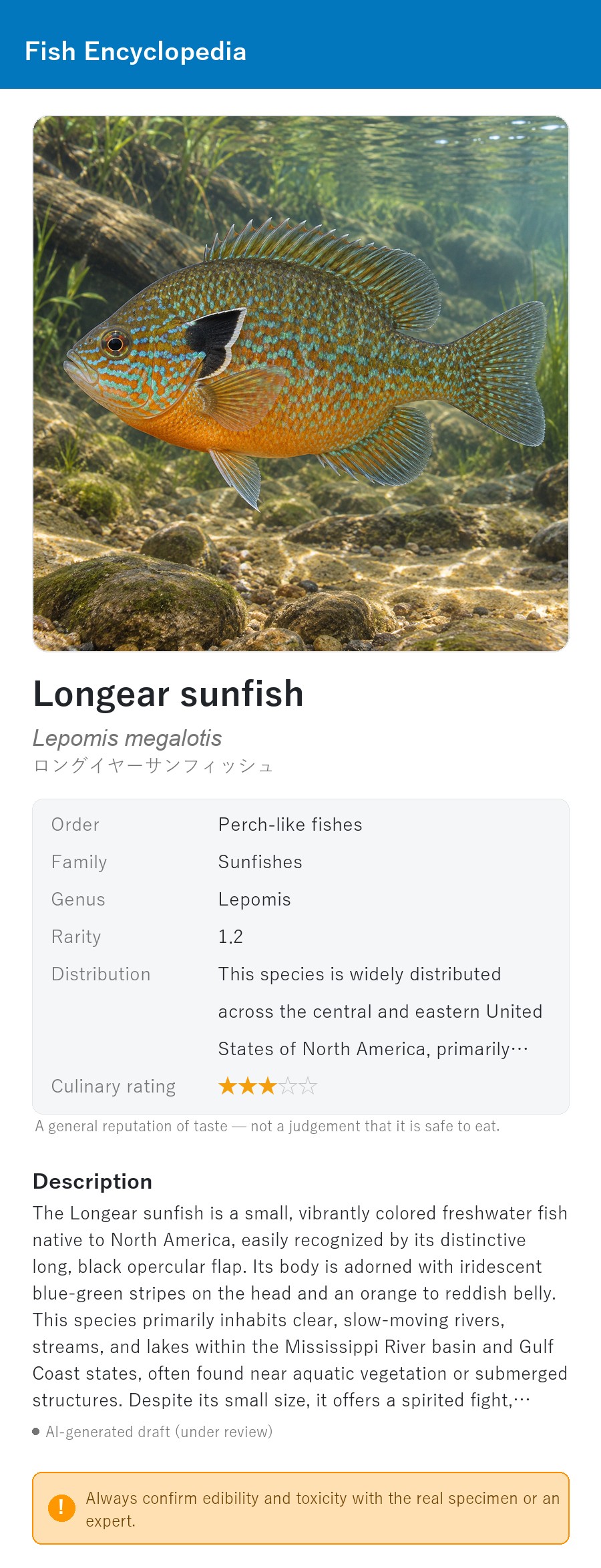
アプリの魚図鑑での表示イメージ。日本語・英語どちらの表示にも対応しています。イラストは左右にスワイプ(Web版はイラスト下の左右ボタン)で白背景版と切り替えられます。生息イメージ版がまだ用意できていない種は、これまでどおり白背景版の1枚だけを表示します。
今回のテーマは「その科の最後の1種」
図鑑は「目 → 科 → 属 → 種」とたどれます。前回、生息イメージ版が1枚も無い科をゼロにしたのに続いて、今回は「あと1種か2種で、その科の全種が2枚立てになる」科を95見つけて、すべて埋めました。ダンゴウオ科のホテイウオ、アンコウ科、マンボウ科のヤリマンボウ、ガンギエイ科のメガネカスベ、そして1科1種だけが現存する北米の古代魚アミア科——この95の科では、科のページを開けばすべての種で2枚のイラストが切り替わります。
常連グループも積み増しました
残り種数がまだ多い定番グループからも選んでいます。砂底で巣穴を守るハゼの仲間を15種(テッポウエビと暮らす共生ハゼや、サンゴの間のダルマハゼなど)、磯のイソギンポの仲間を12種、リーフのフエフキダイの仲間を10種、コショウダイの仲間を10種、ハタの仲間を8種。海外の釣りで人気のサンフィッシュの仲間8種、ヨーロッパの川と池のコイの仲間10種、アフリカ・中南米のシクリッド6種も加わりました。
「そっくりさん」を対で描き分けました
今回は同じ属の2種がペアで入る組が15組ありました。White crappie と Black crappie(帯か、まだら模様か)、オーストラリアのアロワナ2種(うろこの赤い斑がいくつあるか)、アフリカの逆さに泳ぐナマズとその近縁種——どれも決め手を1行ずつ指定して、全組が描き分けられて納品されました。カレイの向き・エイの模様で効果のあった「そっくりさん対策の手順書」は、今回も機能しています。
以前のイラスト3種を差し替えました
前回のお知らせで「描き直しが必要と判断したものは順次差し替えます」とご案内した3種——アイゴの仲間(Siganus lineatus)・アブオコゼ・モンツキカエルウオ——は、今回の納品で正しい姿への差し替えが完了しました。金色の線の向き、体つき、頭の赤い斑点。図鑑として正確な姿になっています。
今回追加したおもな種
- 日本と東アジアの海・川 — ホテイウオ・ビクニン・カガミダイ・タイリクスズキ・ネズミゴチ・イッテンアカタチ・アリアケシラウオ・タケギンポ・ムスジガジ・リュウキュウアユ・アオバダイ・メガネカスベなど。
- 冷たい海・深場・外洋 — ナンヨウキンメ・クロジマナガダラ・チカメエチオピア・ツルギエチオピア・ホカケアナハゼ・イソバテング・アルゼンチンヘイクのほか、「Atlantic saury」「Brill」「Tusk」「Striped seaperch」など。
- 世界の暖かい海 — ヤリマンボウ・オナガウツボ・スズハモ・オオシタビラメ・ミナミウシノシタ・シナマナガツオ・ホウセキキントキ・アミメウマヅラハギ・ツケアゲエソ・ツッパリサギなど。
- 南半球の温帯の海 — ミナミオオスミヤキ・ミナミアオトラギスのほか、「Dhufish」「Marblefish」「Rainbow Cale」「Herring Cale」「Old Wife」ならぬ「Rough Bullseye」「Common warehou」「Cape knifejaw」など豪州・NZ・南アフリカの顔ぶれ。
- 世界の淡水 — 北米の古代魚「Bowfin」、中米の「Tropical gar」、ナイルビチャー・ペヘレイ・ブロンズ・ナイフフィッシュ・イバラトミヨのほか、「Three-spined stickleback」「Australian bonytongue」「Southern saratoga」、絶滅種の記録として描いた「Extinct grayling」(ニュージーランド)など。
- イカ・タコ・貝 — ツブ・トリガイ・マシジミ・アゲマキガイ・リシケタイラギ・イチレツダコ・ドスイカ・セイヨウダンゴイカなど。貝は砂に潜って水管を出す・泥に立つといった「暮らしている姿」で描いています。
- エビ・カニ・ザリガニ — クリガニ・トゲズワイガニのほか、「White-clawed crayfish」「False king crab」「New Zealand paddle crab」「Spanish lobster」「Mangrove land crab」(マングローブの巣穴の前に立つ陸ガニ)など。
- ハゼとイソギンポ — オトメハゼ・クロイトハゼ・ヤマブキハゼ・ニチリンダテハゼ・オドリハゼ・ダルマハゼ・パンダダルマハゼ・アカメハゼ・ウロハゼ・ルリヨシノボリ、ハナダイギンポ・テンクロスジギンポ・イナセギンポ・タマカエルウオ(水しぶきの岩の上)・ウナギギンポなど。
- リーフの中・大型 — マトフエフキ・キツネフエダイ・サザナミダイのフエフキダイ類、チョウチョウコショウダイ・アヤコショウダイ・ムスジコショウダイ・クロオビダイのコショウダイ類、アズキハタ・ニジハタ・クロハタ・オジロバラハタ・オオアオノメアラ・ノミノクチのハタ類。
- 湖と小川の人気者 — 「Rock bass」「Green sunfish」「White crappie」「Black crappie」のサンフィッシュ類、「Rudd」「Tench」「Common bream」・ヨーロッパバラタナゴ・シナイモツゴのコイ類、「Red devil」「Festive Cichlid」・ガリラヤティラピアのシクリッド類。
全点を目視で確認しています
寸法やファイル名の機械的なチェックとは別に、納品されたイラスト203点すべてを1枚ずつ目で見て種を照合する工程を今回も行いました。疑わしいものは原寸まで拡大して図鑑の記載と突き合わせています。その結果、今回は1種(ミズタマハゼ)だけ、実物には無い模様が描かれていたため差し替え待ちとしました(この種は差し替えが済むまで、従来どおり白背景版のみの表示です)。お気づきの点があれば、ぜひアプリの「バグ報告」からお知らせください。
ご注意
- 図鑑の絵は写真ではなくイラストです。 生息イメージ版は水中での見え方を伝えるために描いたもので、特定の個体や実際の撮影地を記録したものではありません。
- 毒の有無や種の判断は、必ず実物と専門家の確認をお願いします。 図鑑の表示は参考情報であり、安全を保証するものではありません。
- 解説の一部は AI による下書きで、順次見直しを進めています。お気づきの点はアプリの「バグ報告」からお知らせください。
- 名称・分類データは GBIF を出典としています。図鑑のイラストの著作権は世界釣りマップに帰属します。無断転載・二次利用はご遠慮ください。
Encyclopedia illustrations come in two versions — a plain one and an in-habitat one. Following the previous 200 species, another 200 now have both versions, for a total of 1,494 species. No species were added; the encyclopedia still covers about 2,941.
How species look in the app encyclopedia — available in both Japanese and English. Swipe the illustration left or right to switch versions (on the web, use the arrow buttons below it). Species without in-habitat artwork simply show the single plain illustration, exactly as before.
This batch is about "the last species in the family"
The encyclopedia is browsable by order, family, genus and species. Last time we made sure no family was left with zero in-habitat artwork. This time we found 95 families that were just one or two species short of complete coverage — and filled every one of them. The smooth lumpsucker for the lumpsuckers, the sharptail mola, the mottled skate, and the bowfin — sole survivor of an ancient North American family. In those 95 families, every species now switches between both illustrations.
The regulars kept growing too
We also kept working through the big groups: 15 gobies (shrimp-partner gobies at their burrows, coral gobies deep in branching coral), 12 blennies, 10 emperors, 10 sweetlips and 8 groupers on the reefs, plus 8 sunfishes beloved of North American anglers, 10 Eurasian carps and minnows, and 6 cichlids from Africa and the Americas.
Lookalikes, drawn apart in pairs
Fifteen pairs of congeners landed in the same batch this time: White and Black crappie (bars versus speckles), Australia's two saratogas (how many red flecks per scale), Africa's upside-down catfish and its cousin. Each pair got a one-line distinguishing note in the brief, and every pair came back distinct. The "lookalike guide" that worked for flatfish and rays keeps earning its place.
Three earlier illustrations were replaced
The three species we flagged in the previous announcement — the golden-lined spinefoot (Siganus lineatus), the velvetfish Erisphex pottii, and the red-spotted blenny — have now been replaced with corrected artwork: the direction of the golden lines, the body shape, the red-spotted head. They now look the way the species actually do.
What this update covers
- Japan and East Asia — Smooth lumpsucker, Cubed snailfish, Mirror dory, Spotted sea bass, Richardson's dragonet, Blackspot bandfish, the Ryukyu ayu and more.
- Cold seas, deep water and the open ocean — Alfonsino, Ling, Brilliant and Keeltail pomfrets, Crested and Silverspotted sculpins, Argentine hake, Atlantic saury, Brill, Tusk and the kelp-forest surfperches.
- Warm seas of the world — Sharptail mola, Slender giant moray, Common pike conger, Fourlined tonguesole, Peacock sole, Chinese silver pomfret, Moontail bullseye, Honeycomb filefish and Brushtooth lizardfish.
- Temperate southern seas — Barracouta, New Zealand blue cod, Dhufish, Marblefish, Rainbow Cale, Herring Cale, Rough Bullseye, Common warehou and Cape knifejaw.
- World freshwater — Bowfin, Tropical gar, Nile bichir, Argentinian silverside, Asiatic knifefish, Three-spined and Ninespine sticklebacks, Australian bonytongue, Southern saratoga — and the extinct New Zealand grayling, drawn as a record of a lost species.
- Squid, octopus and shellfish — Whelk, Egg cockle, Chinese razor clam, Lischke pen shell, Aldrovandu's eledone, Magistrate armhook squid and Atlantic bobtail. Shellfish are shown as they live — buried with siphons out, or standing in the mud.
- Crabs, shrimp and crayfish — Helmet crab, Triangle tanner crab, White-clawed crayfish, False king crab, New Zealand paddle crab, Spanish lobster and the Mangrove land crab at its burrow.
- Gobies and blennies — Maiden goby, Twostripe goby, Black-chest Shrimp Goby, Gold-barred Shrimp-goby, Graceful Shrimpgoby, Redhead goby, Blackfin Coral Goby, Hovering Goby, Midas Blenny, Piano fangblenny, Jumping Blenny and the Hair-tail Blenny.
- Reef mid-sizers — Thumbprint, Longface and Blue-lined large-eye emperors; Clown, Yellowbanded and Oriental sweetlips; Porkfish; Slender grouper, Darkfin hind, Redmouth grouper, White-edged lyretail, Squaretail coralgrouper and Threespot Grouper.
- Lakes and creeks — Rock bass, Green sunfish, White and Black crappies; Rudd, Tench, Common bream and the European bitterling; Red devil, Festive Cichlid and Mango tilapia.
Every illustration was checked by eye
Alongside the mechanical checks on dimensions and file naming, we again reviewed all 203 delivered illustrations one by one and verified each species, zooming to full size wherever something looked off. This time exactly one species (the sixspot goby) is being redrawn — it was given a pattern the real fish does not have. Until the replacement arrives it simply shows its plain illustration, as before. If you spot something, please tell us through "Report a bug" in the app.
Notes
- These are illustrations, not photographs. The in-habitat version is drawn to convey how a species looks underwater; it does not record a particular individual or a real location.
- Always confirm identification and venomousness with the real specimen and an expert. Entries in the encyclopedia are reference information and are not a guarantee of safety.
- Some descriptions are AI-generated drafts that we are reviewing over time. If you spot an error, please tell us through "Report a bug" in the app.
- Names and taxonomy are sourced from GBIF. The encyclopedia illustrations are © World Fishing Map; please do not reproduce or reuse them without permission.