
「生息イメージ」のイラストをさらに200種へ追加しました(合計1,695種)
魚図鑑のイラストは、種によって「白背景版」と「生息イメージ版」の2枚を用意しています。前回の200種に続いて、今回はさらに200種と、前回「差し替え待ち」とご案内したミズタマハゼが2枚立てになり、合計1,695種になりました。収録種数は約2,939種のままで、種の追加はありません(同じ種が別の学名で二重に載っていた2組を統合したため、前回より2種減っています)。
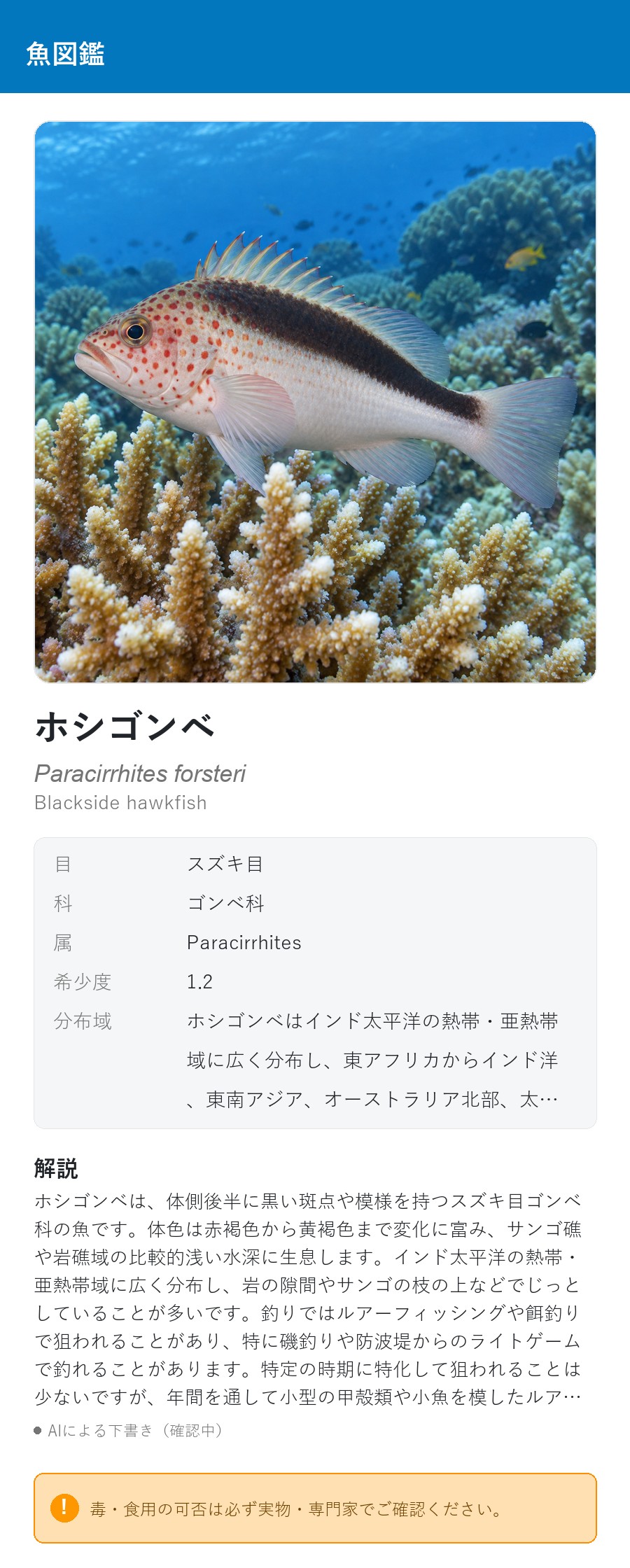
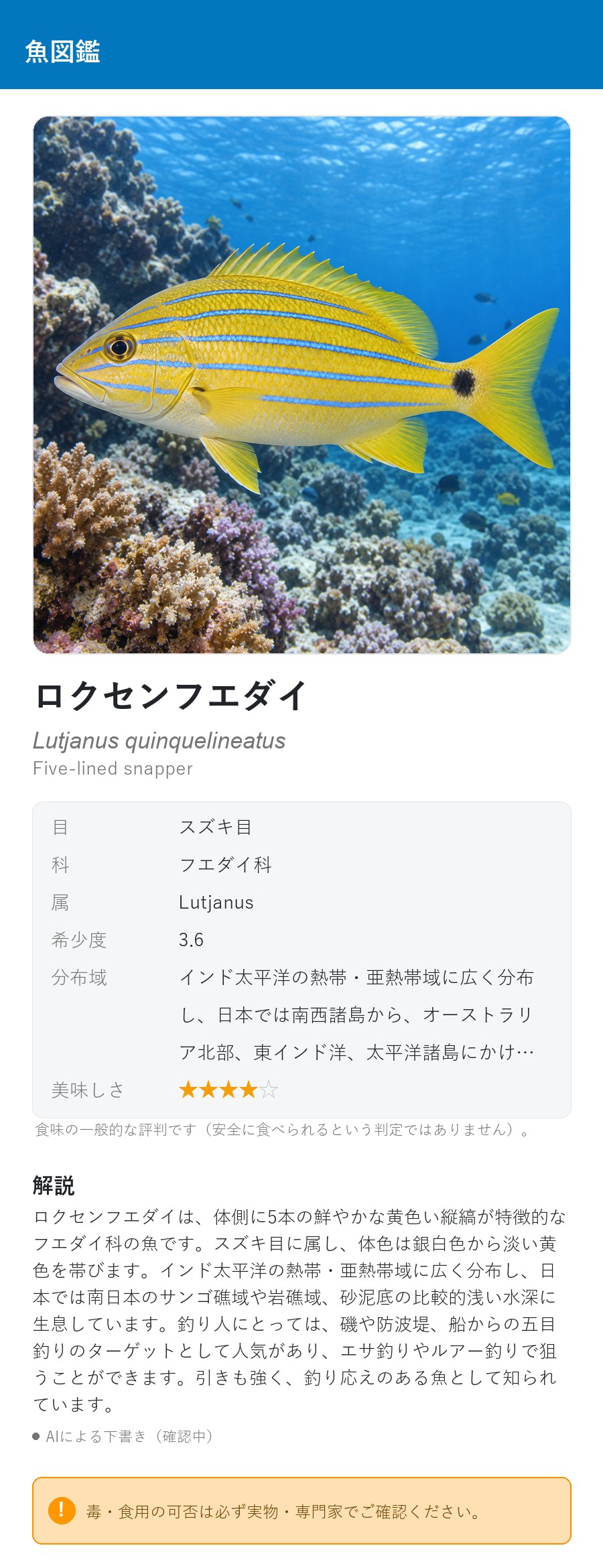
アプリの魚図鑑での表示イメージ。日本語・英語どちらの表示にも対応しています。イラストは左右にスワイプ(Web版はイラスト下の左右ボタン)で白背景版と切り替えられます。生息イメージ版がまだ用意できていない種は、これまでどおり白背景版の1枚だけを表示します。
今回のテーマも「その科の最後の数種」
図鑑は「目 → 科 → 属 → 種」とたどれます。前回、「あと1種か2種で揃う科」を95埋めたのに続いて、今回は「あと3種から5種で、その科の全種が2枚立てになる」科を40見つけて、すべて埋めました。トビウオ科のホソトビウオ・アヤトビウオ・バショウトビウオ、アイナメ科のスジアイナメ・エゾアイナメ、キュウリウオ科のチカ・キュウリウオ・カラフトシシャモ、ゴンベ科・ブダイ科・タカサゴ科・カマス科・チョウザメ科・カワカマス科、そしてアワビ・ホタテ・カキ・イガイ・イシガイの貝の科——この40の科では、科のページを開けばすべての種で2枚のイラストが切り替わります。
常連グループも積み増しました
残り種数がまだ多い定番グループからも選んでいます。ハゼの仲間を15種(ムチヤギの枝に乗るガラスハゼ、炎のような鰭のホムラハゼ、渓流のシマヨシノボリ、河口のコンジキハゼなど)、コイの仲間を10種(オオキンブナ・ズナガニゴイ・ウケクチウグイ・ヤチウグイなど)、ハタの仲間を12種(キテンハタ・ハクテンハタ・オビハタ・イヤゴハタ・トビハタなど)、アジの仲間を10種(イトヒキアジ・オニアジ・ブリモドキ・オアカムロ・コバンアジなど)、フエダイの仲間を10種(ロクセンフエダイ・アミメフエダイ・イレズミフエダイ・ナガサキフエダイ・オオアカムツなど)。
「そっくりさん」は過去最多の45組
科の残り全部を拾うと、同じ属の3〜5種がまとめて入ります。今回は決め手を1行ずつ指定した組が45組——トビウオ3種は胸びれ(無地か、黄色い小斑か、高い黒い背びれか)、タカサゴ5種は体の色と線の数、ボラ4種は眼の色と鰓蓋の金斑、北米のモロネ属3種は縦線の有無と途切れ方、ブダイ3種は雌相・雄相の指定——で、全組が描き分けられて納品されました。前回1種だけ起きた「実物には無い模様を足す」ミスも、無地の種には「無地」と明記する手当てをして、今回はゼロでした。
差し替えたイラスト
前回のお知らせで「差し替え待ち」とご案内したミズタマハゼは、体側に模様の無い正しい姿(決め手は頬の水色の小さな斑点)で差し替えが完了しました。あわせてスナダコ・アカゴチ・ニシキアナゴの3種も、より正確な姿に描き直したイラストへ差し替えています。
今回追加したおもな種
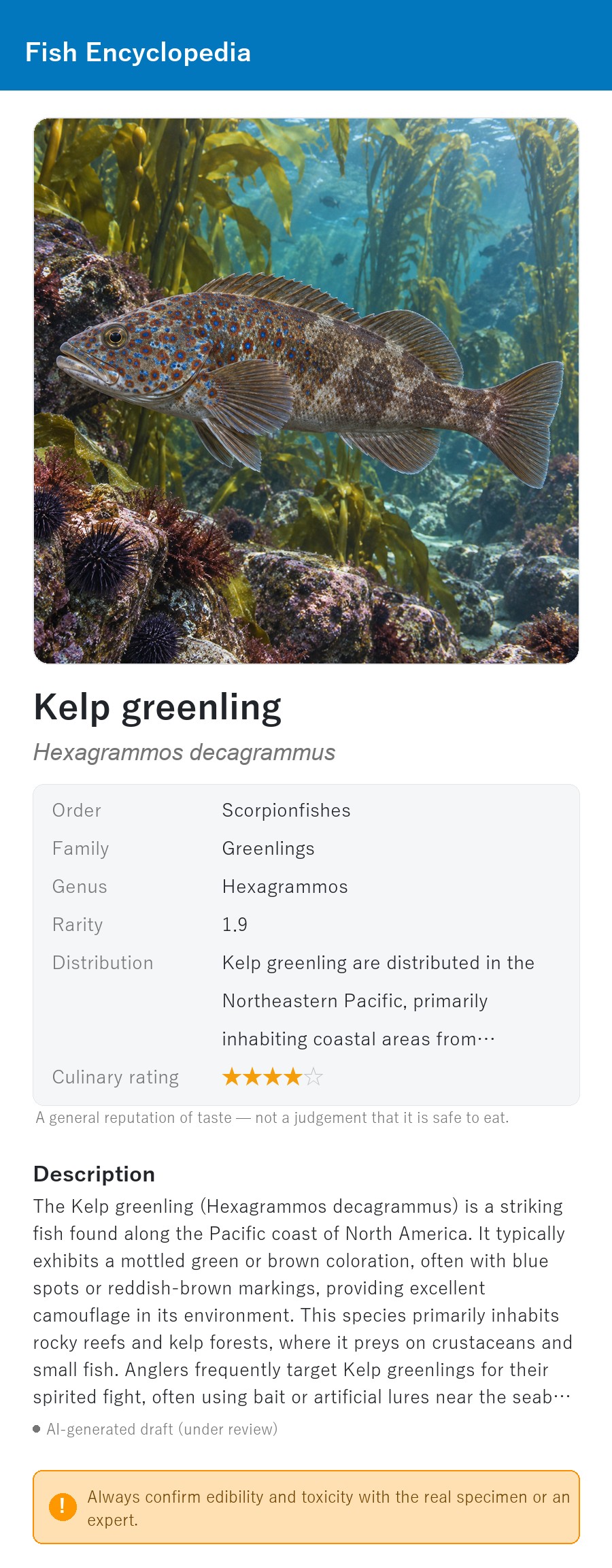
- 日本と北の海 — ホソトビウオ・アヤトビウオ・バショウトビウオ・ソコカナガシラ・トゲカナガシラ・ソコホウボウ・スジアイナメ・エゾアイナメ・チカ・キュウリウオ・カラフトシシャモ・ニジワカサギのほか、「Kelp greenling」「Spotted seabass」。
- 世界の暖かい海 — マルクチソトイワシ・タイセイヨウカライワシ・ツマリエツ・チョウセンタレクチ・マトシボリ・ミスジアカヒレイシモチ・サラサゴンベ・イソゴンベ・ホシゴンベ・ヒブダイ・オビブダイ・ハナタカサゴ・ニセタカサゴ・タイワンカマス・オオカマスなど。
- 南半球の温帯の海 — 「Australian herring」「Western Australian salmon」「Giant kahawai」「Bastard trumpeter」「Blue moki」ならぬ「Telescope fish」「Yellow-eye mullet」など豪州・NZ・南アフリカの顔ぶれ。
- 世界の淡水 — 北米・欧州の「Green sturgeon」「Shovelnose sturgeon」「Redfin pickerel」「White bass」「Yellow bass」「Weatherfish」、アリストテレスナマズ、アフリカの「Elongate tigerfish」「Blue tigerfish」とタンガニーカ湖のアカメの仲間4種、南米の「Redeye piranha」「Red hook silver dollar」とレポリヌスの仲間5種、東南アジアのパンガシウスの仲間4種、豪州・NZのガラクシアスの仲間4種、ニューギニアウナギ・モザンビークウナギなど。
- 貝とイカ — オマーンアワビ・ミダノアワビ・ヨーロッパマツイカ・アカスルメイカ・オーストラリアスルメイカ・アメリカガキ・ケガキ・ペルビアンホタテ・パタゴニアホタテ・イケチョウガイ・マツカサガイ・ドブガイ・チリムールガイ・スダレガイ・ビノスガイ・ウチムラサキなど。貝は岩に固着する・砂に潜って水管を出すといった「暮らしている姿」で描いています。
- カニとザリガニ — イチョウガニ・イボイチョウガニのほか、「Red rock crab」、豪州の「Margaret river marron」「Lamington spiny crayfish」(青い体に白いハサミ)など。
- ハゼ・コイ・ハタ・アジ・フエダイ — スジハゼ・クビアカハゼ・サラサハゼ・ヒノマルハゼ・ササハゼ・ケショウハゼ、デメモロコ・カワヒラ・ゴールデンフォイルバルブ、ヤミハタ・アオスジハタ・アカハナ・ヒメコダイ・コモンハタ・ナミハタ、マテアジ・コガネアジ・ホシカイワリ・クサヤモロ・イケカツオ、イシフエダイ・オキフエダイ・ヨコスジフエダイ・ナミフエダイ・ホホスジタルミなど。
全点を目視で確認しています
寸法やファイル名の機械的なチェックとは別に、納品されたイラスト201点すべてを1枚ずつ目で見て種を照合する工程を今回も行いました。疑わしいものは原寸まで拡大して図鑑の記載と突き合わせています。その結果、今回は差し替えが必要なものはありませんでした。お気づきの点があれば、ぜひアプリの「バグ報告」からお知らせください。
ご注意
- 図鑑の絵は写真ではなくイラストです。 生息イメージ版は水中での見え方を伝えるために描いたもので、特定の個体や実際の撮影地を記録したものではありません。
- 毒の有無や種の判断は、必ず実物と専門家の確認をお願いします。 図鑑の表示は参考情報であり、安全を保証するものではありません。
- 解説の一部は AI による下書きで、順次見直しを進めています。お気づきの点はアプリの「バグ報告」からお知らせください。
- 名称・分類データは GBIF を出典としています。図鑑のイラストの著作権は世界釣りマップに帰属します。無断転載・二次利用はご遠慮ください。
Encyclopedia illustrations come in two versions — a plain one and an in-habitat one. Following the previous 200 species, another 200 now have both versions, plus the sixspot goby we flagged last time as awaiting a redraw — for a total of 1,695 species. No species were added; the encyclopedia covers about 2,939 (two species fewer than before, because two pairs of duplicate entries listed under different scientific names were merged).
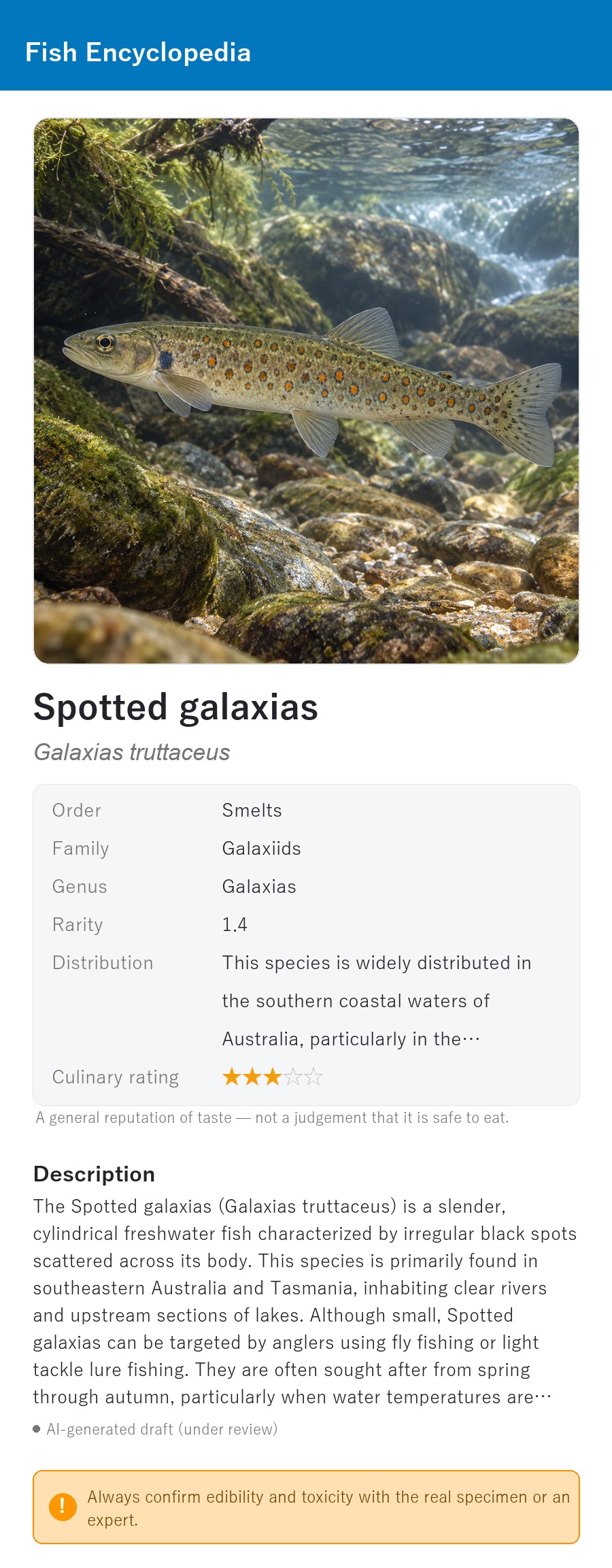
How species look in the app encyclopedia — available in both Japanese and English. Swipe the illustration left or right to switch versions (on the web, use the arrow buttons below it). Species without in-habitat artwork simply show the single plain illustration, exactly as before.
Again, "the last few species in the family"
The encyclopedia is browsable by order, family, genus and species. Last time we filled the 95 families that were one or two species short. This time we found 40 families that were three to five species short of complete coverage — and filled every one of them: the flyingfishes, the greenlings, the smelts, the hawkfishes, parrotfishes, fusiliers and barracudas, the sturgeons and pikes, and the abalone, scallop, oyster, mussel and freshwater-mussel families. In those 40 families, every species now switches between both illustrations.
The regulars kept growing too
We also kept working through the big groups: 15 gobies (the whip-coral goby on its sea whip, the spikefin goby with its flame-coloured fins, stream and estuary gobies of Japan), 10 carps and minnows, 12 groupers, 10 jacks and scads, and 10 snappers.
Lookalikes: a record 45 sets
When you take every remaining species in a family, three to five congeners arrive together. This time the brief carried 45 sets of lookalikes, each with a one-line distinguishing note — pectoral fins for the three flyingfishes (plain, yellow-spotted, or a tall black sail), body colour and stripe count for five fusiliers, eye colour and gill-cover spot for four mullets, stripes present or broken for the three North American temperate basses, and the colour phase specified for three parrotfishes — and every set came back distinct. Last batch's single error ("adding a pattern the fish does not have") did not recur: plain species are now explicitly marked "plain" in the brief.
Replaced illustrations
The sixspot goby flagged in the previous announcement now has its correct, unpatterned body (the giveaway is the pale-blue freckles on the cheek). We also replaced the illustrations of three more species — the sandbird octopus, the red flathead (Bembras japonica) and the splendid garden eel — with redrawn, more accurate artwork.
What this update covers
- Japan and the northern seas — Three flyingfishes, three searobins, two greenlings plus the Kelp greenling, the Japanese smelt (chika), Pacific rainbow smelt, Capelin, Rainbow smelt and the Spotted seabass.
- Warm seas of the world — Three bonefishes and three ladyfishes, five anchovies, three cardinalfishes, three hawkfishes, three parrotfishes, five fusiliers, four barracudas and two mullets.
- Temperate southern seas — Australian herring, Western Australian salmon, Giant kahawai, Bastard trumpeter, Telescope fish, Yellow-eye mullet, Striped mullet and the Shortfinned barracuda.
- World freshwater — Green and Shovelnose sturgeons, Redfin pickerel, White and Yellow bass, Weatherfish, Aristotle's catfish; Elongate and Blue tigerfish and four Lake Tanganyika lates; Redeye piranha, Red hook silver dollar and five leporinus; four pangasius catfishes; four galaxiids of Australia and New Zealand; and three more eels.
- Shellfish and squid — Omani, South African and Roe's abalone; European, Sevenstar and Gould's flying squids; Eastern, Australian flat and Japanese spiny oysters; Peruvian, Australian and Patagonian scallops; three freshwater pearl mussels; four mussels; five venus clams. Shellfish are shown as they live — fixed to rock, or buried with siphons out.
- Crabs and crayfish — Four rock crabs and four Australian crayfish, including the blue-and-white Lamington spiny crayfish.
- Gobies, carps, groupers, jacks and snappers — Barred and Banded shrimpgobies, Whip coral goby, Spikefin goby, Ward's sleeper, Black goby, Tank goby; Japanese crucian carp, Topmouth culter, Tinfoil barb, Gudgeon; Chocolate, Bluelined and Strawberry hinds, Duskytail, White-spotted, Dotted and Blackfin groupers; African pompano, Torpedo scad, Pilot fish, Roughear scad, Double-spotted queenfish; Small-toothed jobfish, Checkered seaperch, Sailfin snapper, Gold band jobfish and Bowen's red snapper.
Every illustration was checked by eye
Alongside the mechanical checks on dimensions and file naming, we again reviewed all 201 delivered illustrations one by one and verified each species, zooming to full size wherever something looked off. This time none needed to be redrawn. If you spot something, please tell us through "Report a bug" in the app.
Notes
- These are illustrations, not photographs. The in-habitat version is drawn to convey how a species looks underwater; it does not record a particular individual or a real location.
- Always confirm identification and venomousness with the real specimen and an expert. Entries in the encyclopedia are reference information and are not a guarantee of safety.
- Some descriptions are AI-generated drafts that we are reviewing over time. If you spot an error, please tell us through "Report a bug" in the app.
- Names and taxonomy are sourced from GBIF. The encyclopedia illustrations are © World Fishing Map; please do not reproduce or reuse them without permission.