
コバンザメを描き直しました — 吸盤は見せるべきか、隠すべきか
魚図鑑のコバンザメ(Echeneis naucrates)のイラストを、白背景版・「生息イメージ」版の2枚とも描き直して差し替えました。きっかけは、生息イメージ版の旧イラストがきれいな絵なのに、生き物としては成立していない姿だったことです。
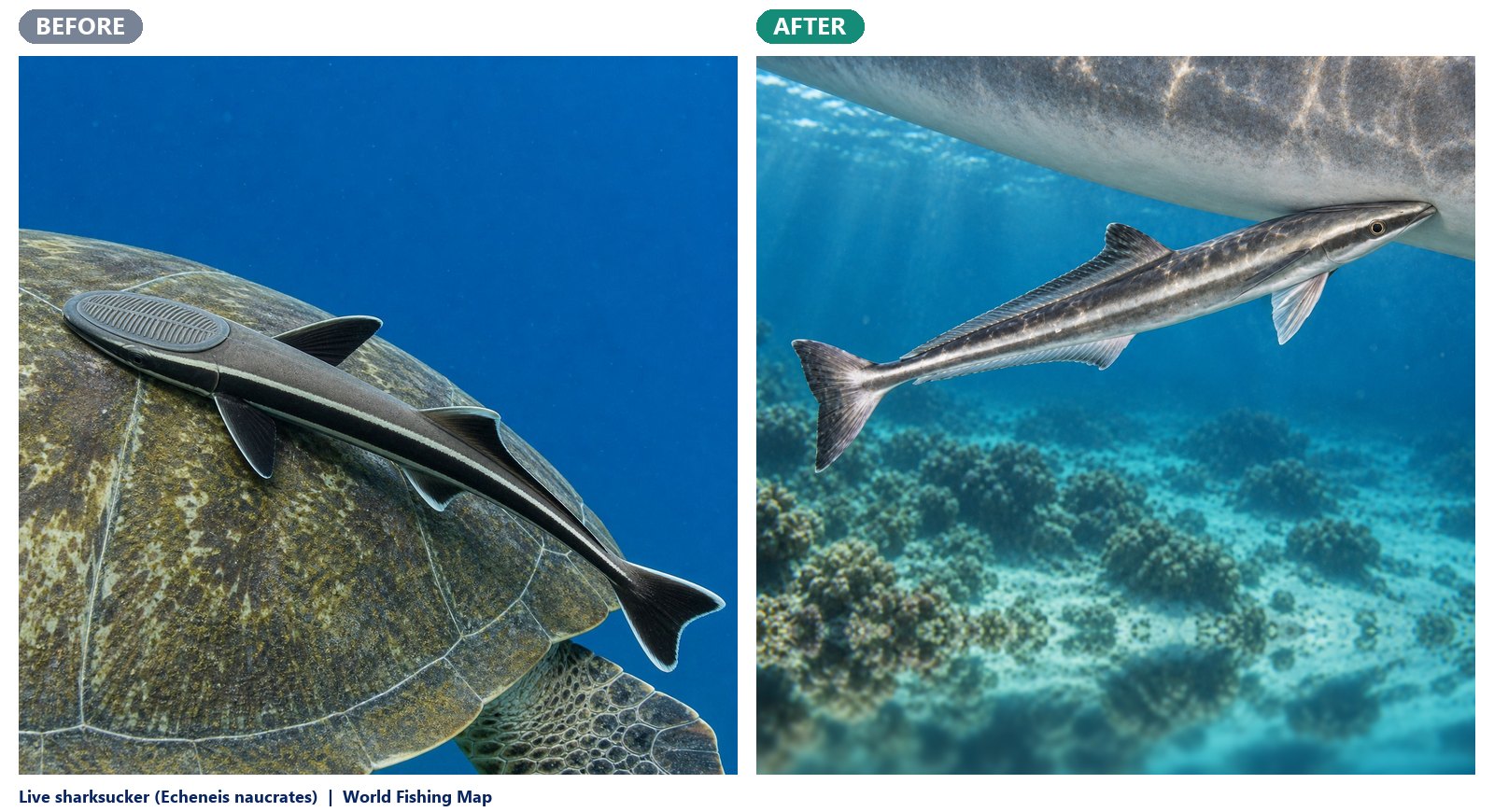
旧イラストの何がおかしかったのか
コバンザメの吸盤は、口でもお腹でもなく頭の「上」にあります。背びれが変化してできた小判形の器官で、板状のひだを立てて相手に吸い付きます。
ところが旧イラストのコバンザメは、その吸盤を海のほうへ向けたまま、お腹でウミガメの甲羅に「載って」いました。吸盤はどこにも触れていません。これでは吸い付けないので、カメがひと掻きすれば置いていかれてしまいます。本当に甲羅の上に付くなら、コバンザメのほうがひっくり返って背中側を甲羅に向けているはずです。
1枚の絵として見ると違和感がないだけに、気づくのが遅れました。名前の由来でもある吸盤をしっかり見せようとした結果、「付いている」という一番大事な事実のほうが嘘になっていたわけです。
描き直しで苦心したところ
難しさの正体は、「コバンザメらしさ」と「自然な姿」が1枚の中で両立しないことでした。
- 図鑑としては、識別の決め手である吸盤を見せたい。
- しかし自然な姿のコバンザメは、その吸盤を宿主にぴったり押し当てている=正しく描くほど、吸盤は見えなくなる。
吸盤を見せれば吸着の向きが嘘になり、吸着を正しく描けば吸盤が隠れる。どちらも1枚に入れようとすると、旧イラストと同じ場所に戻ってきてしまいます。
そこで今回は、2枚のイラストで役割を分けることにしました。
- 生息イメージ版 — 吸盤を見せることはあきらめ、頭頂をサメの腹に押し当てて付いている姿勢を優先しました。背を上にして宿主の下側に付き、体は後ろへ流れる。暗色の縦帯とその白い縁取り、細長い体つきで本種だと分かるようにしています。
- 白背景版 — こちらが吸盤の担当です。真横ではなく少し上から見下ろす角度にして、小判形の輪郭と、中央で左右に分かれた板状のひだが読み取れるようにしました。
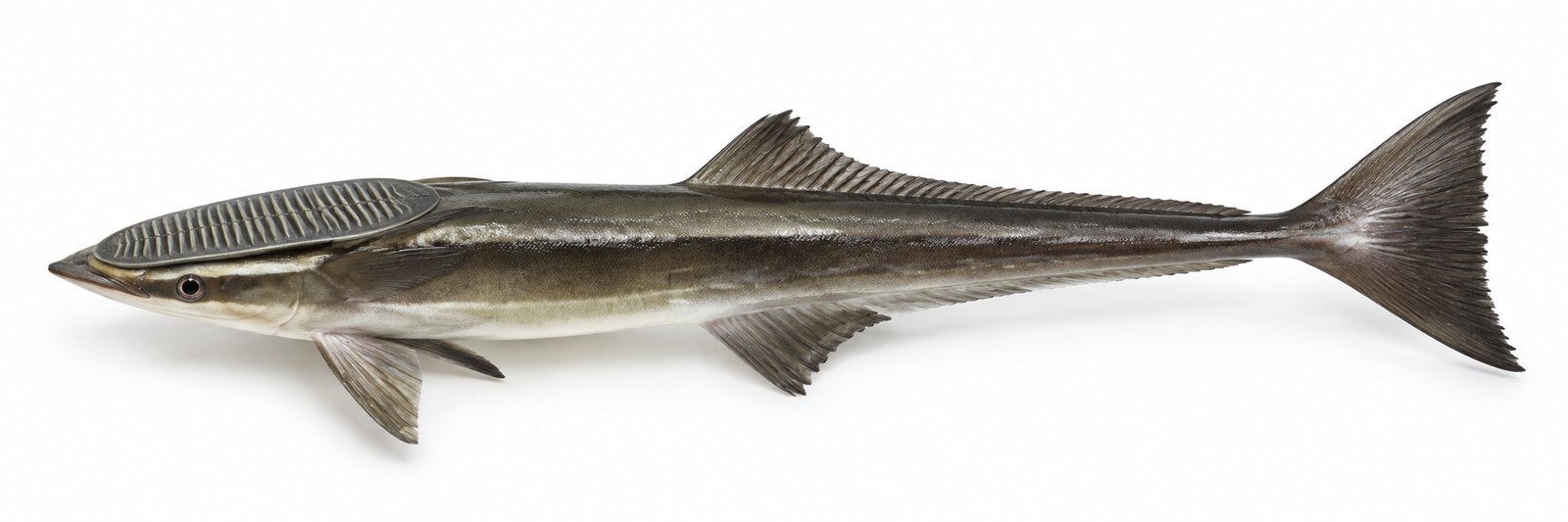
アプリでは図鑑のイラストを左右にスワイプ、この Web の魚図鑑では左右のボタンで、2枚を切り替えて見られます。白背景版で「形」を、生息イメージ版で「暮らし方」を見る、という分担です。
もうひとつの難所 — 細長い魚を正方形に収める
生息イメージ版は、図鑑の一覧でもきれいに並ぶよう全点を正方形にそろえています。ところがコバンザメはとにかく細長い魚で(白背景版は横3:縦1)、描き上がった横長の絵を従来どおり中央で正方形に切り出すと、尾びれが丸ごと画面の外に落ちてしまいました。
かといって魚を縮めたり曲げたりはしたくありません。最終的に、魚体には1画素も手を触れず、足元のサンゴ礁の背景だけを下へ延ばして正方形に収めています。延ばした部分は、手前ほどピントが外れていく水中写真の見え方に合わせてあります。
おかしな絵を見つけたら、教えてください
世界釣りマップの魚図鑑は現在約2,939種、生息イメージ版は1,895種を収録しています。1種ずつ確認してはいますが、今回のように「絵としては自然なのに、生き物としてはおかしい」ものは、どうしても目をすり抜けます。見つけたら、アプリのメニューの「報告・お問い合わせ」からぜひ教えてください(魚種名を書き添えていただけると助かります)。直したものは、このお知らせでご報告していきます。
ご注意
- アプリでは、図鑑の画面を開き直すと新しいイラストが表示されます。この Web の魚図鑑では、以前に表示した画像がブラウザに残っていることがあります(その場合はページの再読み込みで新しいイラストになります)。
- 解説の一部は AI による下書きで、順次見直しを進めています。魚種の同定や食用可否・毒の有無などは、安全のため必ず実物・専門家の確認をお願いします。
- 名称・分類データは GBIF を出典としています。図鑑のイラストの著作権は世界釣りマップに帰属します。無断転載・二次利用はご遠慮ください。
We have redrawn and replaced both Fish Encyclopedia illustrations of the live sharksucker (Echeneis naucrates) — the white-background version and the in-habitat version. The reason: the old in-habitat artwork was a handsome picture of something that could not happen.
What was wrong with the old one
A remora's sucker is not its mouth and not its belly — it sits on top of the head. It is a modified dorsal fin: an oval disc of plate-like ridges that the fish raises to grip its host.
In the old illustration, the remora was lying belly-down on a sea turtle's shell with that disc facing the open sea. The sucker was touching nothing. A fish posed like that is not attached at all; one stroke of the turtle's flippers and it would be left behind. To really ride on top of a shell, the remora would have to flip over and turn its back to the turtle.
Because it works so well as a picture, it took us a while to notice. In trying to show off the feature the fish is famous for, the artwork had made the single most important fact — that it is attached — untrue.
What made the redraw hard
The real difficulty is that "looks like a remora" and "behaves like a remora" do not fit in one picture.
- An encyclopedia wants to show the sucker, the feature that identifies the fish.
- But a remora in nature keeps that sucker pressed flat against its host — the more correctly you draw it, the less of the sucker you can see.
Show the disc and the attachment becomes a lie; draw the attachment properly and the disc disappears. Try to have both and you end up exactly where the old illustration was.
So this time we split the job between the two illustrations.
- In-habitat version — we gave up on showing the sucker and put the posture first: the top of the head pressed against a shark's belly, back uppermost, body trailing behind. The dark stripe with its pale borders and the long, slender body are what tell you which fish it is.
- White-background version — this one is in charge of the sucker. It is drawn from slightly above rather than in pure side view, so you can read the oval outline of the disc and the paired rows of ridges inside it.
Swipe left and right on the illustration in the app, or use the arrow buttons in this web encyclopedia, to switch between the two: the white background for the shape, the habitat scene for the way it lives.
One more hurdle: fitting a very long fish into a square
Every in-habitat illustration is square, so that the encyclopedia lists line up cleanly. But the remora is an extremely elongated fish (its white-background artwork is 3:1), and cropping the finished landscape picture to a centered square, as we normally do, cut the tail fin clean off.
We did not want to shrink or bend the fish. In the end we left every pixel of the fish untouched and extended only the reef background downward until the picture became square, letting the added foreground fall gradually out of focus the way it does in underwater photography.
If a picture looks wrong, please tell us
The World Fishing Map encyclopedia now covers about 2,939 species, 1,895 of them with an in-habitat illustration. We check them one by one, but pictures like this one — natural as an image, wrong as an animal — are exactly the kind that slip through. If you spot one, please let us know via "Report / Contact" in the app menu (mentioning the species name helps a lot). We will keep announcing the fixes here.
See the remora in the Encyclopedia
Notes
- In the app, reopening the encyclopedia screen shows the new illustrations. On this website, a previously viewed image may still be cached by your browser — reload the page to see the new artwork.
- Some descriptions are AI-generated drafts that we are reviewing over time. For safety, always confirm identification and edibility/toxicity with the real specimen or an expert.
- Names and taxonomy are sourced from GBIF. The encyclopedia illustrations are © World Fishing Map; please do not reproduce or reuse them without permission.