
魚図鑑の4魚種について、白背景版と生息イメージ版のイラストを描き直し、本番の画像を差し替えました。きっかけは、同じ魚種のはずなのに、2枚を切り替えると体形や色、模様が別の魚のように見えたことです。特に白背景版に大きな見直しが必要でした。ここでは、変化が分かりやすい白背景版の Before/After を中心に紹介します。
なぜ2枚が食い違ったのか
図鑑の白背景版は先に収録され、生息イメージ版は後から、既存種の「2枚目」として別の依頼で制作されました。後者の依頼書には、学名に加えて生息環境や模様などの作画メモがありましたが、2枚を同じ個体の特徴に照らして揃える工程が十分ではありませんでした。画像生成は、それぞれ単独ではもっともらしい魚を描けても、学名だけで識別形質を必ず再現するわけではありません。画像の寸法やファイル名の検査も、形や模様の正しさまでは判定できません。
今回、旧版と資料を並べてみると、違和感は「絵柄の違い」だけではありませんでした。別種に見える斑点、欠けた黒いひれ縁、雄の特徴が見えない体色など、図鑑の見分け方に関わる差がありました。以下の各例は、保存していた差し替え前の画像と、差し替え後に配信された画像の比較です。
Herring Cale — 雄の細長い姿と青黒い体色
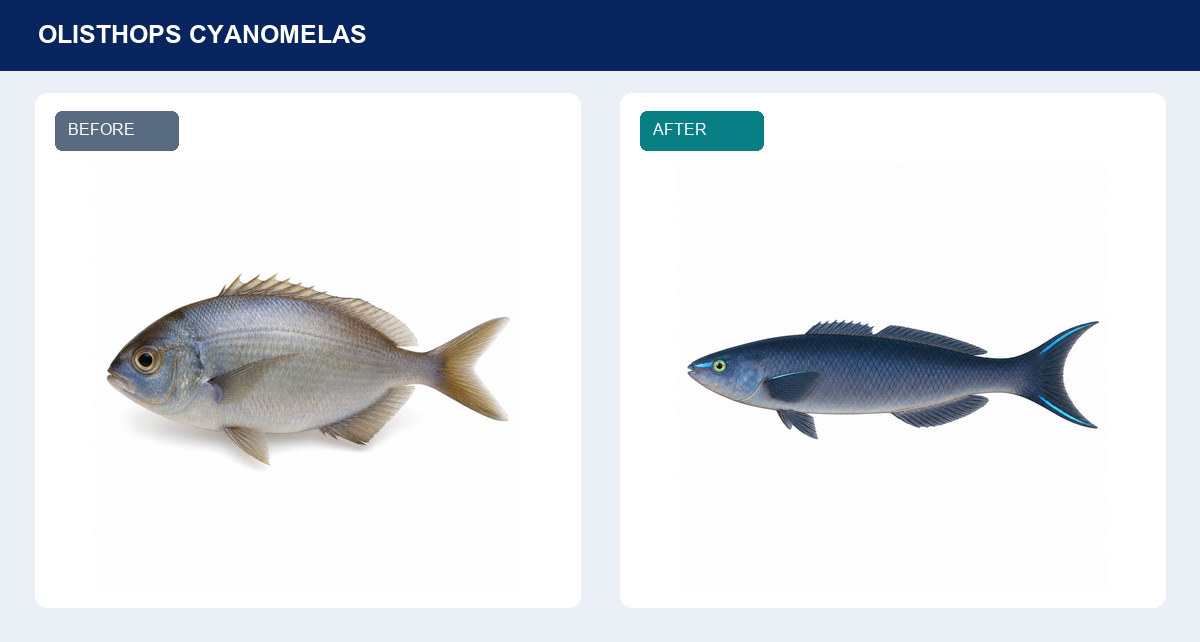
Olisthops cyanomelas の旧白背景版は、丸みのある銀色の魚でした。一方、旧生息イメージ版は、海藻の間を泳ぐ暗色で細長い魚。並べると、同じ種とは読み取りにくい組み合わせでした。資料では雄は淡い青色からほぼ黒色で、尾びれなどの縁に鮮やかな青い線があります。新しい白背景版は雄の青黒い体、伸びた輪郭、青いひれ縁に合わせ、生息イメージ版も同じ特徴で描き直しました。
クラカケモンガラ — 決め手の黒い斑を見せる
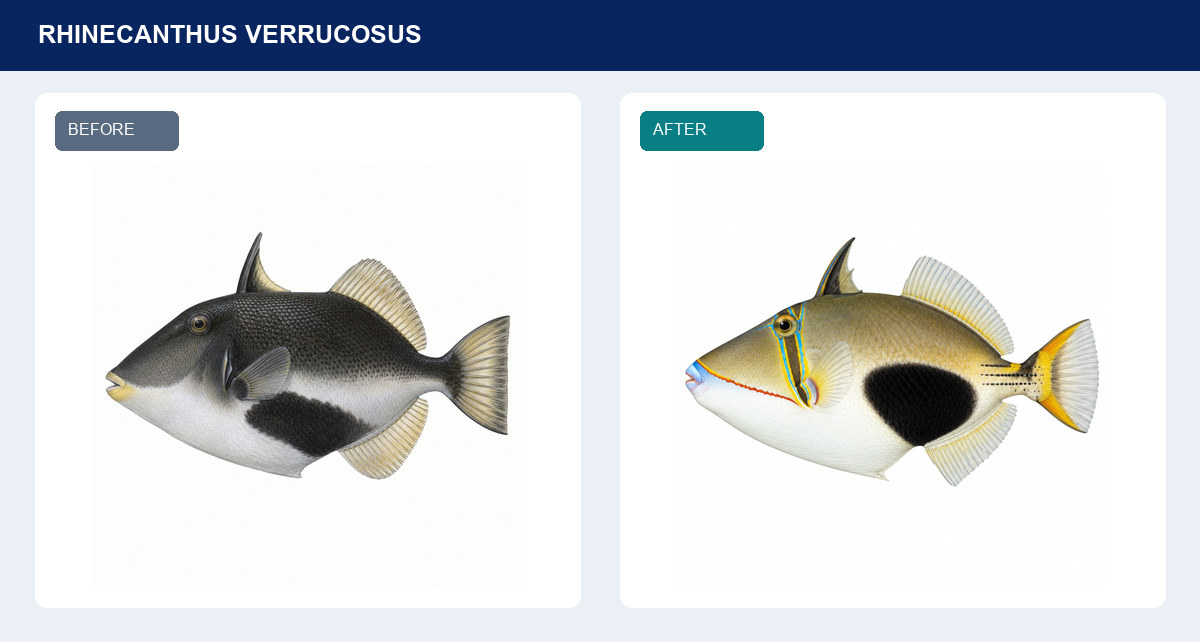
Rhinecanthus verrucosus の旧白背景版にも腹側の黒斑はありましたが、背から体側まで暗いため、斑の輪郭が埋もれていました。旧生息イメージ版は白い腹と黒斑の対比が明瞭で、2枚の色づかいが揃っていませんでした。本種の特徴である淡い褐色の背、白い腹、体の後ろ下側の大きな黒斑を基準に、顔の線と尾柄の小さな棘も見えるよう両方を描き直しました。
ツマグロマツカサ — 名前の決め手になる黒いひれ縁
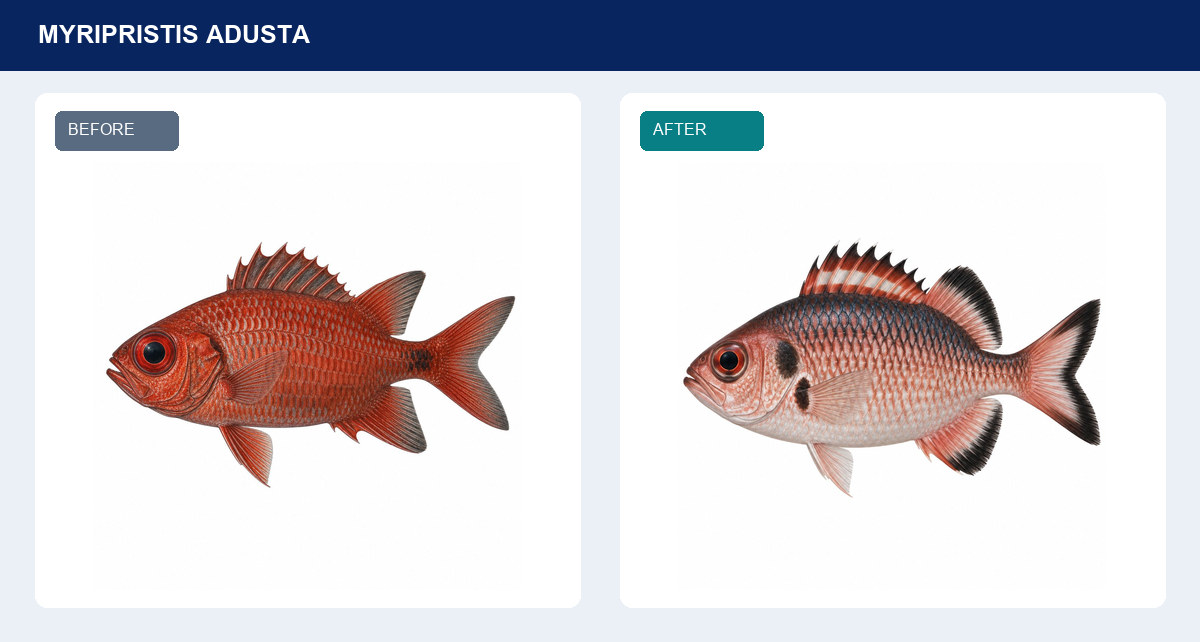
Myripristis adusta の旧白背景版は赤い体と赤いひれが目立ち、生息イメージ版に見えていた暗色のひれ縁がほとんどありませんでした。資料に記載された本種の色は、淡い銀桃色の体、鱗の暗い縁、そして背びれ後部・尻びれ・尾びれの先の黒色です。新しい2枚では、この配色とえらぶた後方の黒斑を共通の目印にしました。
ブロンズ・ナイフフィッシュ — 別のナイフフィッシュの模様を外す
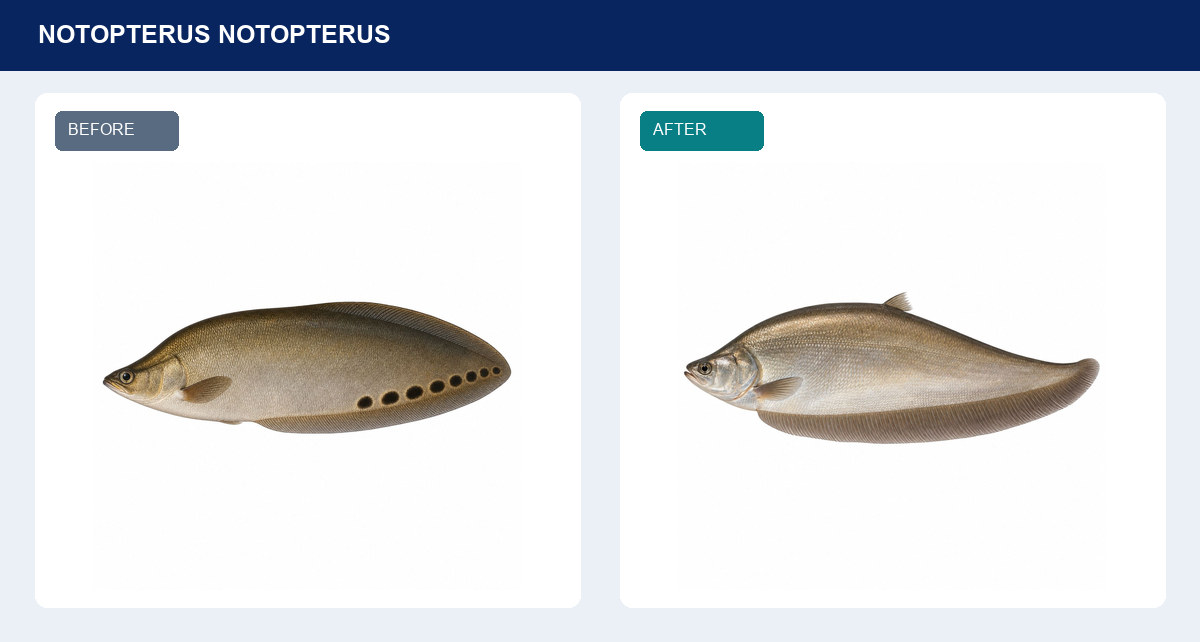
Notopterus notopterus の旧白背景版には、体の後半に丸い黒斑が並んでいました。これは本種の成魚を表すうえで不適切で、斑点のある別のナイフフィッシュを連想させます。旧生息イメージ版にはその斑点がなく、食い違いがはっきりしていました。新版は無地に近い銀褐色、背の盛り上がり、小さな背びれ、尾まで続く長い尻びれを揃えました。
今回、描き直しで変えたこと
白背景版だけを直せば目立つ食い違いは減りますが、今回は4魚種とも2枚を一組として再制作しました。まず学名で資料を確認し、「どの色・線・斑点・ひれが識別の決め手か」を言葉で固定。その同じ目印を白背景版と生息イメージ版の両方で確認しました。白背景版には形と模様を読み取りやすく、生息イメージ版にはその特徴を保ったまま暮らす環境を描く、という役割を持たせています。
今回の教訓は、1枚ずつきれいに見えることと、図鑑として正しいことは別だということです。これからも、2枚を並べて照合し、画像生成後の目視確認と資料への立ち戻りを続けます。
参照した魚種資料
Fishes of Australia: Olisthops cyanomelas/同: Rhinecanthus verrucosus/FAO: Myripristis adusta/Naturalis: Notopterus notopterus。図鑑イラストの著作権は世界釣りマップに帰属します。無断転載・二次利用はご遠慮ください。
We have redrawn and replaced both the white-background and in-habitat illustrations for four species in the Fish Encyclopedia. The two versions sometimes looked like different fish when viewed side by side. The white-background images needed the largest corrections, so the comparisons below focus on them.
Why did the two versions diverge?
The white-background illustrations were added first. The habitat scenes were commissioned later as a second image for species already in the encyclopedia. Those later briefs included habitat and appearance notes, but we did not consistently check both images against the same set of identifying features. An image generator can produce a convincing fish without faithfully reproducing the features of the named species. File names and image dimensions cannot catch an incorrect body shape or marking.
Looking back at the old images alongside species descriptions, the differences were more than artistic style. Spots associated with another fish, missing dark fin tips, and the wrong body colour made identification harder. These comparisons use the saved images from before replacement and the images served after replacement.
Herring Cale — the slender, blue-black male
The old white-background Olisthops cyanomelas was a rounded, silvery fish; its habitat counterpart was dark and slender. They were difficult to read as the same species. Reference descriptions say that males range from pale blue to almost black, with vivid blue edges on the tail and other fins. We redrew both versions around the male's long outline, blue-black body, and blue fin edges.
Blackpatch Triggerfish — make the black patch legible
The old white-background Rhinecanthus verrucosus did have a black lower-side patch, but its otherwise dark body hid the patch's outline. The older habitat scene showed a paler body and a much clearer patch. We aligned both new images with the species' pale brown upper body, white underside, and large black patch low on the rear flank, also showing the facial lines and small spines on the tail base.
Shadowfin Soldierfish — dark fin tips that matter
The old white-background Myripristis adusta was predominantly red, including the fins. Its habitat version already suggested darker fin edges. Reference descriptions instead emphasize a pale silvery-pink body, darker scale edges, and black tips on the soft dorsal, anal, and tail fins. Both new images share those marks and the dark spot behind the gill cover.
Asiatic knifefish — remove another knifefish's spots
The old white-background Notopterus notopterus had a row of round dark spots near the tail. That pattern is unsuitable for an adult of this species and recalls a different knifefish. The old habitat version had no such spots. The new pair shows a largely plain bronze-silver body, raised back, small dorsal fin, and long anal fin continuing towards the tail.
What changed in our redraw process
Correcting only the white-background images would have reduced the most visible differences. This time we remade both illustrations as a pair for every species. We checked species descriptions by scientific name, wrote down the decisive colours, lines, spots, and fins, and checked each new image against that same list. The white-background view should make shape and markings easy to inspect; the habitat view should retain them while showing the fish in its environment.
The lesson is simple: a beautiful individual image is not enough for an encyclopedia. We will continue comparing paired images by eye and returning to species references when a feature looks uncertain.
Species references
Fishes of Australia: Olisthops cyanomelas / Fishes of Australia: Rhinecanthus verrucosus / FAO: Myripristis adusta / Naturalis: Notopterus notopterus. Encyclopedia illustrations are © World Fishing Map. Please do not reproduce or reuse them without permission.