
魚図鑑に新たに100種を追加し、収録数が合計約2,940種になりました。今回は日本で釣りの対象として人気のある魚介類を40種、残りをアジア・オセアニア、南北アメリカ、ヨーロッパ、中東、アフリカから選んでいます。追加した100種すべてに、白背景版と「生息イメージ」版の2枚のイラストを用意しました。
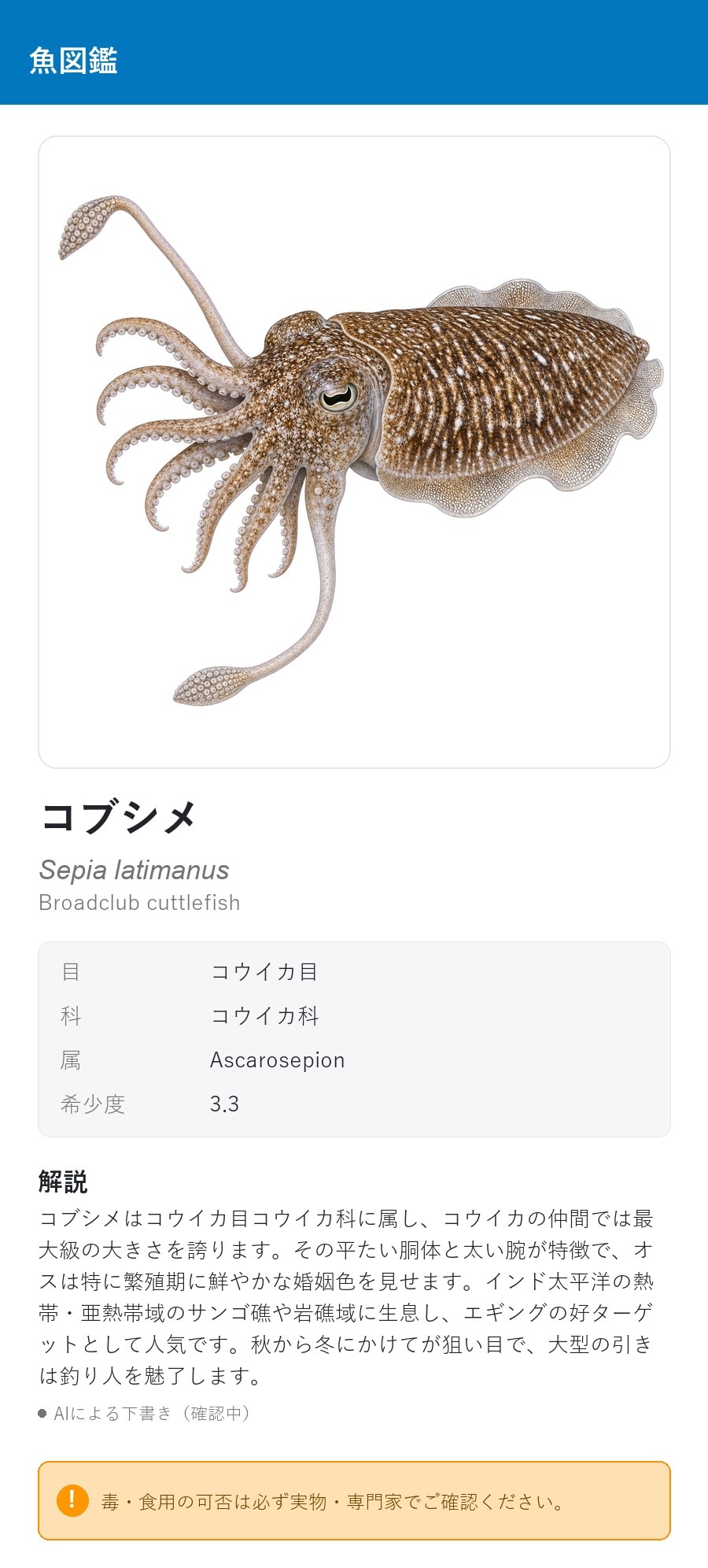
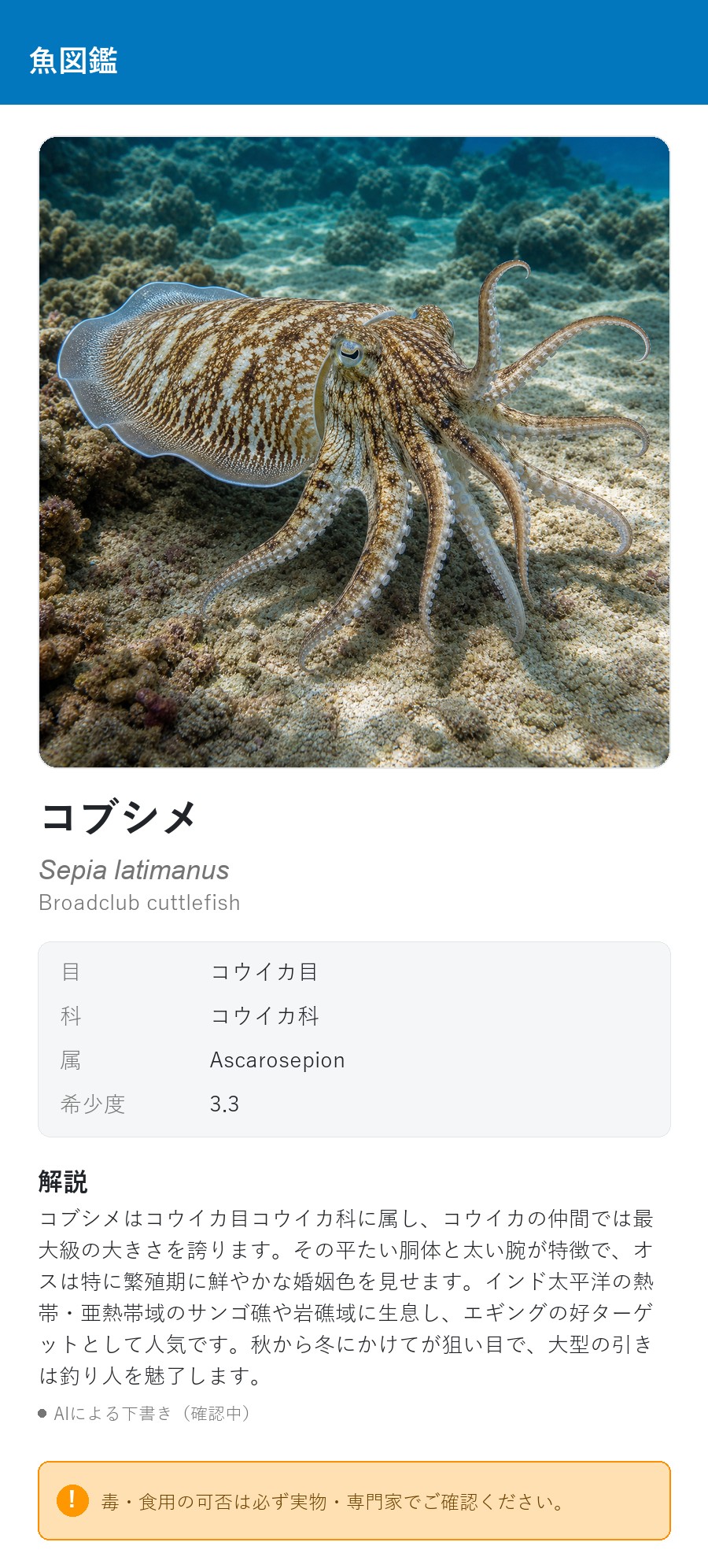
アプリの魚図鑑での表示イメージ。日本語・英語どちらの表示にも対応しています。イラストは左右にスワイプ(Web版はイラスト下の左右ボタン)で切り替えられます。生息イメージ版がまだ用意できていない種は、これまでどおり白背景版の1枚だけを表示します。
新たに加わったおもな仲間
- ハゼ釣りと身近な淡水魚 — 河口で数が出るチチブ、都市部の干潟のアベハゼ、磯のドロメ、平野部のクロダハゼ。渓流の外道として名高いコウライアブラハヤ、湧水のホトケドジョウ・トミヨ、水路でおなじみのミナミメダカも収録しました。
- 北の海の魚 — 北海道の投げ釣りで上がるナガガジ・ナガヅカ・シモフリカジカ、磯の穴釣りのダイナンギンポ、冬のクサウオ、カレイ釣りのアサバガレイ・ツノガレイ。
- 深場の高級魚と船の定番 — 近年ライトジギングで人気のエビスダイ、白身が美味なヨロイイタチウオ、じゃこ天の原料になるホタルジャコ。サビキの定番外道ネンブツダイ・テンジクダイ、砂地のオキエソ・マエソ、アナゴ釣りで掛かるゴテンアナゴも加わりました。
- 潮干狩りと磯の獲物 — シオフキ・カガミガイ・コタマガイ、アサリを食べる一方それ自体も食用のツメタガイ、北日本で「ツブ」として流通するシライトマキバイ、磯の珍味カメノテ、そして磯遊びの主役イソガニ。
- 食用のエビとイカ — かき揚げのシバエビ、駿河湾の特産サクラエビ、佃煮や活きエサのスジエビ。イカは沖縄のエギングの花形コブシメ、内湾のミミイカ・ジンドウイカ。
- アジアとオセアニアのターゲット — 中国・朝鮮半島で珍重されるコウライケツギョ、河川に遡上するメフグ、豪州で最上級の食味とされる「Pearl perch」、ニュージーランドの「Blue moki」「New Zealand scampi」「Pipi」など。
- 北中米のターゲット — 米東岸のピア釣りで数が出る「Spot croaker」「Cunner」、北大西洋のカレイ「American plaice」、カリブの食文化を象徴する巻貝「Queen conch」、米西岸の潮干狩りの花形「Pacific razor clam」、メキシコ湾の「Mexican snook」。
- ヨーロッパの魚と磯もの — 英国の投げ釣りで最も数が出る「Common dab」、人気の小型サメ「Starry smooth-hound」、卵がキャビア代用になる「Lumpfish」、北海の「Brown shrimp」、地中海の砂浜貝「Wedge clam」。
- 中東とアフリカ — チグリス・ユーフラテスの大型バルブ「Leopard barbel」、原産地では普通種の「Doctor fish」、空気呼吸する肺魚「Marbled lungfish」、南アフリカの磯釣り師が憧れる大物「Black musselcracker」、同国の主要漁獲「Cape hake」。
- 南米の淡水魚 — アマゾンの大型ナマズ「Ripsaw catfish」「Porthole shovelnose catfish」、シングー川固有の淡水エイ「Xingu Freshwater Stingray」、空気呼吸ができる「Jeju」、中南米のマングローブで採れる食用貝「ピアングア」。
図鑑にはじめて「カメノテ」の仲間が入りました
磯の岩の割れ目に生えるカメノテは、見た目は貝のようですがエビ・カニと同じ甲殻類で、フジツボに近い仲間です。図鑑の「甲殻類」はこれまでエビ・カニ・ヤドカリだけでしたが、今回はじめてこのグループ(有柄目)が加わりました。あわせて、ツメタガイやQueen conchが属するタマキビ形目も図鑑初登場です。
ご注意
- 毒の有無や種の判断は、必ず実物と専門家の確認をお願いします。 図鑑の表示は参考情報であり、安全を保証するものではありません。今回追加した種のうち6種に毒があります(ハナミノカサゴ、インドナマズ、河川性のフグメフグ(フグ毒)、地中海の「Black scorpionfish」、砂に潜む「Greater weever」、淡水エイ「Xingu Freshwater Stingray」)。
- ナガヅカのように、身は食べられても卵に毒がある魚もいます。食用の可否は種ごとに必ず確認してください。
- 標準的な和名が無い種は、英名(無い場合は学名)で表示します。今回追加した種のうち52種がこれに当たります。
- 解説の一部は AI による下書きで、順次見直しを進めています。
- 名称・分類データは GBIF を出典としています。図鑑のイラストの著作権は世界釣りマップに帰属します。無断転載・二次利用はご遠慮ください。
We have added 100 species to the Fish Encyclopedia, bringing the total to about 2,940 species. Forty of them are popular angling targets in Japan; the rest come from Asia and Oceania, North and South America, Europe, the Middle East and Africa. All 100 species come with two illustrations — a plain version and an in-habitat version.
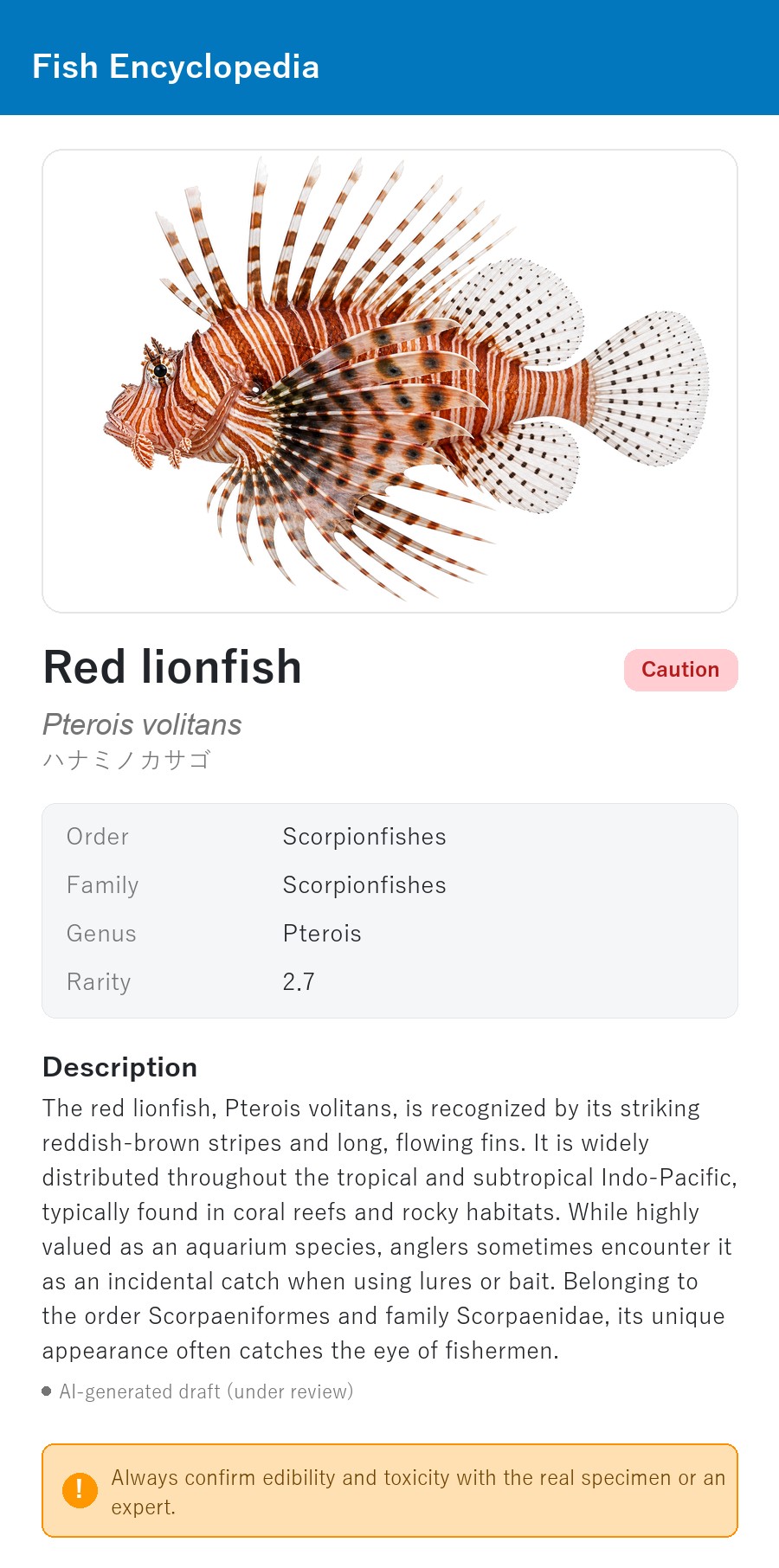
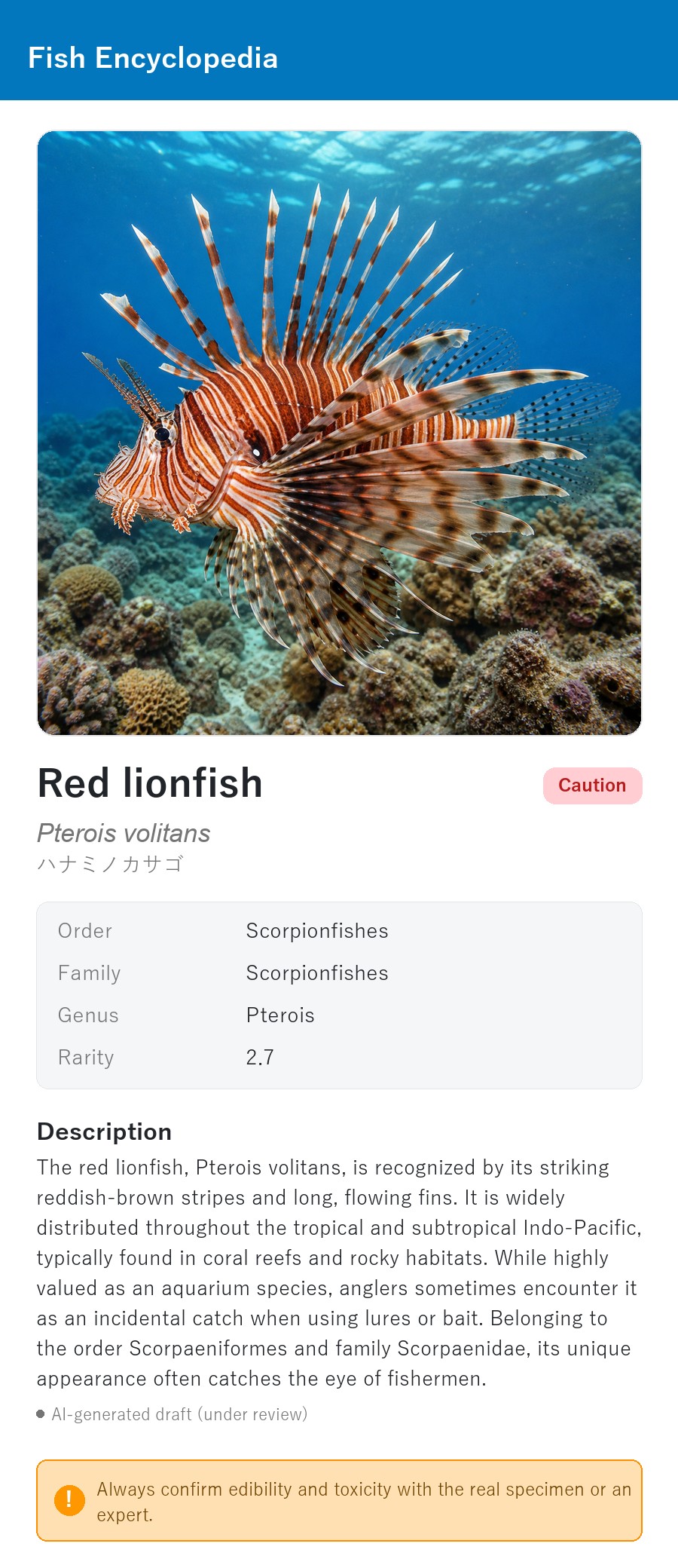
How species look in the app encyclopedia — available in both Japanese and English. Swipe the illustration left or right to switch versions (on the web, use the arrow buttons below it). Species without in-habitat artwork simply show the single plain illustration, exactly as before.
What's new
- Gobies and familiar freshwater fish of Japan — the dusky tripletooth goby that fills buckets in estuaries, Abe's mangrove goby of urban tidal flats, the forktongue goby of rocky shores, plus the Amur minnow of mountain streams, two spring-fed specialists (the eight-barbeled loach and the ninespine stickleback) and the Japanese rice fish.
- Fish of the northern seas — the eelpout, long shanny and sculpins that surfcasters catch in Hokkaido, the gunnel of rocky-shore hole fishing, Tanaka's snailfish, and two righteye flounders.
- Deep-water delicacies and boat-fishing regulars — the Japanese soldierfish now popular with light jigging, the armoured cusk, and the glowbelly used for fish paste. Also the cardinalfishes that dominate sabiki catches, two lizardfishes, and a conger that turns up on eel rigs.
- Clam digging and rocky-shore gathering — three surf clams, the bladder moon snail (a clam predator that is itself eaten), a whelk sold across northern Japan, the goose barnacle prized for stock, and the Asian shore crab.
- Edible shrimp and squid — shiba shrimp, the luminous sakura shrimp of Suruga Bay, lake prawn, and three cephalopods including the broadclub cuttlefish, the star of squid jigging in Okinawa.
- Asian and Oceanian targets — the leopard mandarin fish prized in China and Korea, the river pufferfish, the pearl perch rated among Australia's finest eating fish, and New Zealand's blue moki, scampi and pipi.
- North and Central American targets — spot croaker and cunner from east-coast piers, American plaice, the queen conch that anchors Caribbean cuisine, the Pacific razor clam of west-coast clam digging, and the Mexican snook.
- European fish and shore catches — the common dab that tops British surfcasting numbers, the starry smooth-hound, the lumpfish whose roe substitutes for caviar, North Sea brown shrimp, and the Mediterranean wedge clam.
- The Middle East and Africa — the leopard barbel of the Tigris–Euphrates, the doctor fish (an ordinary species in its native range), the air-breathing marbled lungfish, the black musselcracker that South African shore anglers dream of, and Cape hake.
- South American freshwater fish — the Amazon's ripsaw and porthole shovelnose catfishes, the Xingu Freshwater Stingray, the air-breathing jeju, and the mangrove cockle harvested across Latin America.
The encyclopedia's first goose barnacle
The goose barnacle that grows in the cracks of rocky shores looks like a shellfish, but it is a crustacean — a relative of the acorn barnacles rather than of clams. Until now the encyclopedia's "Crustaceans" category held only shrimp, crabs and hermit crabs; this update adds that group (order Pedunculata) for the first time. Littorinimorpha, the order of the bladder moon snail and the queen conch, is also new to the encyclopedia.
Notes
- Always confirm identification and venomousness with the real specimen and an expert. Entries in the encyclopedia are reference information and are not a guarantee of safety. Six of the species added in this update are venomous: the red lionfish, the stinging catfish, the river pufferfish, the black scorpionfish, the greater weever and the Xingu Freshwater Stingray.
- Some fish are edible as flesh but have toxic roe — the long shanny is one. Check edibility species by species.
- Species without a standard Japanese name are shown by their English name (or scientific name if none exists) — 52 of the species added in this update fall into that category.
- Some descriptions are AI-generated drafts that we are reviewing over time.
- Names and taxonomy are sourced from GBIF. The encyclopedia illustrations are © World Fishing Map; please do not reproduce or reuse them without permission.