
魚図鑑に新たに99種を追加し、収録数が合計約2,840種になりました。今回は日本で釣り・採捕の対象になる魚介類を40種、残りをアジア・オセアニア、南北アメリカ、ヨーロッパ、中東、アフリカから選んでいます。追加した種にはすべて、白背景版と「生息イメージ」版の2枚のイラストを用意しました。
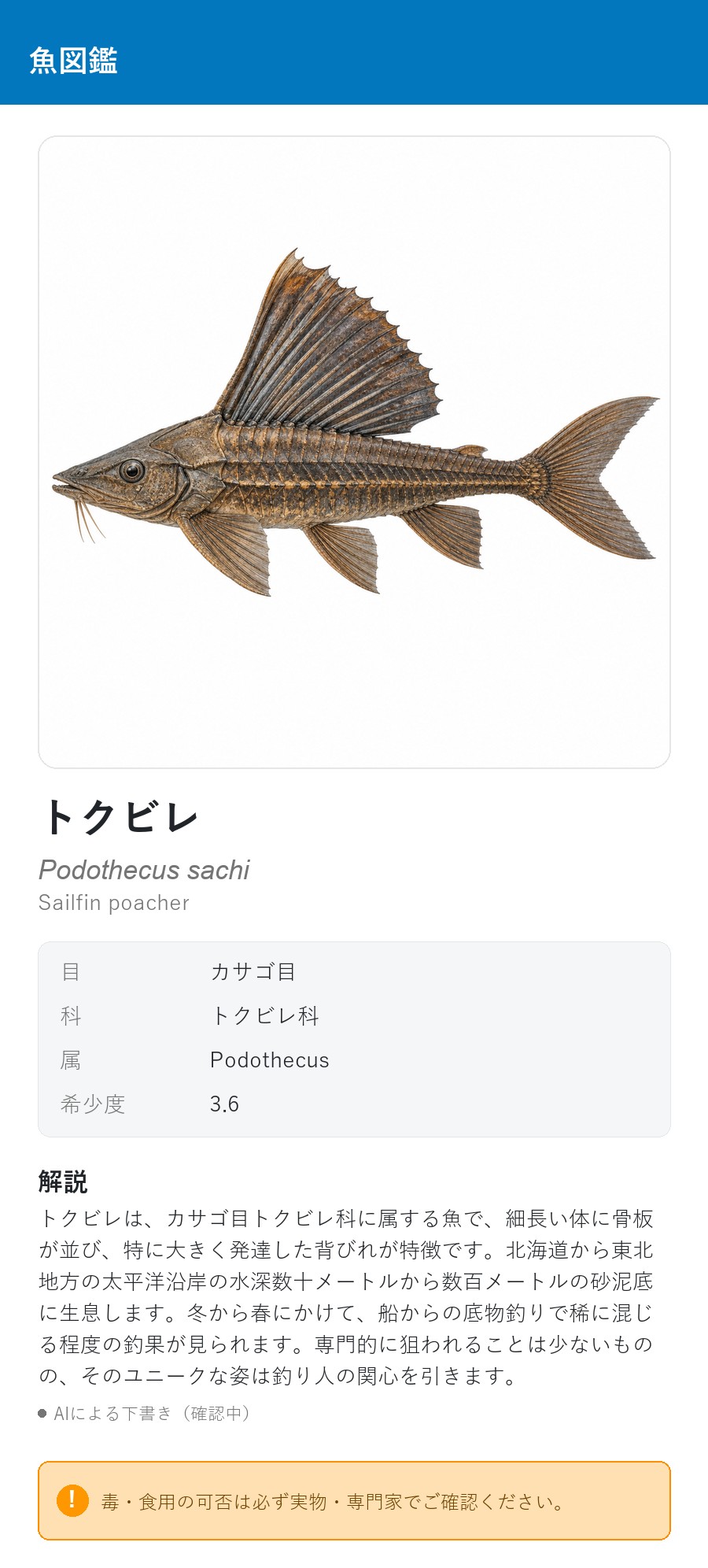
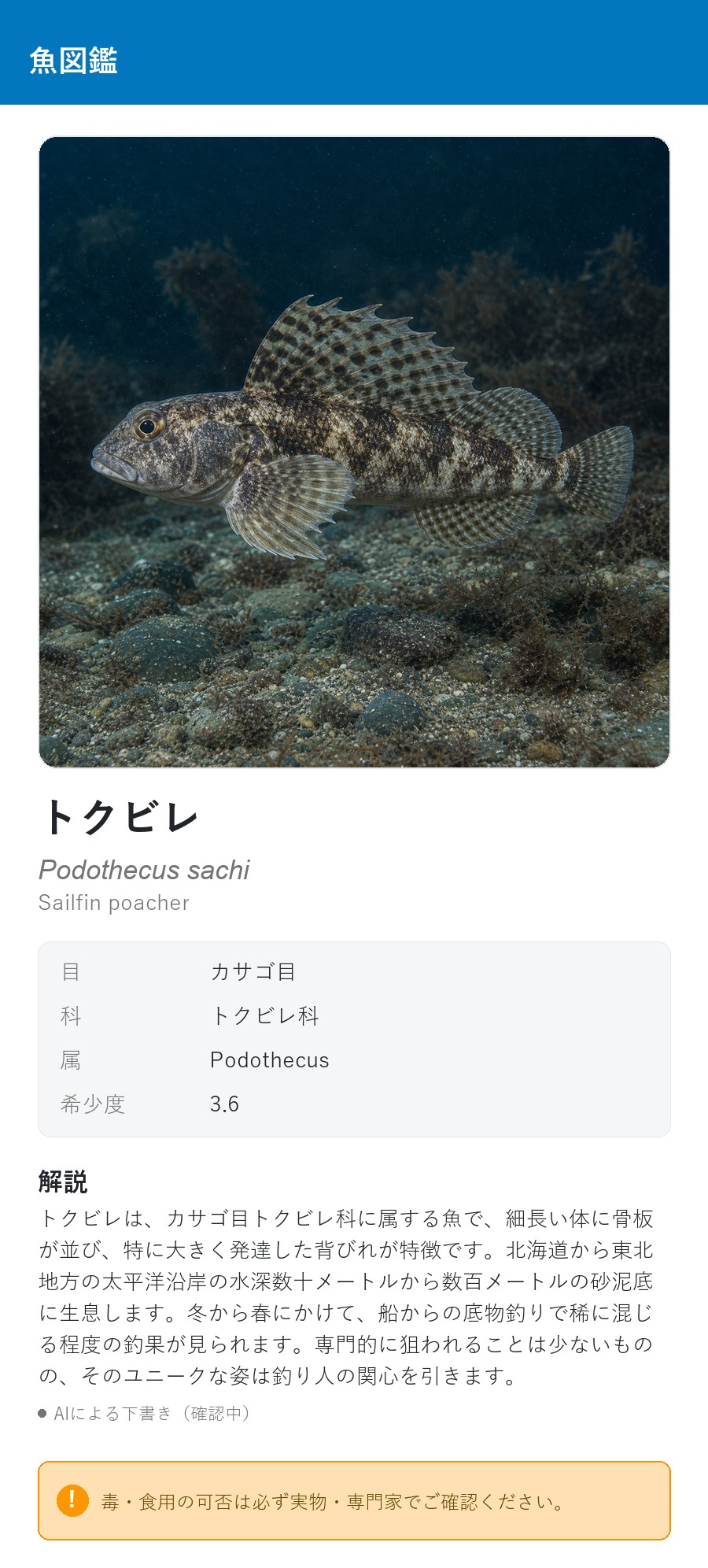
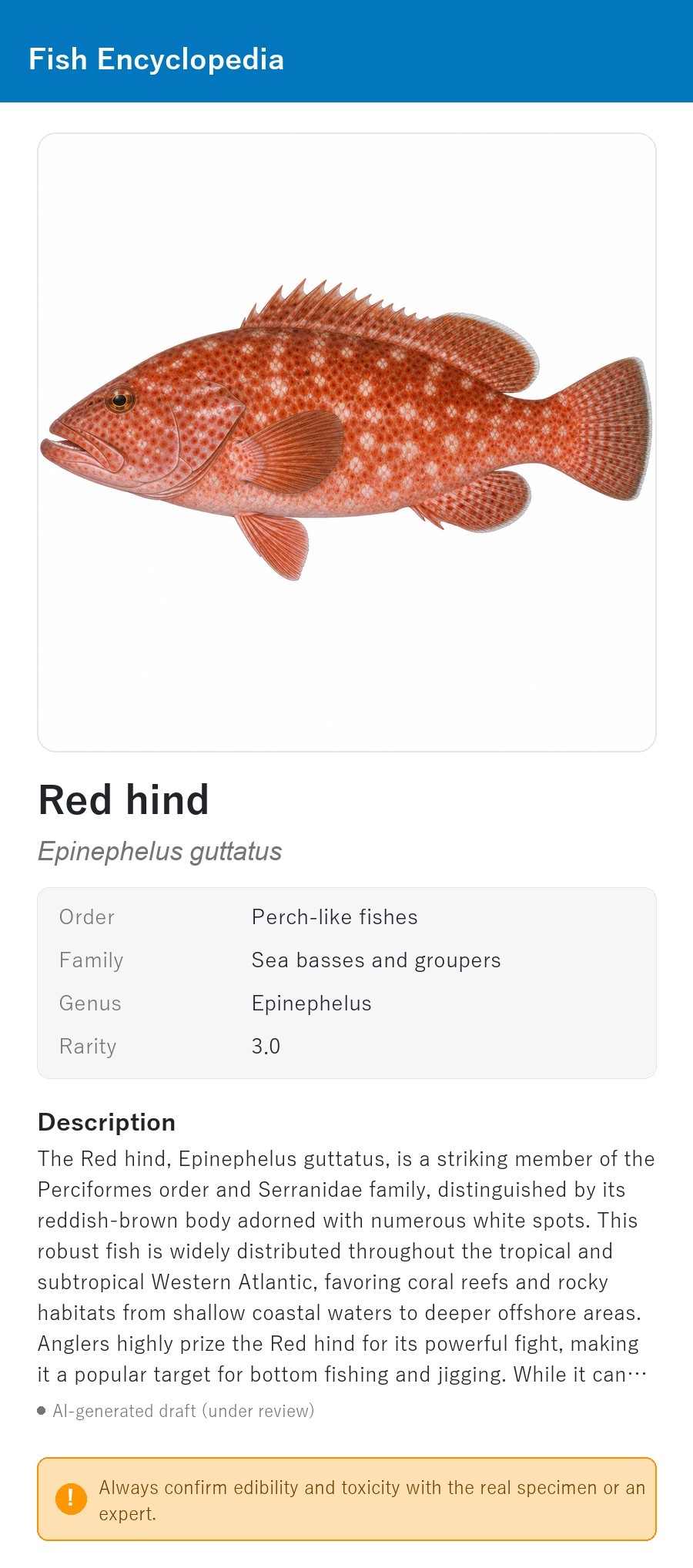
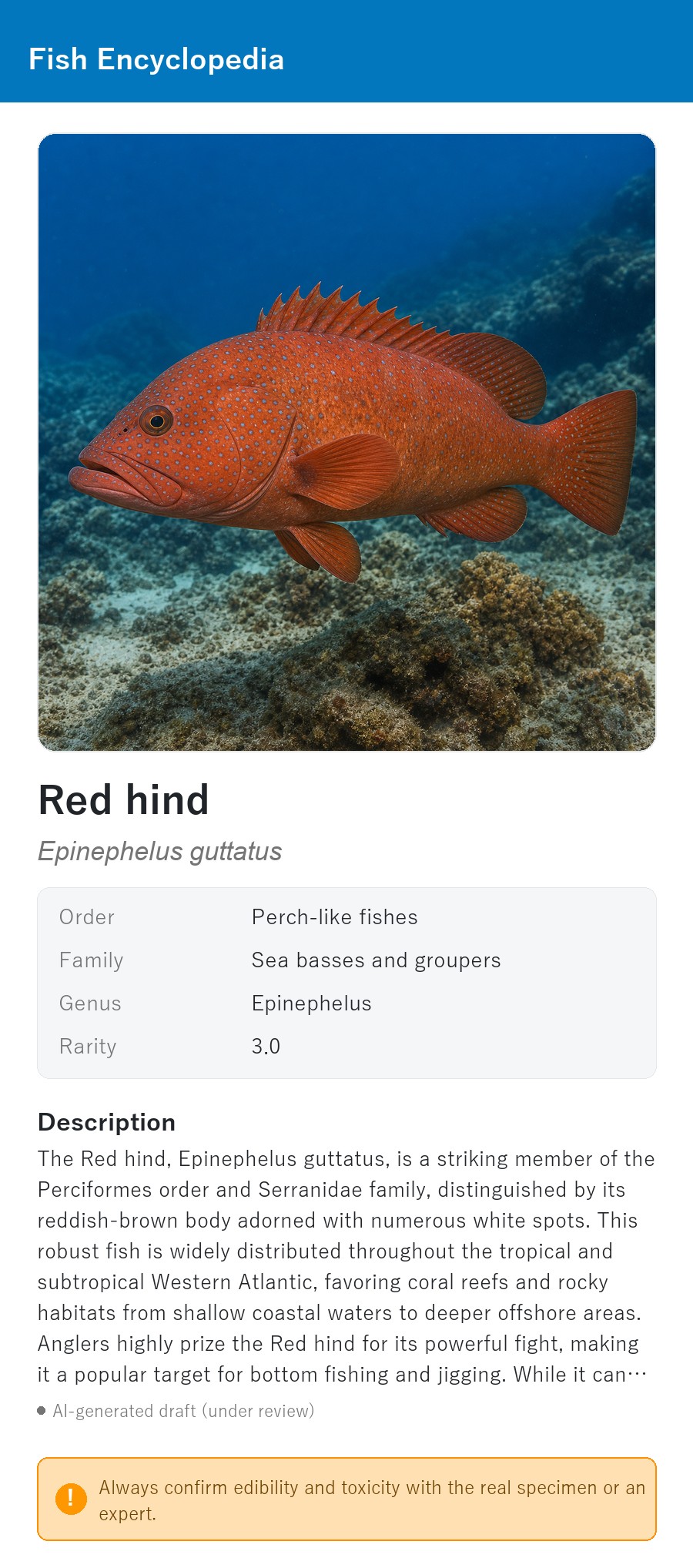
アプリの魚図鑑での表示イメージ。日本語・英語どちらの表示にも対応しています。イラストは左右にスワイプ(Web版はイラスト下の左右ボタン)で切り替えられます。生息イメージ版がまだ用意できていない種は、これまでどおり白背景版の1枚だけを表示します。
新たに加わったおもな仲間
- 干潟と河口の魚 — 有明海のムツゴロウ・ワラスボ、春の風物詩シロウオ、トビハゼやビリンゴなど、汽水域のハゼの仲間をまとめて収録しました。
- 北の海の魚と磯もの — 「ハッカク」の名で知られるトクビレ、投げ釣りのスナガレイ・アブラガレイ、イカナゴ、磯のマツバガイ・ベッコウガサ・スガイといったカサガイ・巻貝の仲間。
- 食卓でおなじみの貝とエビ・タコ — チョウセンハマグリ、サルボウガイ、ツバイ、ヤコウガイ、ヨシエビ、アナジャコ、道具を使うことで知られるメジロダコなど。
- 「生きた化石」オウムガイ — オウムガイと、船のような殻を持つタコブネ。オウムガイ目は図鑑にとって初めての目です。
- アメリカ・カリブのターゲット — カリブの人気ハタ「Red hind」、深場の「Snowy grouper」、カリフォルニアの「Pacific barracuda」「California spiny lobster」「Red abalone」など。
- ヨーロッパの魚 — 高級魚として知られるニシアンコウ、「Tub gurnard」、セイヨウトコブシ、「Common whelk」など。
- アフリカ・中東・南米の淡水魚 — 強い電気を出すデンキナマズ、ナイル川の「Bayad」、チグリス・ユーフラテスの「Largemouth lotak」、アマゾンの「Red ruby piranha」や淡水エイ「Porcupine Freshwater Stingray」など。
- クラゲの仲間 — 「不老不死のクラゲ」として知られるベニクラゲの仲間、淡水に現れるマミズクラゲ、北米西岸の大型種「Black sea nettle」、磯のエダアシクラゲ。
クラゲの仲間は「生息イメージ」版で載せています
今回追加したクラゲの4種は、白背景よりも水中の光や背景があったほうが姿が伝わりやすいため、生息イメージ版のイラストを1枚だけ掲載しています。そのため、これらの種ではイラストの切り替えは行われません。
ご注意
- 毒の有無や種の判断は、必ず実物と専門家の確認をお願いします。 図鑑の表示は参考情報であり、安全を保証するものではありません。クラゲは「毒」の表示がない種でも刺されることがあります。
- 標準的な和名が無い種は、英名(無い場合は学名)で表示します。今回追加した種のうち45種がこれに当たります。
- 解説の一部は AI による下書きで、順次見直しを進めています。
- 名称・分類データは GBIF を出典としています。図鑑のイラストの著作権は世界釣りマップに帰属します。無断転載・二次利用はご遠慮ください。
We have added 99 species to the Fish Encyclopedia, bringing the total to about 2,840 species. Forty of them are fish and shellfish targeted by anglers and gatherers in Japan; the rest come from Asia and Oceania, North and South America, Europe, the Middle East and Africa. Every species added in this update comes with two illustrations — a plain version and an in-habitat version.
How species look in the app encyclopedia — available in both Japanese and English. Swipe the illustration left or right to switch versions (on the web, use the arrow buttons below it). Species without in-habitat artwork simply show the single plain illustration, exactly as before.
What's new
- Fish of tidal flats and estuaries — the mudskippers and gobies of Japan's brackish waters, including the famous mudskipper of the Ariake Sea and the ice goby that marks the arrival of spring.
- Northern coastal fish and rocky-shore shellfish — the sailfin poacher, righteye flounders that are staples of surfcasting, sand lance, and a set of limpets and turban snails gathered from the rocks.
- Familiar shellfish, prawns and octopus — hard clams, ark shells, whelks, the great green turban, greasyback shrimp, mud shrimp, and the tool-using veined octopus.
- Living fossils — the chambered nautilus and the paper nautilus. Nautilida is the first order of its kind in the encyclopedia.
- American and Caribbean targets — red hind, snowy grouper, blackfin snapper, Pacific barracuda, California spiny lobster and red abalone.
- European fish — the prized black-bellied angler, tub gurnard, green ormer and common whelk.
- Freshwater fish of Africa, the Middle East and South America — the electric catfish, the Nile bayad, the largemouth lotak of the Tigris–Euphrates, the red ruby piranha and the porcupine river stingray of the Amazon.
- Jellyfish — the "immortal jellyfish" Turritopsis, the freshwater jellyfish Craspedacusta, the large black sea nettle of the eastern Pacific, and a small hydromedusa of Japanese shores.
Jellyfish are shown in habitat
The four jellyfish added in this update are shown with a single in-habitat illustration: underwater light and background convey their form far better than a plain white field does. For these species the illustration does not switch.
Notes
- Always confirm identification and venomousness with the real specimen and an expert. Entries in the encyclopedia are reference information and are not a guarantee of safety. Jellyfish without a venom marker can still sting.
- Species without a standard Japanese name are shown by their English name (or scientific name if none exists) — 45 of the species added in this update fall into that category.
- Some descriptions are AI-generated drafts that we are reviewing over time.
- Names and taxonomy are sourced from GBIF. The encyclopedia illustrations are © World Fishing Map; please do not reproduce or reuse them without permission.