
魚図鑑に新たに98種を追加し、収録数が合計約2,750種になりました。あわせて、図鑑のイラストに「生息イメージ」版を用意し、左右にスワイプするだけで白背景版と切り替えられるようにしました。
イラストが2枚になりました
これまで図鑑のイラストは、体の特徴が分かりやすい白背景の1枚だけでした。同定の役に立つ一方で、「この魚がどんな場所にいるのか」までは伝わりません。そこで今回から、同じ魚を生息環境のなかで描いた1枚を並べて用意しました。
アプリではイラストを左右にスワイプ、Web版ではイラスト下の左右ボタンで切り替えられます。既定の表示はこれまでどおり白背景版なので、同定の使い勝手は変わりません。
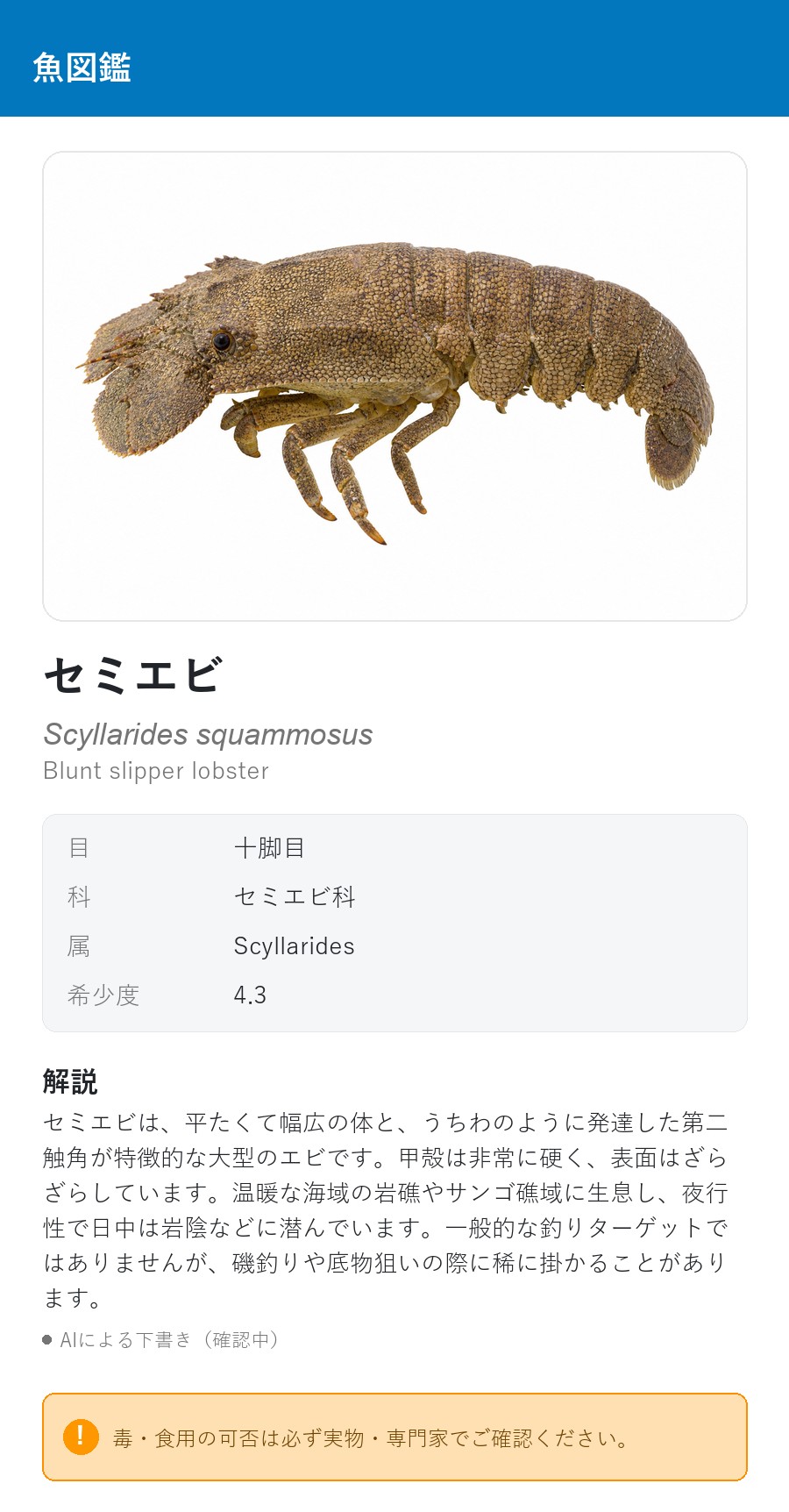
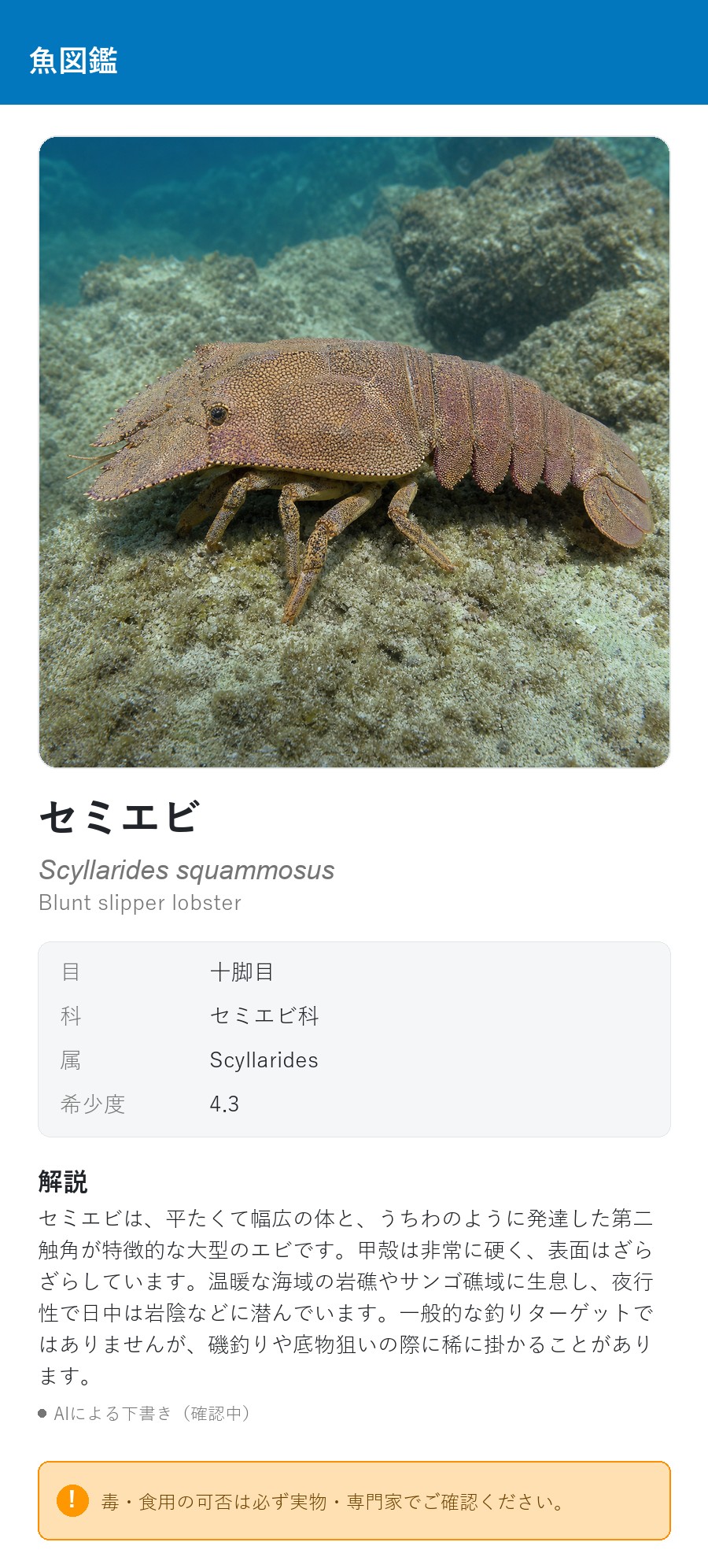
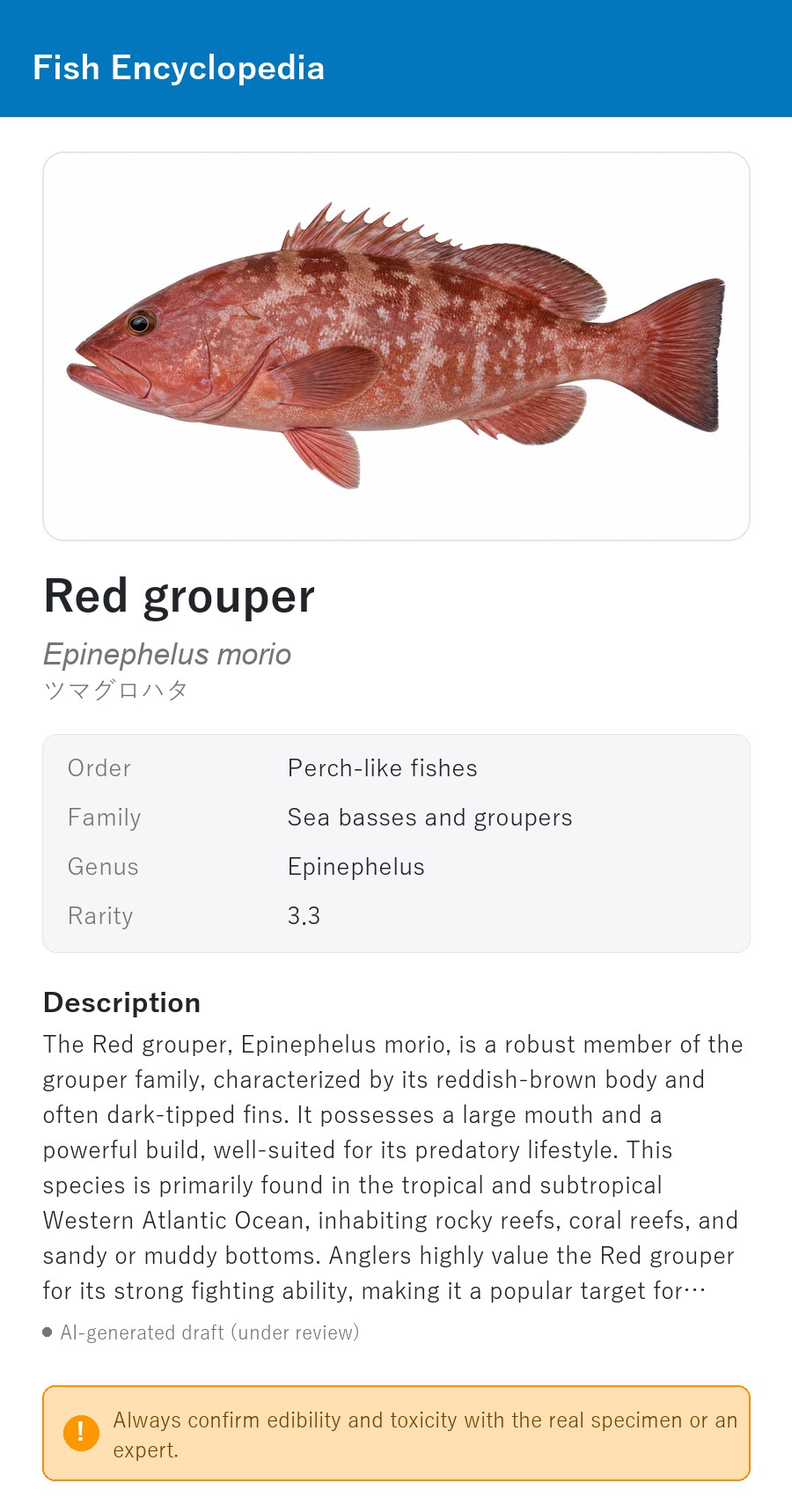
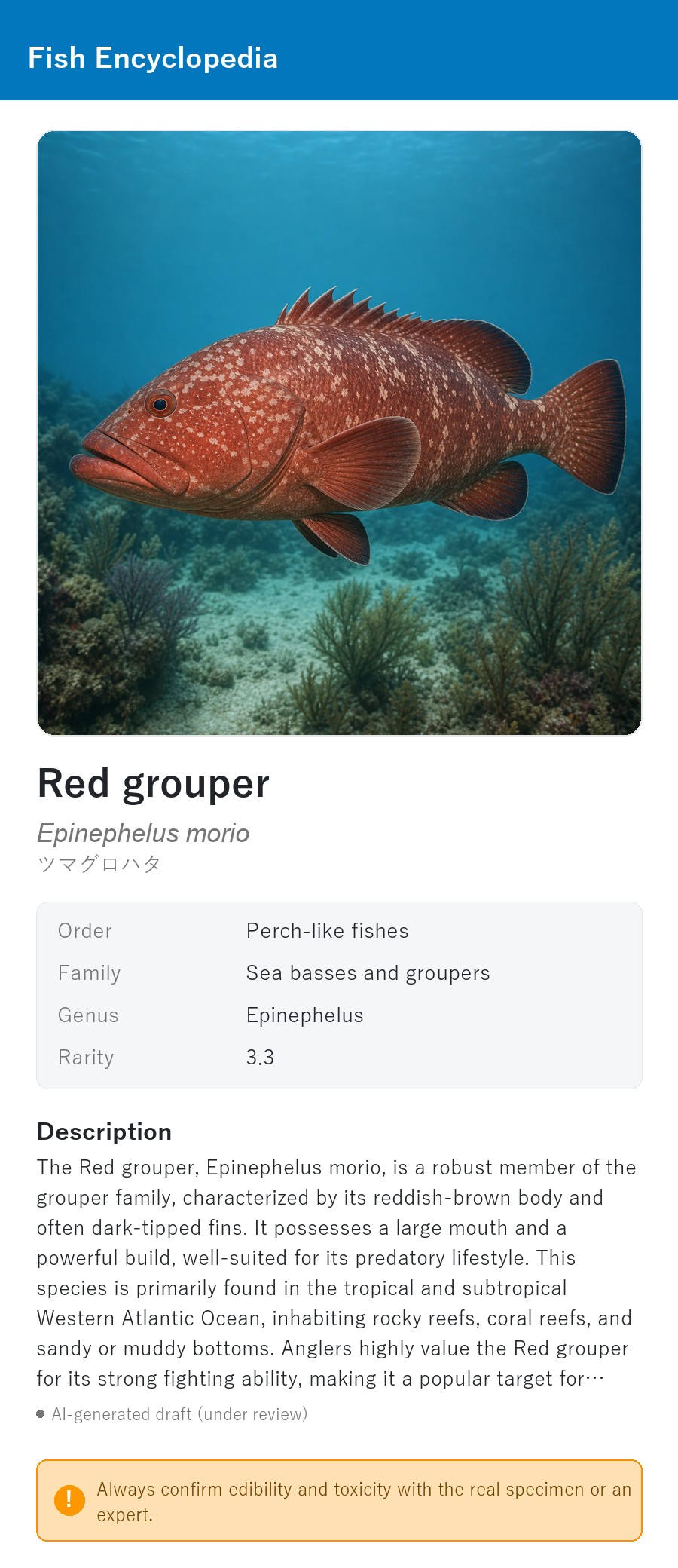
アプリの魚図鑑での表示イメージ。日本語・英語どちらの表示にも対応しています。生息イメージ版は今回追加した種から順次用意しており、既存の種にもこれから加えていきます。用意ができていない種は、これまでどおり白背景版の1枚だけを表示します。
新たに加わったおもな仲間
- 日本近海の深場と磯の魚 — 船釣りの常連「クラカケトラギス」「オキトラギス」、磯の「ホシササノハベラ」「ミギマキ」、深海の「カゴカマス」「モンアオメエソ」、コウイカの仲間「エゾハリイカ」「ヒョウモンコウイカ」など。
- 磯の高級エビ — イセエビと並ぶ味と評価の「セミエビ」、南日本の深場に潜む「キタンヒメセミエビ」。
- 大西洋・カリブのターゲット — メキシコ湾の「Red grouper」、群れで釣れる「Vermilion snapper」、カリブの「Bar jack」など。
- ヨーロッパ・北米の淡水魚 — ドナウ川固有で保護対象の「Zingel」「Streber」、北米南東部の「Blacktail redhorse」など。
- 豪州北部のグランター類 — ノーザンテリトリーの限られた川にしかいない「Longnose sooty grunter」「Midgley's grunter」など。
- 中東・アフリカ・南米の淡水魚 — チグリス・ユーフラテス水系の「Mesopotamian himri」「Tigris bream」、パタゴニアの「Patagonian pejerrey」、アマゾンの「Golden pike-characin」など。
今回あわせて直したこと
新しい種を追加するとき、名前が既存の種とぶつからないかを毎回照合しています。今回はその過程で、これまでの図鑑に紛れ込んでいた和名の取り違えが2件見つかりました。
- ササノハベラの仲間 — 「ホシササノハベラ」としていた種は正しくはアカササノハベラで、ホシササノハベラは今回追加した別の種でした。両方を正しい名前に直しています。
- タカノハダイの仲間 — 「ミギマキ」としていた種は正しくはユウダチタカノハで、ミギマキも今回追加した種のほうでした。
- あわせて、これまで名前が空欄だった九州北西部の固有種にアリアケギバチの名前を補い、絶滅危惧種であることを踏まえて希少度も見直しました。
ご注意
- 毒の有無や種の判断は、必ず実物と専門家の確認をお願いします。 図鑑の表示は参考情報であり、安全を保証するものではありません。
- 標準的な和名が無い種は、英名(無い場合は学名)で表示します。
- 解説の一部は AI による下書きで、順次見直しを進めています。
- 名称・分類データは GBIF を出典としています。図鑑のイラストの著作権は世界釣りマップに帰属します。無断転載・二次利用はご遠慮ください。
We have added 98 species to the Fish Encyclopedia, bringing the total to about 2,750 species. Alongside this, every newly added species now comes with a second illustration showing it in its habitat, and you can swipe left or right to switch between the two.
Two illustrations per species
Until now each species had a single illustration on a plain white background. That is ideal for identification, but it tells you nothing about where the animal actually lives. So we have drawn a second version of each new species in its natural surroundings.
In the app, swipe the illustration left or right; on the web, use the arrow buttons below the illustration. The default view is still the plain version, so identification works exactly as before.
How species look in the app encyclopedia — available in both Japanese and English. In-habitat artwork starts with the species added in this update and will be extended to existing entries over time. Species without it simply show the single plain illustration, exactly as before.
What's new
- Deep-water and rocky-shore fish of Japan — sandperches that regularly come up on boat trips, the wrasses and morwongs of the rocky shore, deep-water gemfish and cucumberfish, and several cuttlefish of the genus Doratosepion.
- Prized slipper lobsters — the blunt slipper lobster, rated alongside spiny lobster in Japan, and its smaller deep-reef relative.
- Atlantic and Caribbean targets — red grouper of the Gulf of Mexico, vermilion snapper, and bar jack.
- European and North American freshwater fish — the Danube-endemic zingel and streber, both legally protected, and the blacktail redhorse of the American southeast.
- Grunters of northern Australia — long-nose sooty grunter and Midgley's grunter, confined to a handful of Northern Territory rivers.
- Freshwater fish of the Middle East, Africa and South America — Mesopotamian himri and Tigris bream of the Tigris–Euphrates, Patagonian pejerrey, and the golden pike-characin of the Amazon.
Corrections made along the way
Every time we add species we cross-check their names against the existing entries. That check surfaced two long-standing mix-ups of Japanese names, which we have now fixed — along with a species that had been sitting in the encyclopedia with no common name at all.
Notes
- Always confirm identification and venomousness with the real specimen and an expert. Entries in the encyclopedia are reference information and are not a guarantee of safety.
- Species without a standard Japanese name are shown by their English name (or scientific name if none exists).
- Some descriptions are AI-generated drafts that we are reviewing over time.
- Names and taxonomy are sourced from GBIF. The encyclopedia illustrations are © World Fishing Map; please do not reproduce or reuse them without permission.