
魚図鑑に新たに100種を追加し、収録数が合計約2,000種になりました。そして今回、図鑑に初めて貝類(腹足類・二枚貝類)が加わりました。クロアワビやサザエ、アサリ・ハマグリといった潮干狩り・磯遊びでおなじみの貝から、タカアシガニやノルウェーロブスターのような食卓の主役級まで、オリジナルのイラストを一点ずつ描き下ろしています。
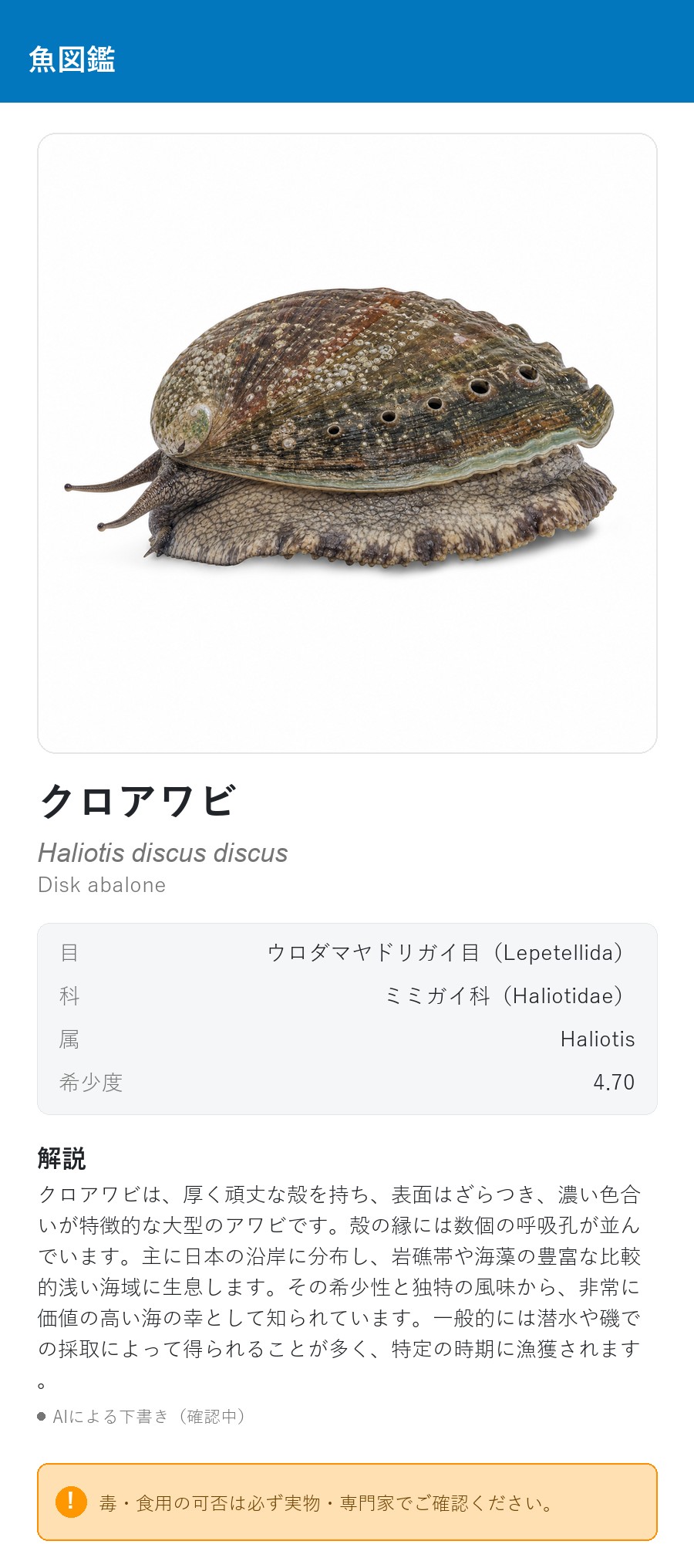
アプリの魚図鑑での表示例。日本語・英語どちらの表示にも対応しています。
新たに加わったおもな仲間
- 初収載の貝類 — クロアワビ・メガイアワビ・マダカアワビ・エゾアワビ・トコブシなどアワビの仲間、サザエ、エゾボラ、バイ、アサリ・ハマグリ・シジミ・タイラギ・ホタテガイなどの二枚貝。
- 甲殻類の逸品 — 世界最大級のタカアシガニ、ボタンエビ・シラエビ・トヤマエビ、川を下るモクズガニ。
- 海外の高級食材 — ノルウェーロブスター、ヨーロッパヒラガキ、ニュージーランドのパウア(アワビ)、ダンジネスクラブ、フロリダのストーンクラブ。
- 魚類・頭足類も — 深海の高級魚ハチジョウアカムツやオオクチイシナギ、琵琶湖固有のビワマス、大型のソデイカなど。
ご注意
- 標準的な和名が無い海外の種は、英名(無い場合は学名)で表示します。
- 解説の一部は AI による下書きで、順次見直しを進めています。魚種・貝類の同定や食用可否・毒の有無などは、安全のため必ず実物・専門家の確認をお願いします。
- 名称・分類データは GBIF を出典としています。図鑑のイラストの著作権は世界釣りマップに帰属します。無断転載・二次利用はご遠慮ください。
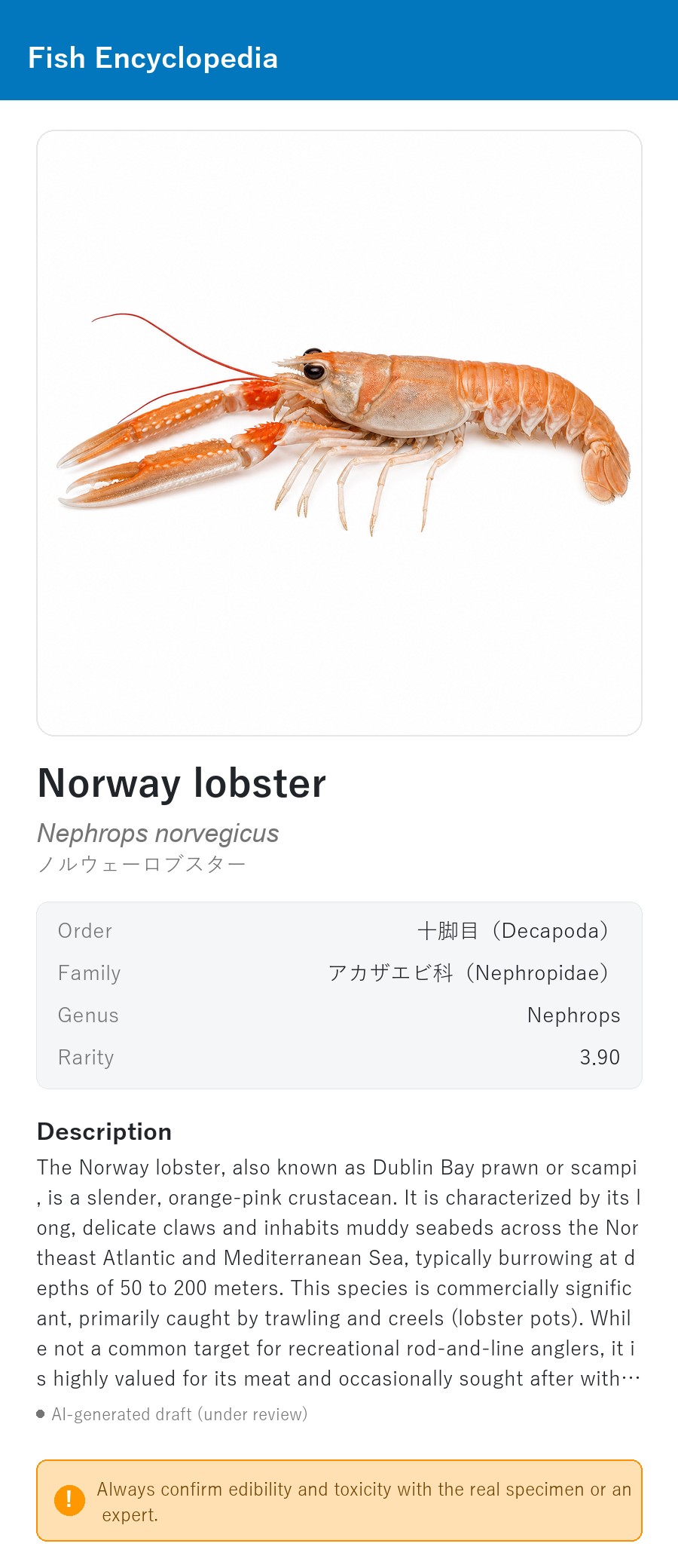
We have added 100 more species to the Fish Encyclopedia, bringing the total to about 2,000 species. This update also introduces shellfish (gastropods and bivalves) to the encyclopedia for the first time — from everyday tide-pool favorites like abalone, turban shells, and Manila clams, to showpiece catches like the Japanese spider crab and Norway lobster, each with an original illustration drawn one by one.
How species look in the app encyclopedia — available in both Japanese and English.
What's new
- Shellfish, for the first time — abalone species (Disk, Giant, Madaka, Ezo, and more), turban shells, whelks, and bivalves such as Manila clams, hard clams, basket clams, pen shells, and scallops.
- Prized crustaceans — the Japanese spider crab (one of the largest crabs in the world), botan and glass shrimp, and the river-migrating Japanese mitten crab.
- Premium seafood from abroad — Norway lobster, European flat oyster, New Zealand paua (abalone), Dungeness crab, and Florida stone crab.
- Fish and cephalopods too — the deep-sea alfonsino and striped jewfish, Lake Biwa's endemic Biwa salmon, and the large diamondback squid.
Notes
- Species without a standard Japanese name are shown by their English name (or scientific name if none exists).
- Some descriptions are AI-generated drafts that we are reviewing over time. For safety, always confirm identification and edibility/toxicity with the real specimen or an expert.
- Names and taxonomy are sourced from GBIF. The encyclopedia illustrations are © World Fishing Map; please do not reproduce or reuse them without permission.